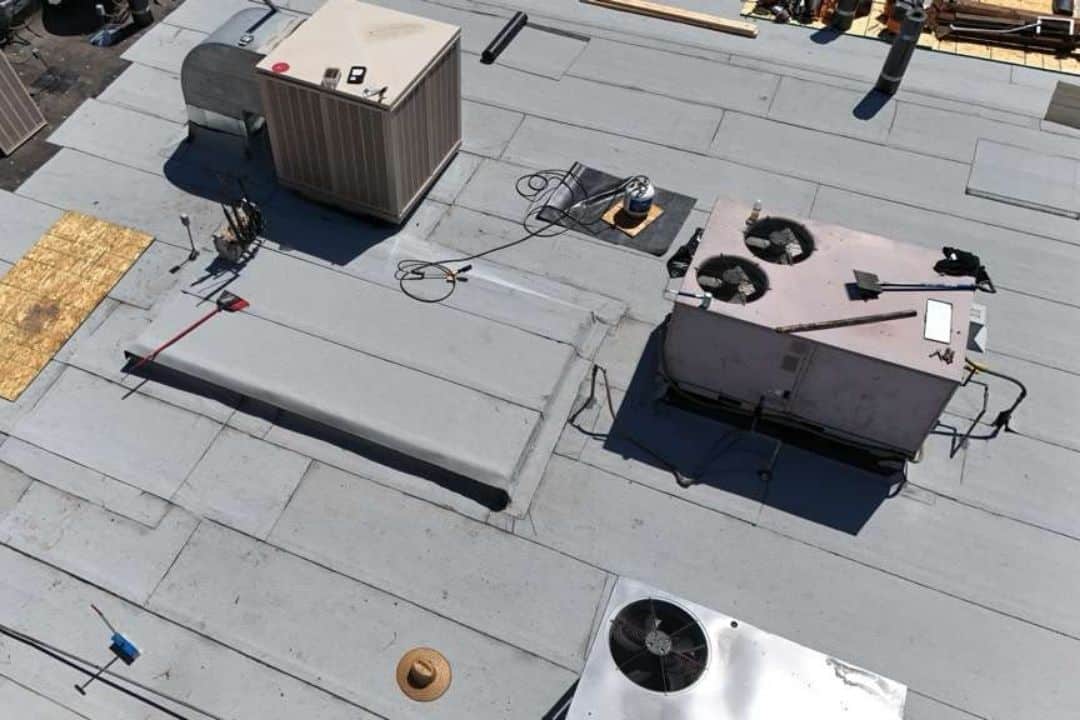
Short answer: the best commercial roof for a Phoenix building is usually a reflective low-slope system, such as TPO, foam with a coating, or a coated built-up or modified bitumen roof, installed with good drainage and maintained on a schedule. Heat, UV and monsoon rain are the three forces that decide how long it lasts.
This guide is for owners, property managers and facility teams of offices, retail, restaurants, warehouses and multi-tenant buildings in the Phoenix metro. If you are comparing contractors, start with our commercial roofing services or the Phoenix service area page.
What roof systems work best on Phoenix commercial buildings?
Most commercial buildings here are low-slope or flat, so the choice is about membranes and coatings rather than shingles or tile. The common options are:
- TPO single-ply: a white reflective membrane with heat-welded seams. Read what TPO roofing is and whether it suits Arizona.
- Spray foam with a reflective coating: seamless, adheres to the deck and adds insulation. See foam roof recoating: how it works and how often.
- Modified bitumen and built-up roofs: layered systems, often finished with a reflective surface. See our flat roofing page.
- Roof coatings over a sound roof: a way to extend life and add reflectance when the substrate is still good. See roof coatings.
- Standing seam metal on buildings with a pitch. Our standing seam metal roof guide covers it.
Why does reflectance matter in Phoenix?
A City of Phoenix cool roofs memorandum describes cool roofs as typically 65 percent or more reflective, compared with 5 to 15 percent for standard roofs, and notes that dark roofs can reach 150 degrees Fahrenheit or more in summer sun. The memo also states that Phoenix has adopted the 2018 International Building Code, which requires a solar reflectance index of 64 for commercially owned flat roofs, and that the city checks base reflectance for new commercial construction before plan review. Reflective surfaces reduce cooling load and heat stress on the roof. For the science behind this, see our post on solar reflectance and cool roof materials in Arizona. Confirm current code requirements with the city before you design a project.
What causes commercial roofs to fail here?
- Ponding water: low spots and clogged drains hold water after monsoon storms. Read flat roof drainage and ponding water.
- Heat and UV: they dry out membranes, harden sealants and open seams. See how Arizona heat affects flat roofs.
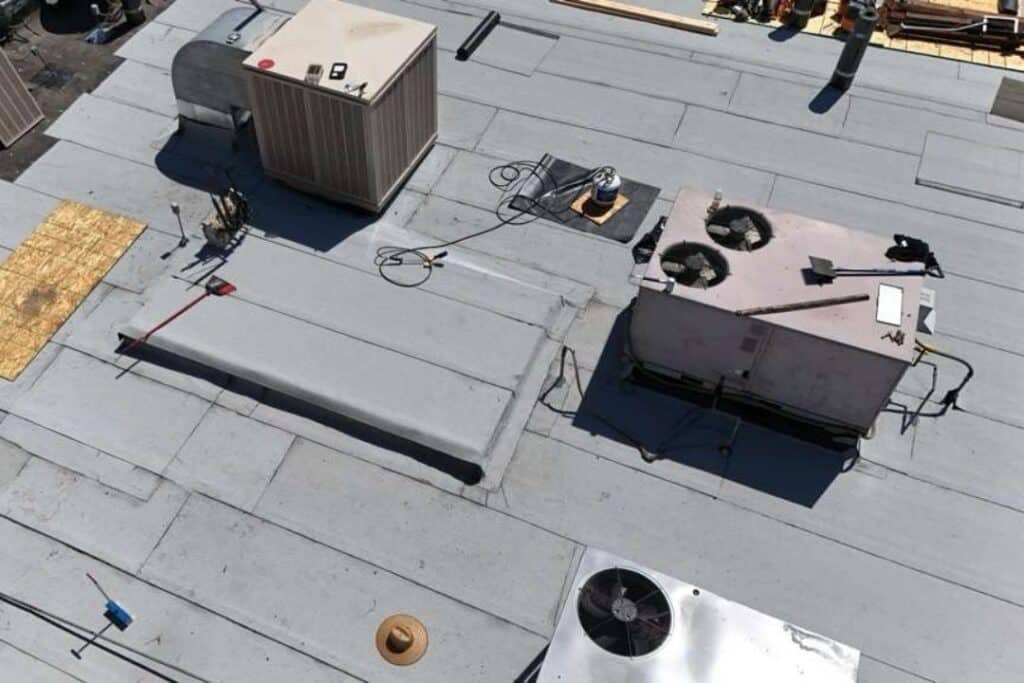
- Rooftop equipment: HVAC curbs, penetrations and service traffic create leak points. Our post on why AC units on roofs cause leaks explains where to look.
- Flashing and parapets: edges, walls and transitions fail before the field of the roof does. See common commercial roof problems.
Repair, coat or replace?
The right answer depends on the condition of the substrate. A roof with isolated leaks and dry insulation may be a repair or coating candidate. A roof with wet insulation, widespread blistering or repeated leaks in many areas usually needs replacement. An infrared or moisture survey and a written inspection report make the decision factual. For budgeting, read commercial roof replacement cost by size, and for the next layer of detail see commercial vs residential roofing cost and how the work differs.
Plan maintenance before you need a repair
A maintenance plan is cheaper than emergency leak calls. At minimum, plan for two inspections a year, one before monsoon season and one after, with drain and scupper cleaning, sealant checks and photo documentation. Our guide to commercial roof maintenance plans lists what to expect, and our roof maintenance page describes the service.
Working on an occupied building
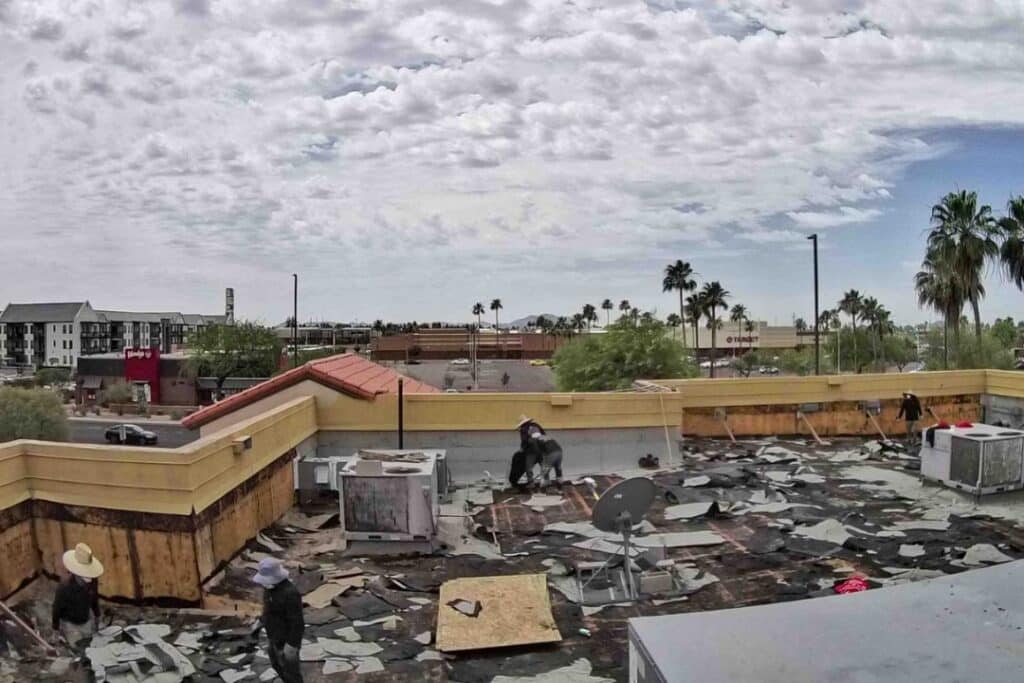
Businesses stay open during most commercial roofing projects, so planning matters. Ask about work phases, noise, safety barriers for foot traffic, protection of rooftop equipment and the schedule around business hours. If you manage tenants or an association, our flat roof replacement guide for property managers covers communication and logistics.
How to choose a commercial roofer in Phoenix
- Verify an active Arizona ROC license in a class that covers commercial roofing. Tip Top Roofing Service holds ROC #355034 (CR-42, commercial and residential roofing).
- Ask for proof of insurance and references from similar buildings.
- Compare written scopes, including drainage, flashing, insulation and warranty.
- Ask who handles permits, inspections and manufacturer warranty registration.
More detail is in how to choose a commercial roofing contractor and our Phoenix hiring checklist.
Frequently asked questions
What is the best commercial roofing material for Phoenix?
There is no single best material. Reflective low-slope systems such as TPO and foam with a coating are common because they handle heat and UV well. The right choice depends on the building, the deck, drainage and budget.
How often should a commercial roof be inspected in Phoenix?
At least twice a year, before and after monsoon season, and after any major storm.
Can a commercial roof be coated instead of replaced?
Sometimes. A coating can extend the life of a roof with a sound substrate and dry insulation. A roof with wet insulation or widespread failure usually needs replacement.
Does Tip Top Roofing Service provide free estimates for commercial roofs?
Yes. We provide free written estimates for commercial properties in Phoenix and the surrounding cities.
Next step
Tell us about your building, the roof type and any leaks, and we will prepare a written plan. Request a free estimate or call Tip Top Roofing Service at (480) 877-1643. We are at 6830 E 5th Ave Ste 205 in Old Town Scottsdale and serve Phoenix and the surrounding cities. ROC #355034, GAF certified, BBB accredited.
Last updated November 23, 2026. Reviewed by Lior Gabay, Tip Top Roofing Service.