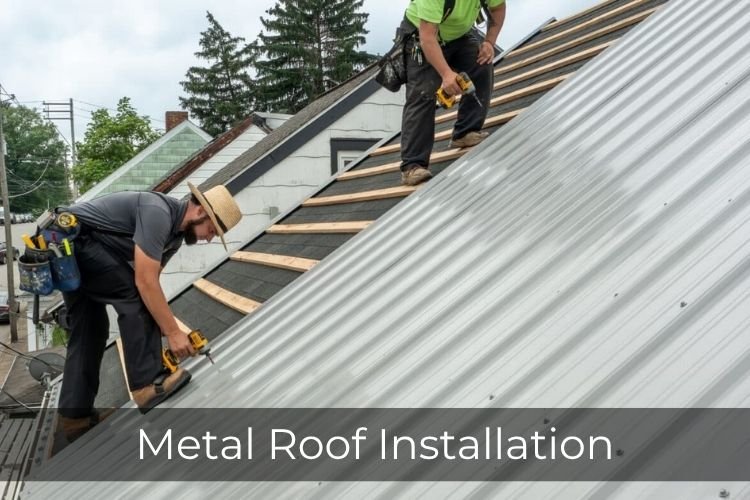
A standing seam metal roof is one of the most durable options for a Scottsdale or Phoenix home, but it is not the right fit for every roof. This guide explains how it is built, how it performs in desert heat and monsoon storms, and what to check before you commit. If you are weighing materials, our metal roofing service page covers the full range of systems Tip Top Roofing Service installs and repairs.
What makes a roof “standing seam”
Standing seam panels run in one piece from the eave up to the ridge, with raised vertical seams where one panel locks into the next. The fasteners sit underneath the panels in concealed clips, so there are no screw heads exposed to the sun. That one design detail is the main difference from exposed-fastener metal panels, which are screwed through the face of the metal with rubber washers.
Why the design suits Arizona heat
- Thermal movement. Metal expands in afternoon heat and contracts overnight. Concealed clips let standing seam panels slide slightly with that movement, instead of working fasteners loose over the years.
- Fewer penetrations. Every exposed screw is a place where a washer can dry out and crack under UV. Hidden fasteners remove most of that maintenance.
- Reflective finishes. Light, reflective factory finishes bounce more solar heat than dark roofs, which can help attic temperatures and cooling loads. Finish choice matters, so ask for the manufacturer’s finish and fade information.
- Monsoon wind. Interlocked panels held by a continuous clip system resist uplift well when they are installed correctly and the edges and ridge are detailed properly.
Standing seam vs. exposed-fastener metal vs. stone-coated steel
Exposed-fastener panels cost less up front and are common on patios, sheds and some commercial buildings, but the screws need periodic checking. Stone-coated steel gives a tile or shingle look with a metal base, and we cover it in our stone-coated steel roofing guide. Standing seam has the cleanest, most modern look and the fewest exposed fasteners. For a cost breakdown of what drives pricing, see our metal roof cost article.
Questions homeowners ask
Are standing seam roofs noisy in a monsoon?
Not usually. Noise depends mostly on the decking and underlayment beneath the metal. We explain this in are metal roofs noisy.
Does it work on a low-slope roof?
Standing seam is designed for pitched roofs. Very low slopes and flat sections usually need a different system, such as a membrane or a coating. Our flat roofing and roof coating pages cover those options.
Will my HOA approve it?
Many Scottsdale and Phoenix communities regulate roof material and color. Submit the panel profile and a finish sample before you order. Our guide to HOA roof approval walks through the process.
What color and finish should I choose?
Review options in our metal roof styles and finishes article, and ask to see a physical sample in direct Arizona sun, not just indoors.
What to ask a roofer before you sign
- Which panel gauge, clip type and underlayment are specified for high desert temperatures?
- How are valleys, skylights, vents and the ridge flashed?
- What are the manufacturer warranty terms for the panel and the finish, and what are the workmanship terms?
- Is the crew experienced with standing seam, which needs different tools and skills than shingles or tile?
Next step
If a standing seam roof is on your shortlist, we can look at your roof, pitch and structure and tell you honestly whether it is a good fit. Request a free estimate or call Tip Top Roofing Service at (480) 877-1643. We are located at 6830 E 5th Ave Ste 205 in Old Town Scottsdale and serve the Phoenix metro. ROC #355034, GAF certified, BBB accredited.