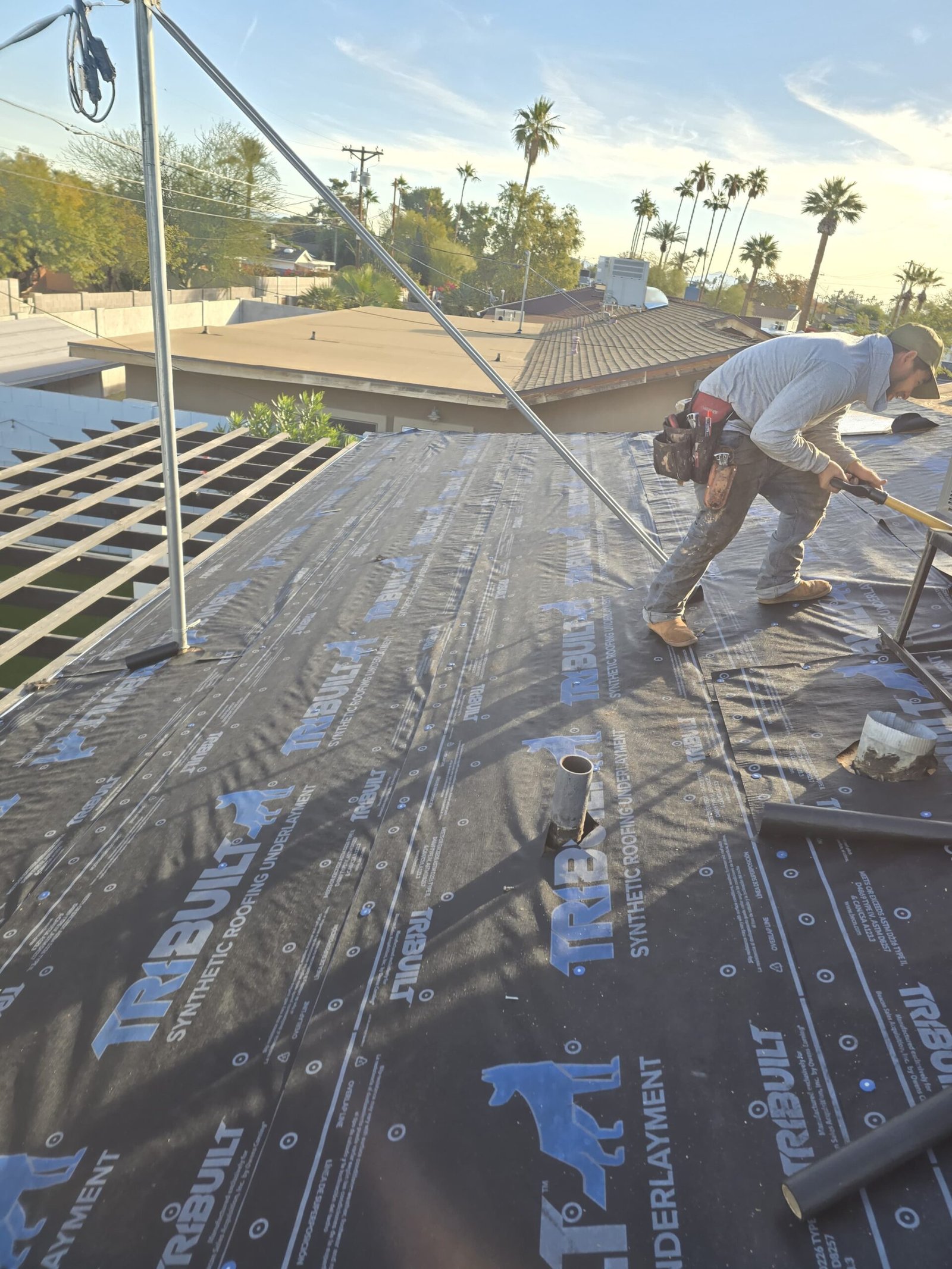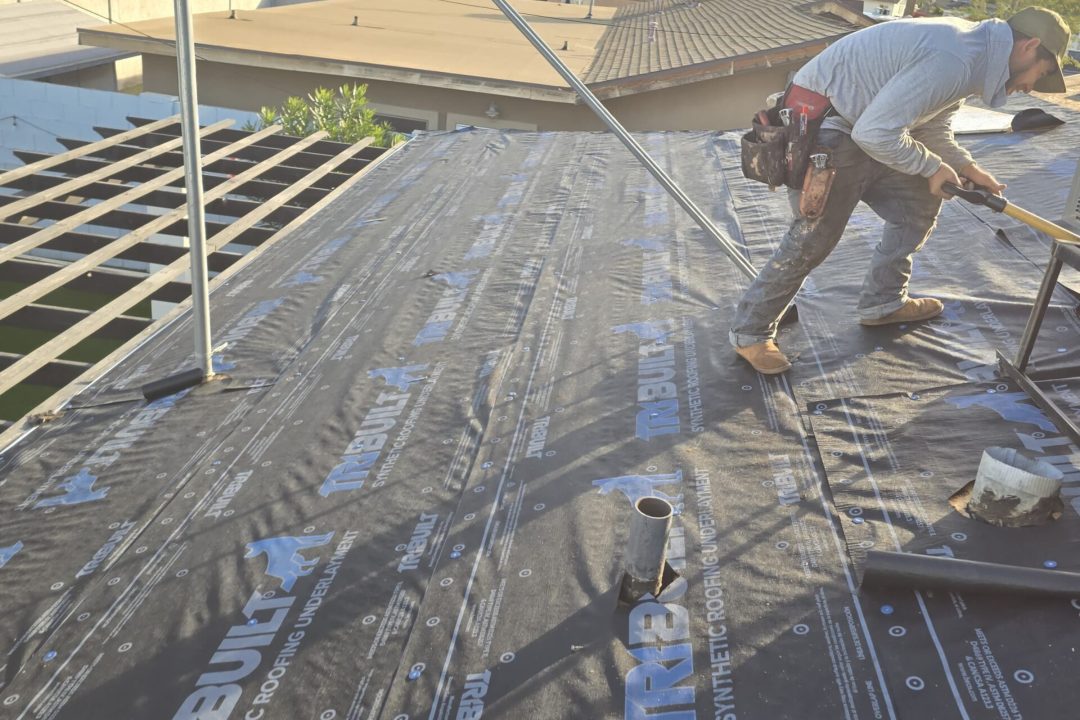
Short answer: Most HOAs in Scottsdale and the Phoenix area expect an architectural review application before a roof replacement, and a complete package usually includes a manufacturer’s product data sheet, the exact color name and code, a physical sample or color chip, and a clear description of the work. Your roofer can supply most of that. Your CC&Rs and design guidelines decide the rest, including how long review takes.
Our earlier guide, HOA Roofing Rules in Scottsdale & Phoenix, covers which roofing projects typically need approval. This 2026 follow-up focuses on the paperwork itself: what to put in the submission, how committees judge whether a roof “matches,” how to plan around review timing, and what Arizona law says about enforcement if approval gets skipped.
Start With Your Own Governing Documents
Every association is different, so the first step is always to read the documents that bind your lot: the recorded declaration (CC&Rs), any architectural or design guidelines, and the review application form itself. Look for a roofing section, an approved color list, required attachments, and how the committee communicates decisions.
If you do not have copies, Arizona law helps. Under A.R.S. 33-1805, association records must be made reasonably available for examination by members, the association has ten business days to fulfill a request to examine records or to provide copies, and copies may cost no more than fifteen cents per page. Those statutes sit in the chapter of Arizona law that applies to planned communities (A.R.S. 33-1801). If you live in a condominium, a separate part of Arizona law applies, so ask your association which rules govern your building.
What to Include in a Roof Approval Submission
Requirements vary, but these are the items architectural committees in the Valley most often ask for. Assembling all of them up front is the simplest way to avoid a “resubmit” letter.
1. The completed application form
Fill in every field, sign where required, and list your contractor’s name and Arizona Registrar of Contractors license number if the form asks for it. Some forms ask whether the work is a full replacement or a partial one, so be specific.
2. Manufacturer product data sheet
This is the one-to-two page technical document the manufacturer publishes for the product. It identifies the manufacturer, the product line, the profile or style, dimensions, and often the available colors. Committees use it to confirm you are proposing a real, specific product rather than a general category.
3. Exact color name and color code
“Brown tile” is not enough. Submit the manufacturer’s full color name along with any color or blend code, exactly as it appears on the product literature. If your community keeps an approved palette, quote the palette entry next to the manufacturer name so the reviewer can match them line for line.
4. A physical sample or color chip
Many committees want to see the actual tile, a shingle sample, or a manufacturer color chip, because colors on screens and printouts vary. Ask your roofer for a sample from the same product line you will install.
5. A plain-language scope of work
Describe what is being removed, what is going on, and which visible components will change: ridge and hip pieces, flashing and vent colors, drip edge, and gutters if they are part of the project. Recent photos of the existing roof from the street help reviewers understand the before and after.
6. Anything your guidelines specifically require
Some associations ask for a roof plan, a neighbor acknowledgment, or a contractor insurance certificate. Only your documents can tell you, so read the checklist on the application carefully.
How Committees Judge a “Match”
When a community requires a new roof to match the neighborhood or the original roof, reviewers generally look at three things together:
- Color: the specific color or blend, not just the color family. Tile blends with several tones are compared as a whole.
- Material: concrete tile, clay tile, asphalt shingle, metal, or a foam or coated low-slope roof. A change in material is often reviewed more closely than a color change.
- Profile: the shape of the product, such as flat, S-shaped or barrel tile, or the dimensional pattern of a shingle. Two products in the same color can look very different on a roof if the profile differs.
A common snag in older Scottsdale and Phoenix neighborhoods is a discontinued color. If the original product is no longer made, ask your roofer to find the closest current product from the manufacturer and submit it with a short note explaining that the original is unavailable. Partial replacements raise the same question in reverse: new tile next to weathered tile may not look identical, so tell the committee how the transition will be handled.
Planning Around Review Timing
How long review takes depends on your governing documents and on how often the committee meets. Some guidelines set a response period, and some say what happens if the committee does not respond in time. Others are silent. Read that section before you set an installation date, and build the review period into your schedule rather than booking the crew first.
Arizona law does set one structural rule for planned communities. Under A.R.S. 33-1817, a design review or architectural committee must include at least one member of the board of directors, who serves as chairperson. That means a board member is involved in every review decision, which can be useful if you need to follow up on a pending application.
An urgent leak is different from a planned replacement. Temporary protection or a small roof repair that keeps water out may be possible while a full replacement application is pending. Check your guidelines for how they treat emergency work, and notify the association in writing.
What Happens If You Skip HOA Approval
Your CC&Rs describe the association’s remedies, which can include requiring the work to be brought into compliance. Arizona law adds procedural protections for owners in planned communities. Under A.R.S. 33-1803:
- The board may impose reasonable monetary penalties for violations only after notice and an opportunity to be heard.
- An owner who receives a written violation notice may send a written response by certified mail within 21 calendar days of the notice date.
- Within ten business days of receiving that response, the association must reply in writing with the provision allegedly violated, the date of the violation or when it was observed, the name of the person or persons who observed it, and the process for contesting the notice.
- The owner may petition for an administrative hearing through the state real estate department for disputes within its jurisdiction.
Those protections help with fairness, but they do not make an unapproved roof acceptable. Paying to change a finished roof costs far more than waiting for approval.
A Note on Solar and HOA Approval
Homeowners sometimes hear that Arizona law limits what an HOA can say about roofs. The statute people usually mean is A.R.S. 33-1816, and it is narrower than that. It says an association cannot prohibit the installation or use of a solar energy device, and it may adopt reasonable placement rules that do not prevent installation, impair the device, or adversely affect its cost or efficiency. It does not address roofing materials, colors or profiles, so it does not override your community’s roofing guidelines.
How Your Roofer Helps With the HOA Package
A roofer who works in HOA communities every week can make approval much smoother. At Tip Top Roofing Service we provide the manufacturer product data sheet, the exact color name and code, and a sample or chip for the product we are quoting, and we write the scope so it lines up with what reviewers look for. We do not start installation until you have written approval. City permits are a separate process from HOA approval; our guide to roof replacement in Scottsdale covers how the whole project fits together.
Frequently Asked Questions
What documents does an HOA usually want for a new roof?
Typically a completed application, the manufacturer’s product data sheet, the exact color name and code, a sample or color chip, and a written scope of work. Your community’s guidelines may add items such as photos or a roof plan.
How do I get a copy of my HOA’s architectural guidelines?
Ask the association or its management company in writing. For planned communities, A.R.S. 33-1805 gives associations ten business days to make records available for examination or to provide copies.
Does Arizona’s solar law let me ignore HOA roofing rules?
No. A.R.S. 33-1816 protects the right to install solar energy devices. It does not address roofing materials or colors.
Does HOA approval replace a city permit?
No. They are separate. Your HOA reviews appearance under its governing documents, while the city decides whether the work needs a building permit. You may need both.
Can I replace my roof without HOA approval?
In most HOA communities, you should not. CC&Rs usually require architectural approval before exterior changes, and many guidelines treat a full roof replacement as one even when the new roof looks similar. Skipping approval can lead to a violation notice, monetary penalties after notice and an opportunity to be heard, and in some cases a demand to redo the roof in an approved product at your own expense. The safer path is to submit the application, product data sheet, exact color name and code, a sample and a scope of work before the crew is booked. Some associations exempt true like-for-like replacements, so check your own CC&Rs and design guidelines and ask the association in writing. This is general information, not legal advice.
Get Your HOA Roof Package Started
Tip Top Roofing Service is a licensed Arizona roofing contractor (ROC #355034), GAF certified, BBB A rated, and backed by more than 130 Google reviews. We will gather the product data sheets, color names and samples your committee needs. Call Tip Top Roofing Service at (480) 877-1643 or visit our office at 6830 E 5th Ave in Old Town Scottsdale for a free estimate.