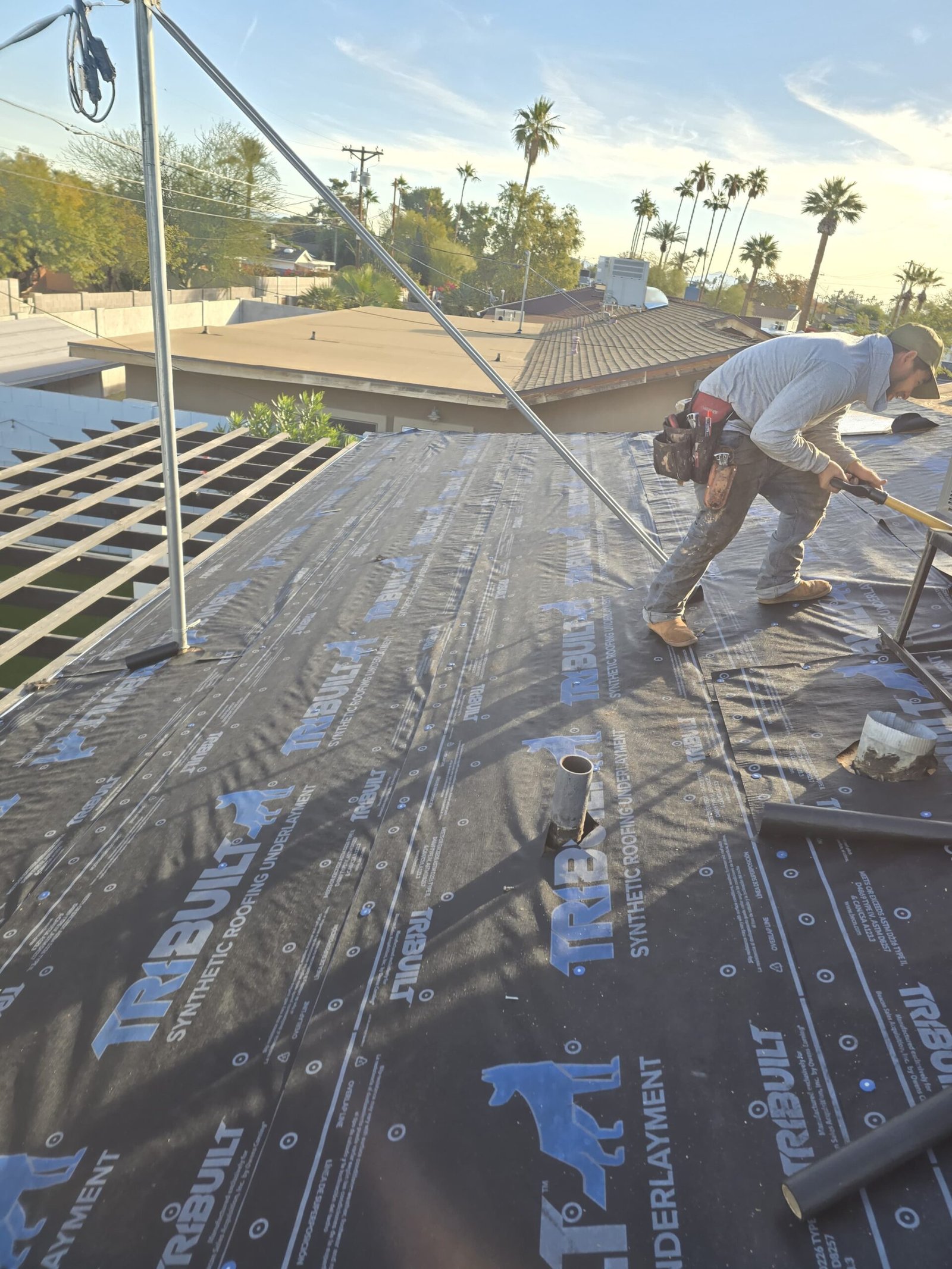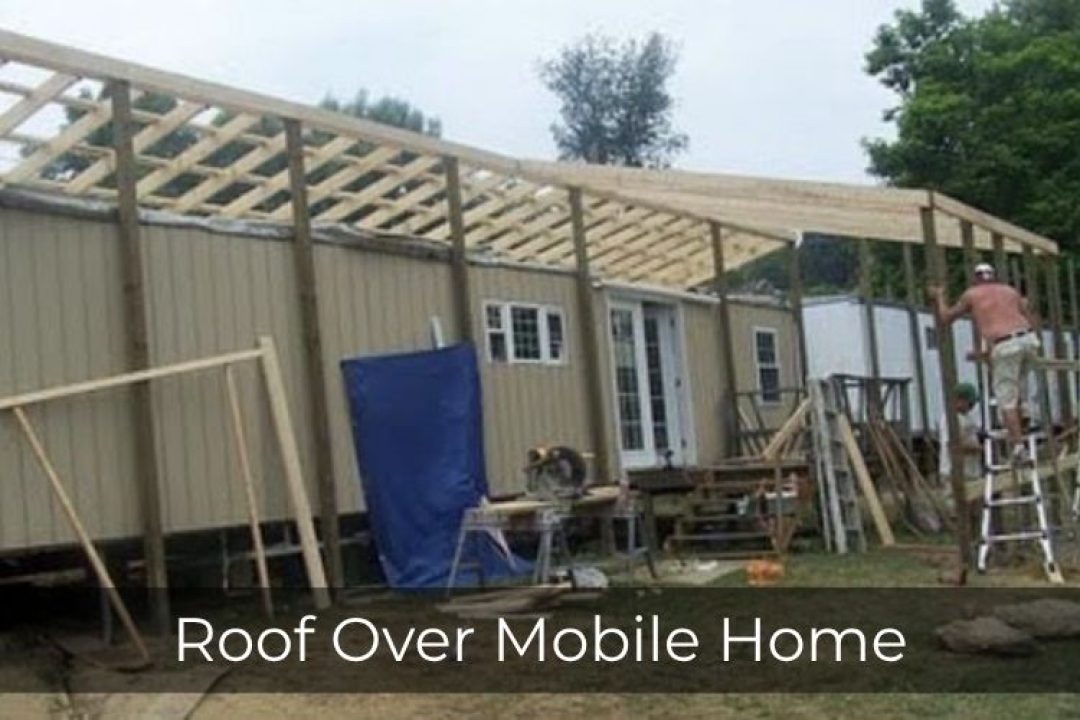
Short answer: A mobile home roof over adds a new, pitched roof on top of the existing one using a lightweight truss or purlin framework, insulation and a fresh surface such as metal panels, TPO or spray foam. In Arizona it usually beats a full tear-off replacement when the original deck and framing are still sound, because it adds insulation and drainage without exposing the home to the weather. A recoat or targeted repair is enough when the roof is only worn on the surface.
Owners of single-wides and double-wides across the Valley ask us the same question every summer: patch it again, put a roof over it, or tear it all off? This guide walks through how each option works on a manufactured home, the Arizona factors that tip the decision, what affects the price, and what the project looks like from start to finish. For an overview of everything we do on these homes, see our mobile home roofing services page.
What Is a Mobile Home Roof Over?
A roof over (also written roof-over or roofover) is a second roof system built directly above the factory roof. The original roof stays in place and becomes a base layer, while a new structure carries the weather surface. On manufactured homes, it is the most common way to correct the two weaknesses most factory roofs share: very low slope and very little insulation.
A typical system has three parts:
- Framing: lightweight steel or wood trusses, or a series of purlins (horizontal rails), fastened along the edges and over the existing roof to create a gentle pitch toward the eaves.
- Insulation: rigid board, foam or blanket insulation placed in the new cavity between the old roof and the new surface, along with an air space that helps slow heat moving down into the ceiling.
- Surface: factory-finished metal panels for pitched systems, or a reflective TPO membrane or sprayed polyurethane foam with a protective coating for flatter profiles.
Because the new roof is designed around the home’s weight limits, the materials are lighter than those used on many site-built houses. Concrete tile, for example, is not a fit for most manufactured homes.
When a Recoat or Repair Is Enough
Not every aging mobile home roof needs a new system. A recoat or a targeted repair is often the better call when:
- The metal or rolled roof is still solid underfoot, with no soft spots, sagging or rotted decking.
- Leaks trace back to a few specific spots, such as loose fasteners, a failed seam, cracked sealant around a vent, or the joint where a carport or addition ties in.
- Interior ceilings show limited staining and no signs of long-term water damage.
- You plan to sell or move within a few years and want the roof watertight in the meantime.
In those cases we clean the surface, reseal seams and fasteners, repair the problem areas and, if appropriate, apply a bright elastomeric coating that reflects sunlight and adds a continuous waterproof layer. Our mobile home roof repair in Mesa page explains the repair side in more detail.
When a Roof Over Beats a Full Replacement
A full replacement on a manufactured home means stripping the factory roof down to the framing and installing new decking and a new surface. That is the right answer when the framing itself is compromised. Otherwise, a roof over usually comes out ahead for these reasons:
- The home stays closed: the old roof remains in place during installation, so the interior is not opened to monsoon storms or dust.
- Pitch is added: most factory roofs are nearly flat, and the new framework gives water somewhere to go instead of ponding.
- Insulation is added: the new cavity creates room for insulation that the original thin roof never had.
- Less debris: without a tear-off, there is far less material to haul away, and less disruption in tight park lots.
- Repeat leaks stop: homes that have been coated and patched several times often have too many failure points to chase one by one.
A full replacement or structural repair should come first if inspection finds rotted rafters, badly sagging sections, or water damage that has spread into the framing. A roof over should never be used to hide a structural problem.
Heat, Insulation and Noise Benefits in Arizona
Single-wide and double-wide homes have very little attic space, so summer heat travels through the ceiling quickly. A properly built roof over changes that in several ways. The reflective surface sends back much of the sun’s energy before it reaches the home, the new air space and insulation slow what does get through, and better venting lets hot air escape from the cavity. Owners often notice that rooms under the roof feel steadier on a July afternoon and that the air conditioner cycles less.
The U.S. Department of Energy notes that adding roof insulation or a roof cap is one of the main retrofit options for manufactured homes, and that it is a job for trained professionals rather than do-it-yourselfers. In practice, the insulation thickness you can add depends on the framing height and on what the home’s structure can carry.
Noise is the other common complaint. Bare metal roofs can be loud during monsoon downpours and can pop and tick as they expand and contract in the heat. The insulation layer and the separation between the new panels and the old roof dampen both, which makes the home noticeably quieter.
Park, HOA and Permit Considerations
Before any work starts, check two sets of rules: your community’s and the government’s.
Community rules
Many manufactured homes in the Valley sit in age-restricted, resort-style or HOA-governed communities. These often set rules on roof color, material, overhangs and work hours, and some require written approval before a contractor begins. Ask your park office or association for its current guidelines, then submit the product information and color selection with plenty of lead time.
Permits
Permit requirements depend on where the home sits. Homes inside city limits generally go through the local building department, while homes in unincorporated areas go through the county. Manufactured homes are also built to federal HUD construction standards, and in Arizona the Department of Housing oversees installation standards and inspections for manufactured housing, sometimes through agreements with local jurisdictions. Manufactured-home rules may therefore apply on top of local requirements, so confirm which office handles your address before the project is scheduled. Tip Top Roofing Service checks this for every job we quote.
What Affects the Cost of a Mobile Home Roof Over
Every home is different, so pricing is set after we see the roof. The factors below have the biggest influence on the final quote for a manufactured home:
| Factor | Why it matters |
|---|---|
| Home size (single, double or triple-wide) | Roof area and the length of each run set the quantity of framing, insulation and surface material. |
| Surface material | Metal panels, TPO membrane and spray foam differ in material cost, labor and the framing they need. |
| Framing type and added pitch | A taller truss system adds slope and insulation space but uses more material than low-profile purlins. |
| Insulation package | Thicker or higher-performing insulation changes material quantities and can change framing height. |
| Existing roof condition | Soft decking, rust-through or damaged framing must be repaired before the new system goes on. |
| Additions, carports and awnings | Each tie-in needs flashing and detail work so the new roof drains cleanly past attached structures. |
| Vents, skylights and rooftop equipment | Penetrations must be extended, flashed and sealed through the new layer. |
| Permits and community requirements | Required inspections, approved colors or specified products can affect scheduling and materials. |
See how our roof-over mobile home service in Mesa works or call Tip Top Roofing Service at (480) 877-1643 for a free estimate.
The Roof Over Process, Step by Step
- Estimate and inspection: we walk the roof carefully, check the ceilings inside, and look for soft spots, rust and failed tie-ins.
- Approvals and permits: we provide product data for your community and confirm which permits apply to the address.
- Preparation: loose fasteners, open seams and damaged areas on the old roof are repaired so the base layer is sound.
- Framing: the truss or purlin system is fastened along the home’s edges and over the existing roof to create the new pitch.
- Insulation: insulation is placed in the new cavity, and venting is planned so the space can breathe.
- New surface: metal panels are fastened and trimmed, or TPO or foam is installed and finished with its protective layer.
- Details and cleanup: vents, edges and addition tie-ins are flashed and sealed, then the site is cleaned and the roof is reviewed with you.
Most owners stay in the home throughout the project. Expect some noise during framing and panel installation. Homeowners east of Mesa can read about our roof over mobile home service in Apache Junction.
Frequently Asked Questions
Is a roof over better than replacing a mobile home roof?
When the framing and deck are sound, a roof over is usually the better value because it adds pitch and insulation and keeps the home closed during the work. A full replacement is the right choice when inspection finds rotted or damaged framing.
Can a mobile home roof over go on top of a leaking roof?
Yes, once the leaks are diagnosed and any water-damaged areas are repaired. The existing roof needs to be structurally sound before the new framing is attached to it.
Do I need a permit for a mobile home roof over in Arizona?
Often, yes. Depending on the address, the local building department, the county, or Arizona’s manufactured housing office may be involved, and park or HOA approval may also be needed. Confirm the requirements before work is scheduled.
Which material is best for a mobile home roof over in Arizona?
Factory-finished metal over a pitched framework is the most common choice for heat and drainage. TPO or spray foam suits homes that need a lower profile. The right option depends on the home’s structure and your community’s rules.
Get a Clear Answer for Your Manufactured Home
Tip Top Roofing Service is a licensed Arizona roofing contractor (ROC #355034), GAF certified and BBB A rated, with more than 130 Google reviews. We will tell you plainly whether your home needs a repair, a recoat or a full mobile home roof over, and we offer 0% financing for qualified buyers.
📞 Call Tip Top Roofing Service today at (480) 877-1643
📧 Email: info@tiptoproofingservice.com
🌐 Website: https://tiptoproofingservice.com/