“Metal roofs are loud in the rain” is one of the most persistent myths in roofing, and it’s rooted in a real memory: a barn or shed with thin metal sheets screwed directly to open framing, nothing underneath but air. A residential metal roof built with a solid deck, underlayment, and insulation is a completely different assembly. Here’s what the actual sound data shows.
The Real Numbers
A metal roof over open framing, the barn-style setup, registers around 61 decibels in rain. A metal roof installed over a complete residential assembly, solid deck, underlayment, attic insulation, measures around 52 decibels, close to a quiet conversation or the hum of a refrigerator. Asphalt shingle over the same assembly measures roughly 46 to 50 decibels. The gap between properly installed metal and shingle is a matter of a few decibels, below the threshold most people can actually perceive.
Why the Assembly Matters More Than the Metal
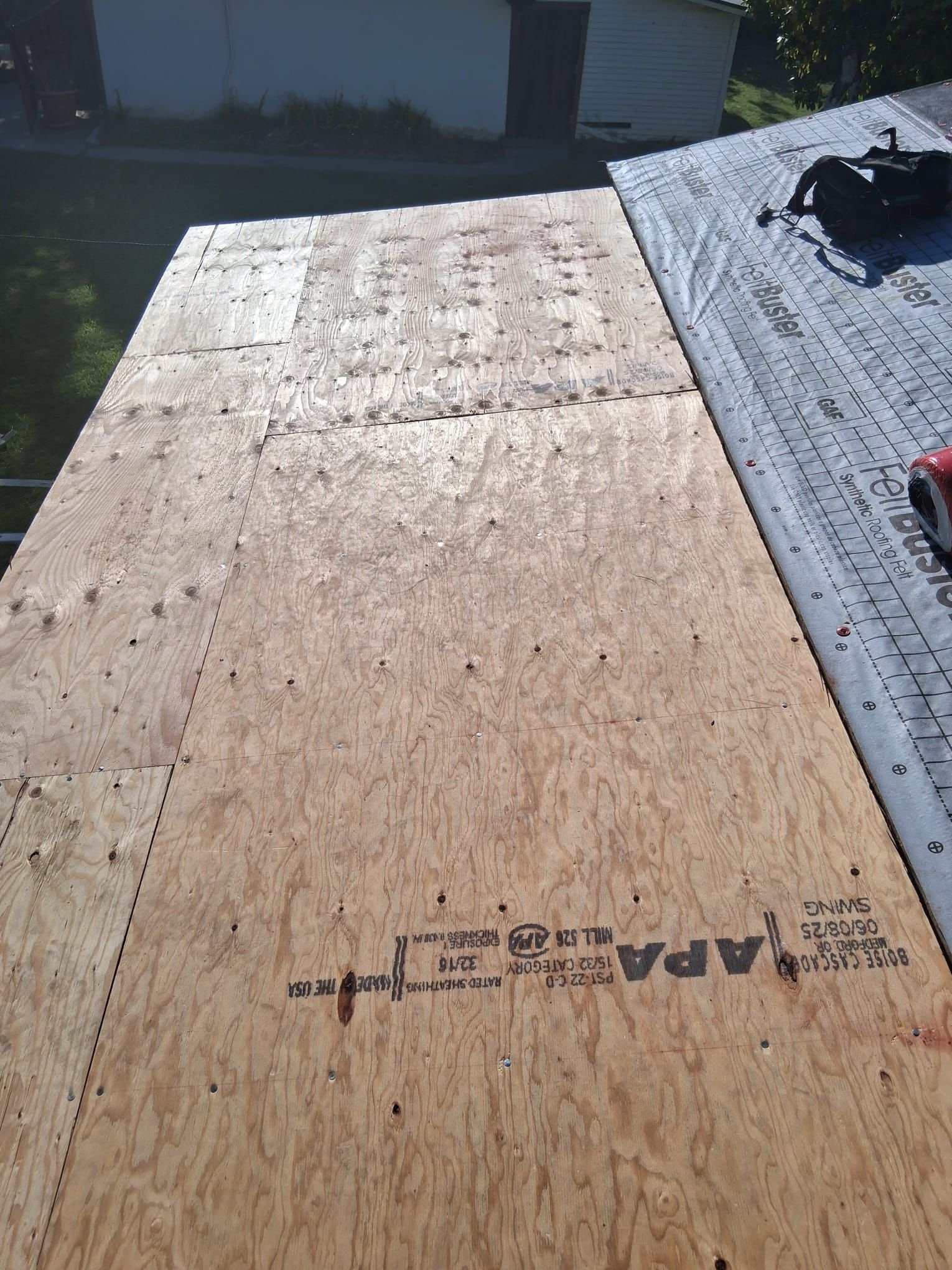
The surface material you see from the street is one thin layer in a multi-layer system. Solid decking absorbs vibration. Underlayment adds another sound barrier. Attic insulation and the air space above the ceiling absorb the rest. It’s this full assembly, not the metal panel itself, that determines how much rain noise actually reaches the living space below.
What Actually Reduces Noise Further
- Rigid insulation board between the deck and panels adds an extra absorption layer for noise-sensitive homeowners.
- Spray foam on the underside of the deck can bring noise levels down to 40 to 50 decibels, in some cases quieter than a shingle roof with standard insulation.
- Panel thickness and material. Thicker panels absorb impact energy more effectively, and steel generally outperforms aluminum due to higher mass and density.
- Standing seam over exposed-fastener panels. Concealed fasteners reduce gaps that could otherwise amplify sound.
What About Hail?
Hail is louder than rain on any roof type, since hailstones are denser and hit harder. On a properly decked and insulated metal roof, hail sounds muffled and comparable to hail on shingle or tile, not the amplified drumming people picture from an exposed panel.
The Bottom Line
If noise is the one thing holding you back from metal, the data doesn’t support the concern for a properly built home. A solid deck, quality underlayment, and standard attic insulation, the baseline for any residential metal install, already puts rain noise within a few imperceptible decibels of asphalt.
Frequently Asked Questions About Metal Roof Noise
Are metal roofs actually loud in the rain?
Not on a properly installed residential roof. With a solid deck, underlayment, and attic insulation, indoor rain noise measures within a few decibels of asphalt shingle, a difference most people can’t perceive.
Why do people think metal roofs are noisy?
The association comes from barns, sheds, and agricultural buildings, where thin metal panels are installed directly over open framing with no deck, underlayment, or insulation underneath, creating a drum-like effect that doesn’t exist on a finished home.
Is hail louder on a metal roof than other materials?
On a properly decked and insulated metal roof, hail sounds muffled and comparable to hail on shingle or tile roofs, not the amplified banging associated with an exposed barn-style panel.
Can I make a metal roof even quieter?
Yes. Adding rigid insulation board or spray foam under the deck, and choosing thicker panels or a standing-seam profile, can further reduce noise below a standard installation.
Get the Full Picture on Metal Roofing for Your Home
As a local roofing company serving Scottsdale, AZ, Tip Top Roofing Service will walk you through the full assembly for a quiet, properly built metal roof, not just the panel choice.
📞 Call Tip Top Roofing Service today at (480) 877-1643
📧 Email: info@tiptoproofingservice.com
🌐 Website: https://tiptoproofingservice.com/