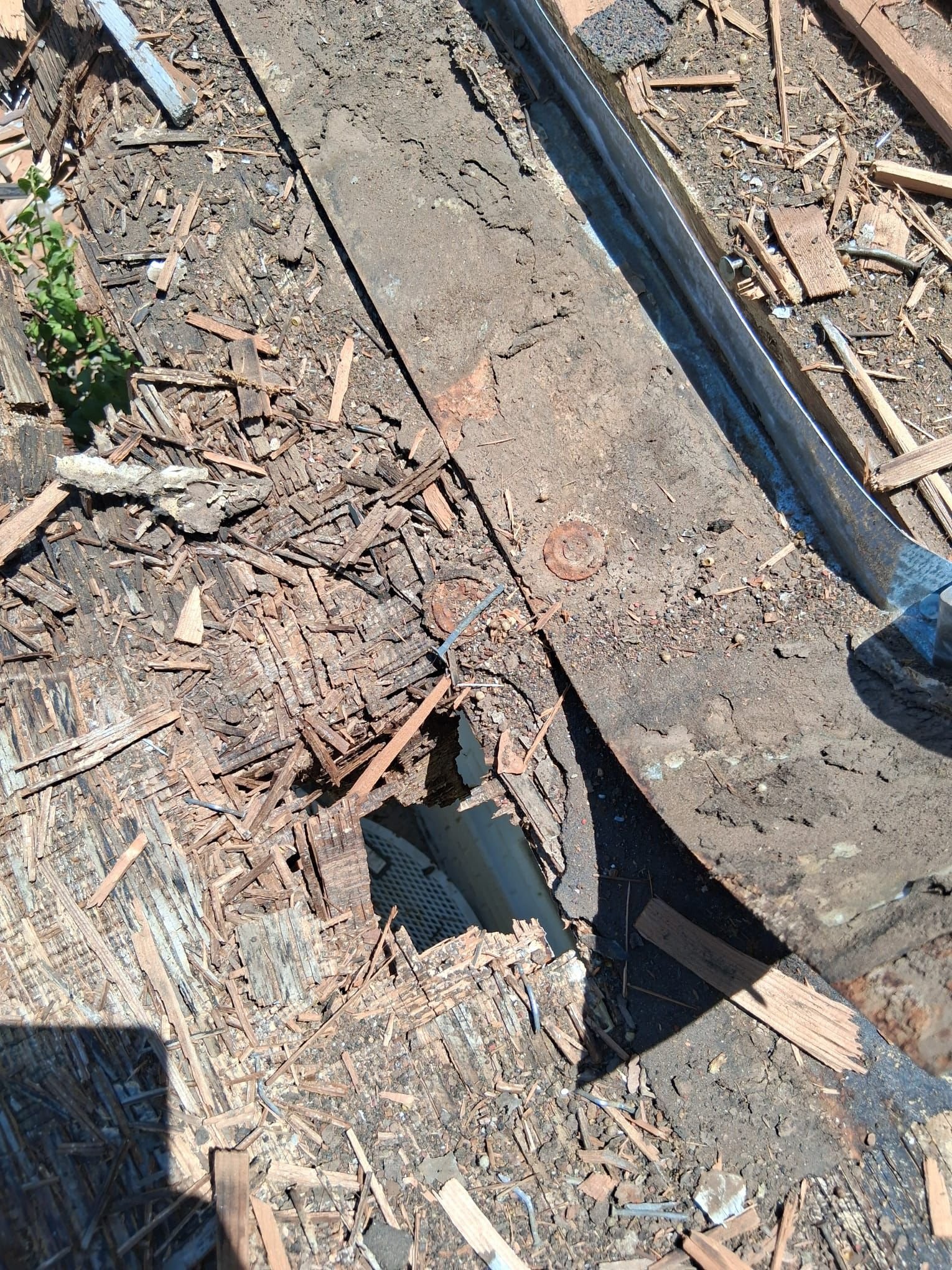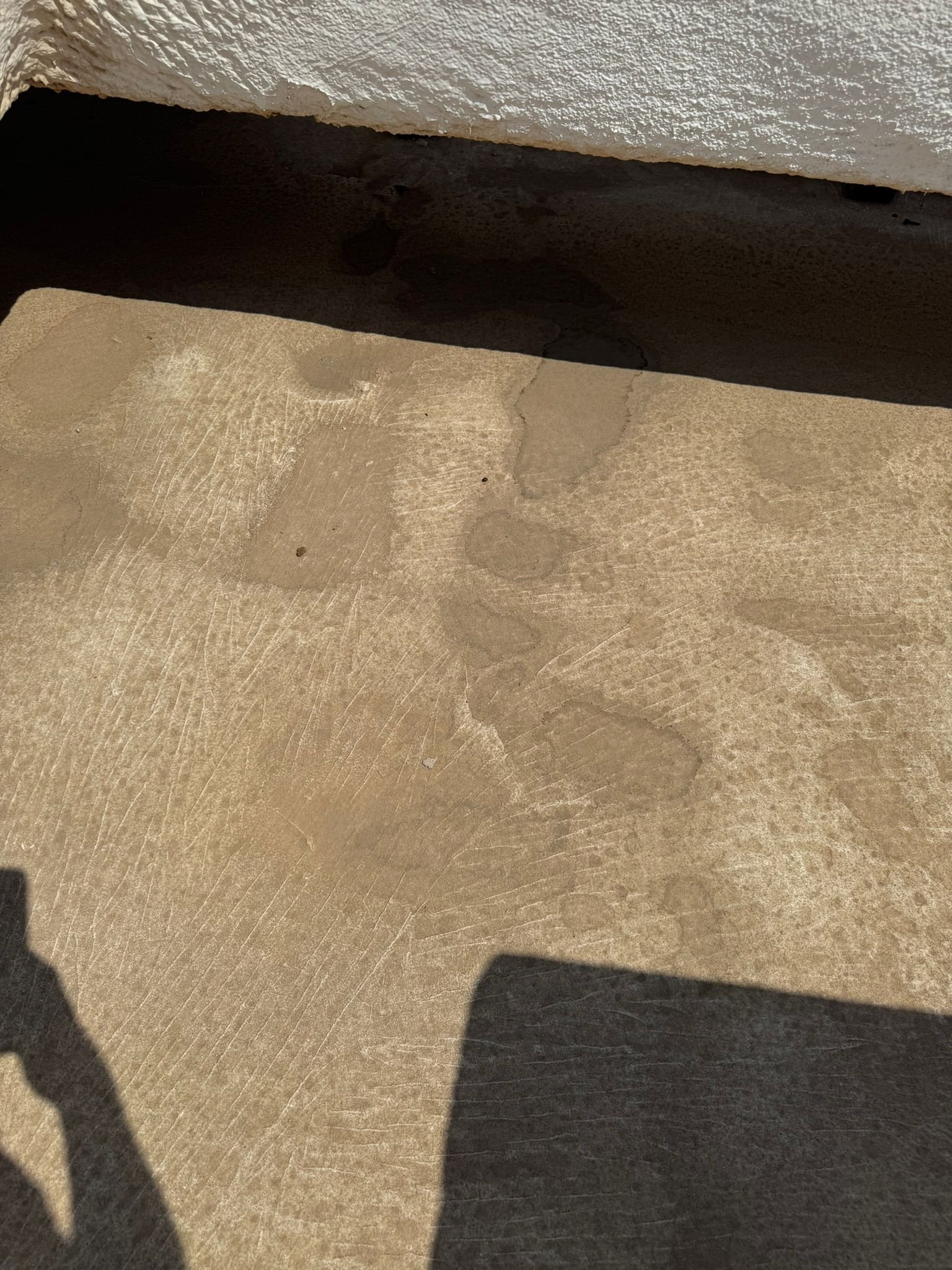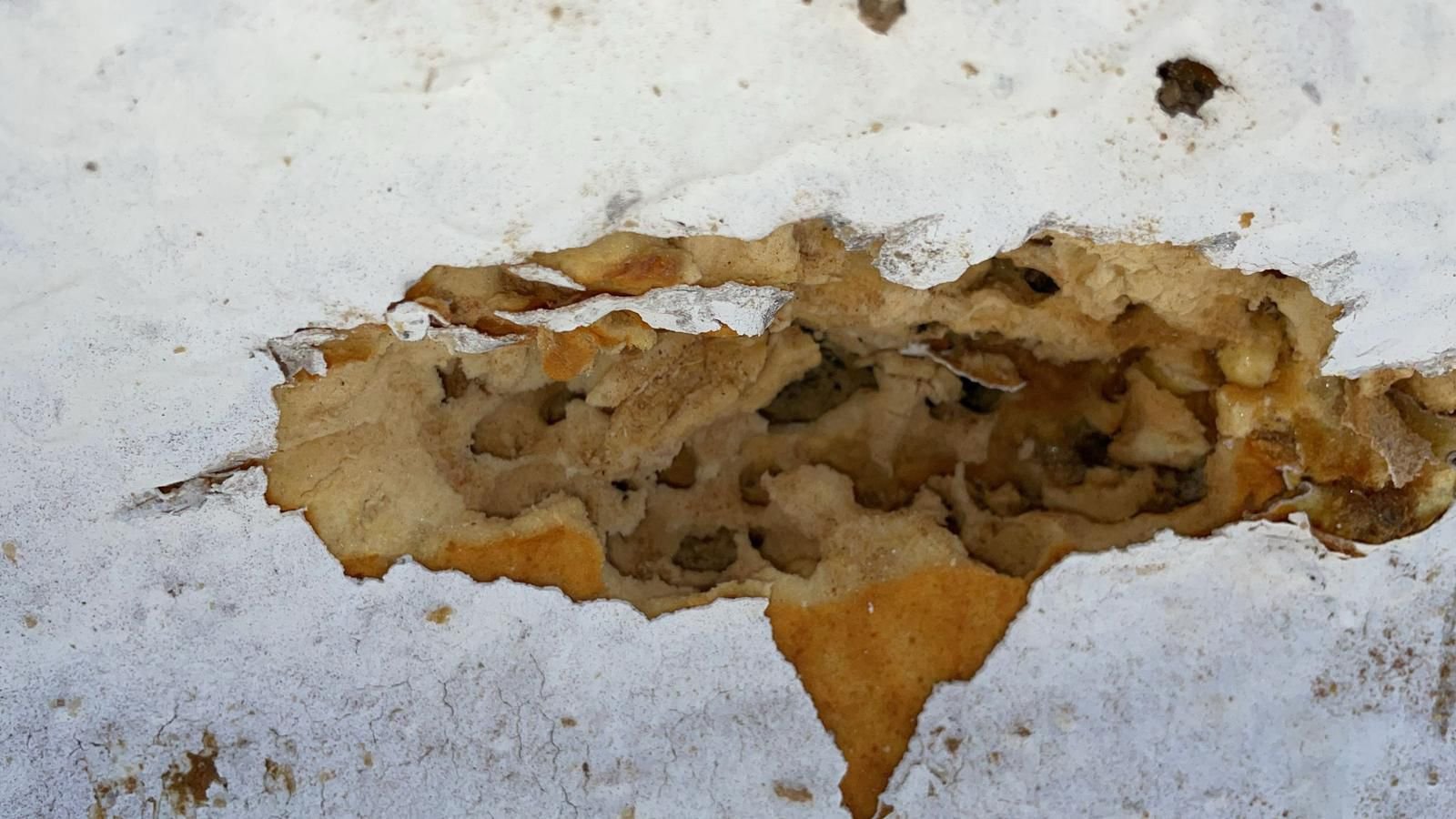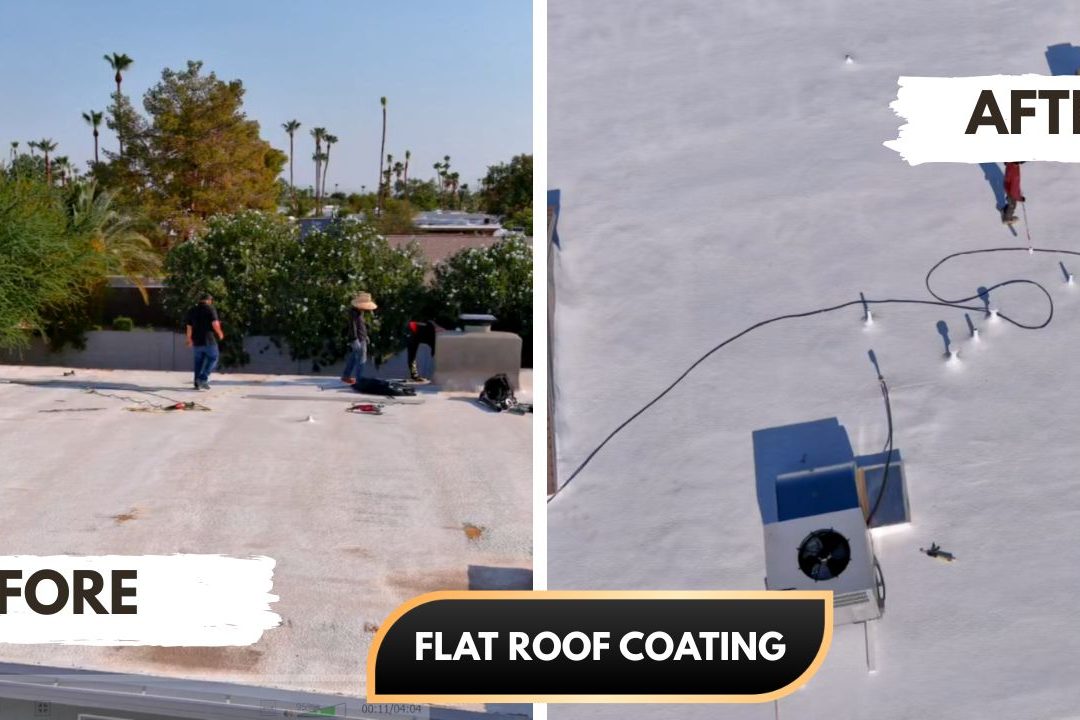
Flat roofs take Arizona heat differently than a sloped tile or shingle roof. Surface temperatures on a flat membrane can hit 150 to 180 degrees in summer, and the flat profile means that heat, and the thermal cycling that comes with it, has nowhere to shed the way a pitched roof does. Here’s what that actually does to foam and membrane systems over time.
Thermal Cycling: The Core Stress
Phoenix’s temperature swing, from winter nights near 20 degrees to summer afternoons past 115, puts flat roof materials through constant expansion and contraction. That cycling is the primary long-term stress on any membrane system, and it concentrates at the weakest points: seams, flashings, and terminations.
What Heat Does to TPO Specifically
UV exposure breaks down TPO’s polymer chains over time, causing the surface to chalk, or develop a powdery residue as the top layer degrades. As the membrane ages, it loses elasticity, which puts increasing stress on seams that were originally heat-welded strong. Phoenix contractors report TPO showing significant UV-related degradation at 10 to 12 years, notably earlier than the 15 to 20 year lifespan manufacturers claim for moderate climates. Membrane thickness matters here: 60-mil and 80-mil products contain more UV stabilizer and outlast thinner 45-mil membranes under the same Arizona sun.
What Heat Does to Foam Roofing
Sprayed foam’s vulnerability isn’t the foam itself, it’s the protective topcoat. The topcoat blocks UV light that would otherwise degrade the foam within a year or two, and its thickness directly determines warranty length. Skip a scheduled recoat and the topcoat degrades, exposing the foam underneath to direct UV damage. Foam roofs on a proper recoat cycle, roughly every 10 to 15 years, can outlast a single TPO service life across multiple recoat cycles.
Why Reflectivity Matters More on Flat Roofs
White TPO reflects roughly 80 to 88% of sunlight back off the surface, keeping the membrane itself cooler and reducing how much heat radiates into the building below. White elastomeric coatings with high solar reflectance can cut surface temperatures 30 to 40 degrees and reduce cooling costs 10 to 25%. On a flat roof, where the entire surface faces the sun directly for most of the day, that reflectance difference matters more than it would on a pitched roof with varying sun angles.
What Actually Extends Flat Roof Life in Arizona Heat
- Thicker membrane grade. 60-mil or 80-mil TPO outperforms 45-mil under the same sun exposure.
- Proper heat-welding. Under-welded seams fail early; over-welded seams burn through the membrane. Both require an experienced installer calibrated for Arizona ambient temperatures.
- Scheduled recoating on foam systems. Recoat on schedule and the topcoat, and the warranty, stay intact.
- Twice-yearly seam inspection. Since thermal cycling concentrates stress at seams, catching early separation before monsoon season prevents a small issue from becoming a leak.
Frequently Asked Questions About Heat and Flat Roofs
How hot does a flat roof get in Arizona summer?
Surface temperatures commonly reach 150 to 180 degrees Fahrenheit, well above ambient air temperature, which accelerates membrane and coating degradation.
Does TPO last as long in Arizona as manufacturers claim?
Often not. While manufacturers claim 15 to 20 years in moderate climates, Phoenix-area contractors commonly see significant UV-related degradation by 10 to 12 years, particularly on thinner 45-mil membranes.
Why does foam roofing need recoating?
The topcoat is what blocks UV light from degrading the foam underneath. Skipping a scheduled recoat, typically needed every 10 to 15 years, exposes the foam to direct UV damage and voids the warranty.
Does roof color matter on a flat roof in Arizona?
Yes, significantly. White or light-reflective membranes and coatings can reduce surface temperature by 30 to 40 degrees compared to a darker surface, which meaningfully reduces heat-driven degradation.
Get a Flat Roof Built for Arizona Heat
As a local roofing company serving Scottsdale, AZ, Tip Top Roofing Service specs membrane thickness and coating systems for Arizona’s specific heat load, not a generic national standard.
📞 Call Tip Top Roofing Service today at (480) 877-1643
📧 Email: info@tiptoproofingservice.com
🌐 Website: https://tiptoproofingservice.com/