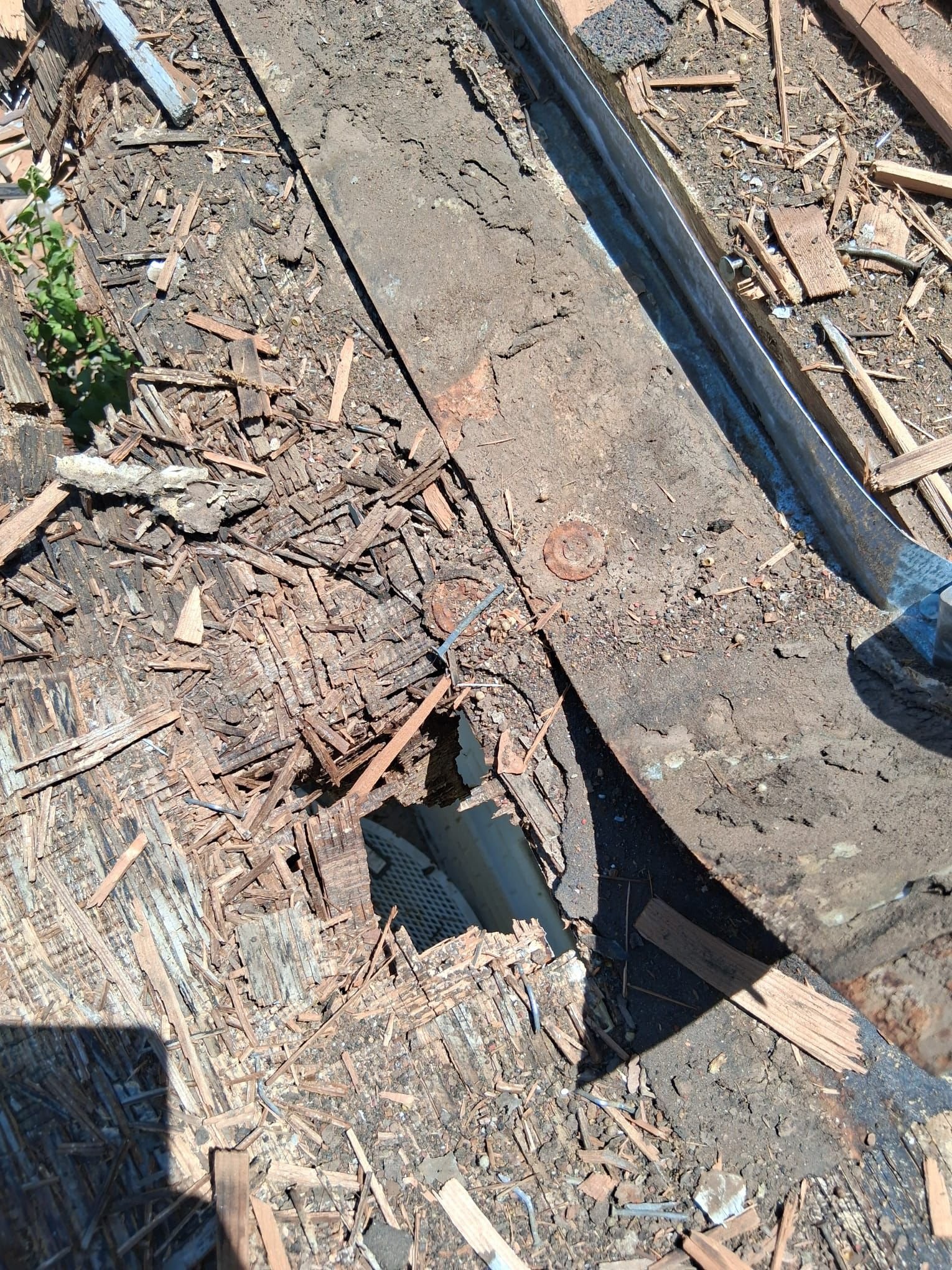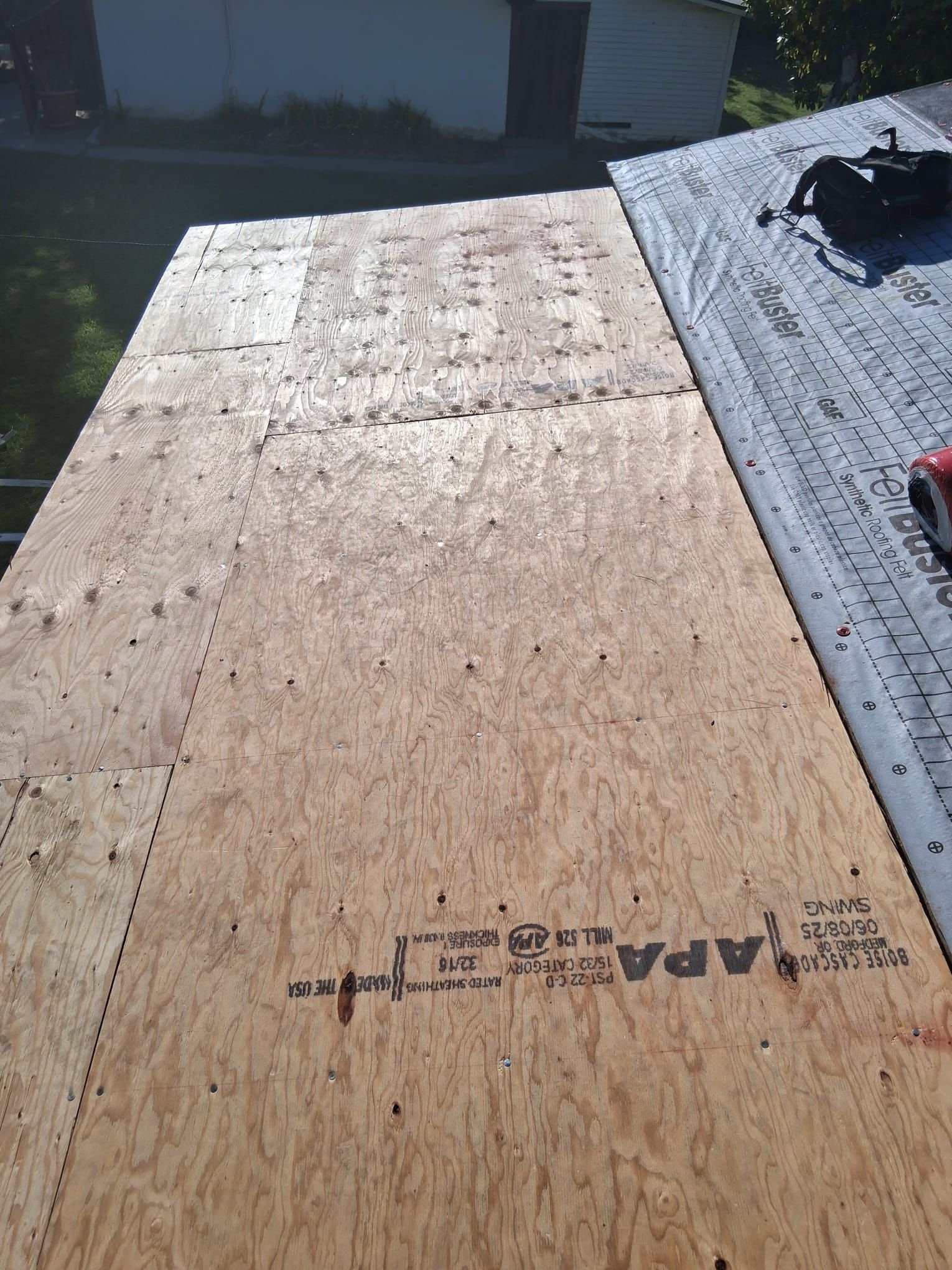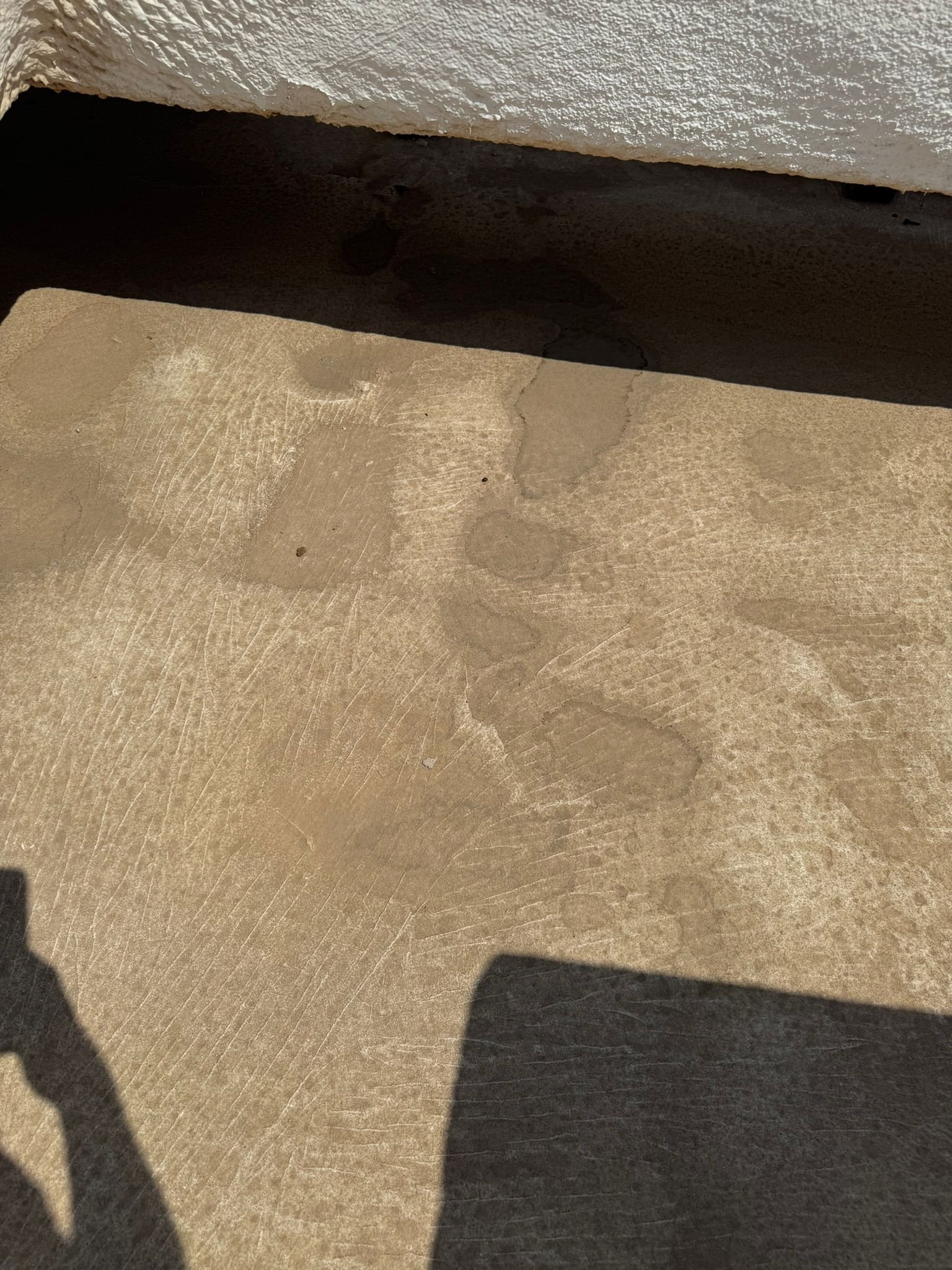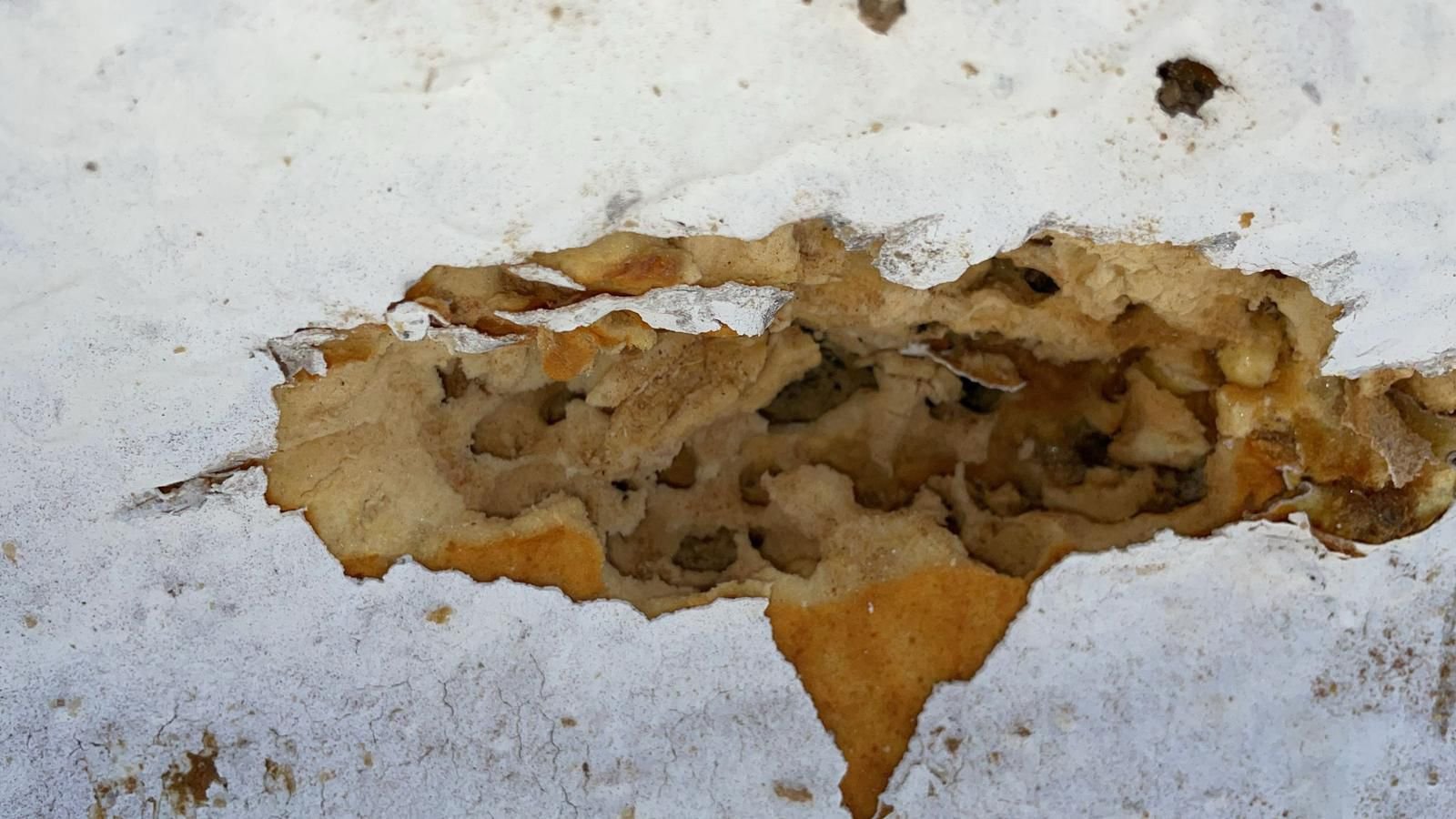
A flat roof isn’t actually flat. It needs a minimum slope, typically a quarter inch per foot, to move rainwater to a drain instead of letting it sit. When that slope or drainage fails, water pooling for more than 48 hours after a storm becomes the leading cause of flat roof failure, not the membrane itself.
Why Ponding Water Is a Real Problem
Standing water adds real weight, hundreds or even thousands of pounds depending on the roof’s size and how deep the pooling gets. That extra load stresses the deck and structure, while the water itself accelerates membrane breakdown, works into seams, and saturates insulation that stays wet long after the surface dries.
What Actually Causes Ponding
- Clogged drains or scuppers. Debris blocking the drainage point is the simplest cause and the easiest to rule out. Clear the blockage; if the water drains, that was the whole problem.
- Insufficient slope. Flat insulation boards installed without taper leave no clear path for water to follow, regardless of how many drains exist.
- Sagging or settled areas. Over time, decking can settle or sag under HVAC equipment weight or age, creating low spots that hold water even on an otherwise well-sloped roof.
- Too few drains for the roof area. Engineering guidance generally caps drainage area at 10,000 square feet per drain with a minimum of two drains per roof, and spacing beyond roughly 80 feet between drains.
How Drainage Gets Fixed
- Tapered insulation. Wedge-shaped insulation boards installed under the membrane build the necessary slope where the underlying structure is flat, directing water toward drains while also adding insulation value.
- Crickets. Small triangular slope-builders placed behind curbs, walls, and other obstructions divert water around them instead of letting it pool against the obstruction.
- Additional drains or scuppers. When the existing drainage simply can’t handle the roof’s area, adding capacity is the direct fix rather than trying to force more slope out of the same drain points.
- Regular drain clearing. Debris is the most common and cheapest cause to fix. Clearing drains twice a year, timed around monsoon season, prevents most simple blockage-driven ponding.
Diagnosing Which Problem You Have
Clear the drains first. If water drains away once the blockage is gone, the issue was maintenance, not the roof’s design. If drains are clear but water still sits, that points to a slope or capacity problem, which requires tapered insulation, crickets, or added drainage, not just cleaning.
Frequently Asked Questions About Flat Roof Drainage
How much slope does a flat roof need?
A minimum of a quarter inch per foot, typically built with tapered insulation boards installed under the membrane rather than by changing the structural deck itself.
How long can water sit on a flat roof before it’s a problem?
Water remaining more than 48 hours after rainfall stops is considered a warning sign and the leading cause of flat roof failure over time.
Is ponding water always a drainage design problem?
Not always. Clogged drains or scuppers are the most common and simplest cause; if clearing debris solves it, the underlying slope and drainage design were fine.
What is a cricket in roofing?
A small triangular structure built under the membrane to divert water around obstructions like curbs and walls, preventing pooling in spots the main roof slope doesn’t reach.
Get Ponding Water Diagnosed and Fixed
As a local roofing company serving Scottsdale, AZ, Tip Top Roofing Service inspects drains, slope, and low spots to find out whether ponding is a maintenance fix or a drainage redesign before recommending any work.
📞 Call Tip Top Roofing Service today at (480) 877-1643
📧 Email: info@tiptoproofingservice.com
🌐 Website: https://tiptoproofingservice.com/