It is one of the most common questions Arizona homeowners ask — and the answer is more nuanced than a simple yes or no. You see a cracked tile from the ground. A palm frond has landed on the roof after a monsoon. You want to clean out the gutters and think you should check up top while you are at it. The instinct to get up there yourself is completely understandable.
But tile roofs in Arizona are not designed to be walked on casually — and in Arizona’s specific climate, the consequences of walking on tile incorrectly are more serious than most homeowners realize. This guide explains exactly what happens when you walk on a tile roof, why Arizona’s conditions make the risk higher than in other states, what professionals do differently, and what you should and should not attempt yourself.
The Short Answer: Avoid Walking on Your Tile Roof Unless Absolutely Necessary
Tile roofs — whether clay, concrete, or the sandcast Mexican styles common in Arizona’s Southwestern-architecture neighborhoods — are not engineered to support the concentrated weight of a person walking across them. They are designed to shed water, resist wind, and handle the distributed load of their own weight across the structural deck below. A person’s foot concentrates weight onto a small surface area in a way that tile material simply was not made to handle.
This does not mean that tile roofs can never be accessed. Professional roofing contractors walk on tile roofs regularly — but they do so with specific techniques, equipment, and knowledge of exactly where weight can and cannot be placed. The difference between a trained roofer and a homeowner attempting the same access is the difference between no damage and a cracked tile, a damaged underlayment, or a serious fall.
The Tile Roofing Industry Alliance — the national industry body for tile roofing — recommends that homeowners avoid walking on tile roofs entirely and leave all roof access to trained professionals. Most tile manufacturers also do not warrant tiles against breakage from foot traffic, meaning damage you cause by walking on your own roof is typically your financial responsibility regardless of how new the tile is.
Why Arizona Makes Tile Roof Walking Riskier Than Most States
Tile roofs anywhere require care when accessed. In Arizona, several climate-specific factors make the consequences of incorrect walking significantly worse.
UV Degradation Makes Tiles More Brittle Over Time
Arizona receives intense UV radiation virtually year-round — and that radiation gradually makes clay and concrete tile more brittle as the years pass. A tile that would flex slightly under pressure when new becomes increasingly rigid and crack-prone after a decade or more of Arizona sun exposure. A tile that might survive a misplaced step on a 5-year-old roof in a moderate climate may fracture immediately under the same pressure on a 15-year-old Arizona roof that has absorbed years of UV stress. Our guide on why Arizona roofs age faster than homeowners expect covers this UV brittleness effect in full detail.
Desert Dust Makes Tile Surfaces Dangerously Slippery
Arizona’s frequent dust storms and haboobs deposit a fine layer of silica-rich powder on roof surfaces continuously throughout the year. This dust layer — invisible from the ground — makes tile surfaces significantly more slippery than they appear. A tile roof that looks perfectly navigable from a ladder is actually a slip hazard the moment you step onto it, particularly on any slope steeper than a few degrees. Falls from residential roofs are among the leading causes of serious home injury in the United States, and the dust-coated tile surfaces common on Arizona roofs make this risk more acute than in wetter climates where rain regularly washes roofing surfaces clean.
Underlayment Damage Is a Hidden Consequence
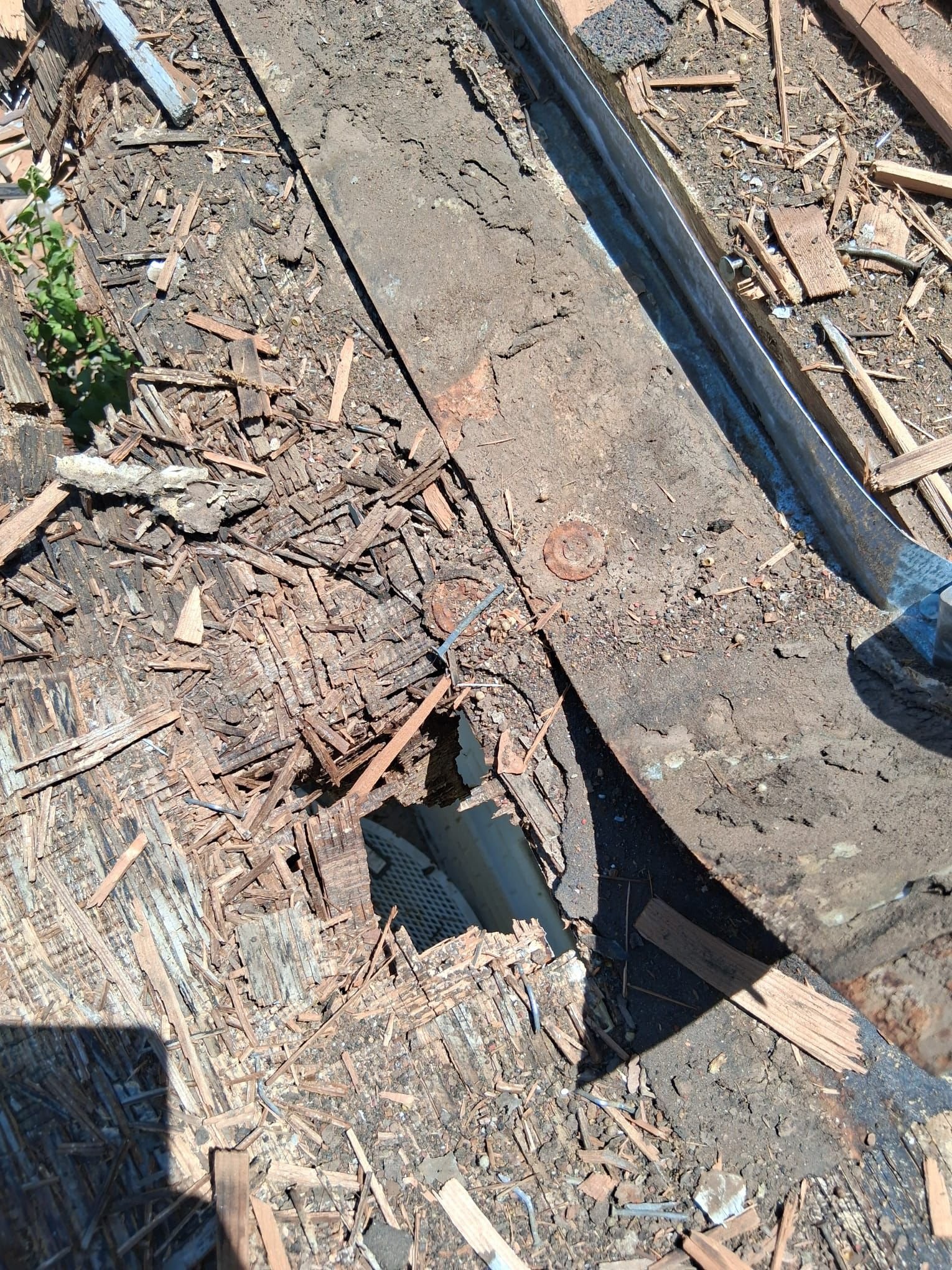
Even when walking on a tile roof does not visibly crack any tile, it can damage the underlayment beneath the tiles. Tile roofs are a two-component system — the visible tile on top and the waterproof underlayment membrane beneath it. When a person steps between tiles rather than on the supported overlap zone, their weight bears directly on the underlayment rather than transferring through the tile to the deck. This can puncture, compress, or crack underlayment that is already stressed from years of Arizona heat exposure — creating a water entry point that produces interior ceiling stains weeks or months later with no visible tile damage above it.
Many Arizona Tile Roofs Are Already in a Vulnerable State
A large portion of Arizona’s tile roofing stock was installed between the late 1980s and early 2000s. That means many homes across Scottsdale, Phoenix, Mesa, Chandler, Gilbert, and surrounding communities have tile roofs that are 20 to 35 years old. Tiles at this age in Arizona’s UV environment are at their most brittle — far more susceptible to cracking from foot traffic than the same tile would have been at 5 or 10 years old. If you live in an established Arizona neighborhood and your home was built before 2005, assume your tiles are more fragile than they look before considering any roof access.
What Actually Happens When You Step on a Tile Incorrectly
Understanding the mechanics of tile failure from foot traffic helps explain why the risk is real even when nothing looks wrong afterward.
The Tile Cracks — Visibly or Invisibly
When a foot lands on the center or upper portion of a tile — the unsupported area — the tile flexes downward. Clay and concrete tile have very limited flex tolerance, particularly after years of UV exposure. The tile either cracks visibly at the point of impact or develops a hairline fracture that is invisible to the eye but structurally significant. A hairline-cracked tile allows water to seep through to the underlayment on the next rain event. If the underlayment beneath it is already aging, that water infiltration reaches the structural deck — and eventually the interior ceiling — before anyone realizes the tile was compromised.
The Tile Shifts or Displaces
Tiles that are not fastened — which includes many tiles in the field of an Arizona roof, where only the perimeter rows are typically nailed and interior tiles rely on their own weight and interlocking to stay in place — can shift under foot pressure without cracking. A shifted tile creates a gap at its edge that allows wind-driven rain to penetrate during the next monsoon storm. From the ground, the tile looks exactly as it did before. From inside the attic after the next heavy rain, the water tells a different story.
The Tile Breaks Completely
On older or already-stressed tiles, a misplaced step simply breaks the tile. This is immediately visible and clearly represents damage — but the repair cost is not just the tile itself. If the broken tile has exposed the underlayment beneath it to UV and subsequent rain before the repair is made, the underlayment in that area may also need attention. And if the broken tile was covering an area of already-deteriorated underlayment, a professional inspection of the surrounding section is warranted before simply replacing the single tile.
What Professional Roofers Do Differently When Walking on Tile
Professional roofing contractors do access tile roofs — and they do so regularly without causing damage. Understanding what they do differently helps explain why the same access that is dangerous for a homeowner is routine for a trained roofer.
They Step Only on the Supported Overlap Zone
Every tile roof has a specific zone where foot traffic is safe — the bottom three inches of each installed tile, where it overlaps with the tile course below and transfers weight directly through to the deck beneath rather than bearing on the unsupported center of a single tile. Professional roofers know exactly where this zone is on every tile profile — from standard S-tile to low-profile concrete to high-barrel clay — and step only within it. A homeowner without this knowledge will instinctively step wherever looks stable, which is often the least supported part of the tile.
They Use Crawling Boards and Foam Pads
For extended roof access — full inspections, underlayment replacement, or large-area repairs — professional roofers use crawling boards or padded equipment that distributes their weight across multiple tiles simultaneously rather than concentrating it on one point. This dramatically reduces the per-tile pressure and eliminates the concentrated load that causes cracking. Homeowners attempting roof access without this equipment are putting their full body weight through whatever surface they happen to be standing on.
They Wear Appropriate Footwear
Professional roofers wear soft-soled shoes with rubber grip designed specifically for roofing work. The soft sole distributes pressure and grips the tile surface without the hard edges that concentrate force. Hard-soled shoes, boots, or sneakers with firm soles transfer weight in concentrated points that increase tile crack risk and provide inadequate grip on dust-coated Arizona tile surfaces.
They Know When Not to Walk
Experienced Arizona roofers also know which roofs should not be walked on at all without special preparation — roofs with severely UV-degraded tile, roofs with known underlayment failure beneath, or roofs on steep pitches where safety cannot be assured without anchoring equipment. A homeowner has no reliable way to make these assessments from the ground before attempting access.
What You Can Safely Do Yourself — And What You Cannot
There is a meaningful set of roof-related tasks that Arizona homeowners can and should handle themselves, and a separate set that should always involve a professional. Understanding the boundary between the two protects both your roof and your safety.
What You Can Do From the Ground or a Ladder
A significant amount of useful roof assessment is possible without ever stepping onto the tile surface. From the ground with a pair of binoculars, or from the top rungs of a ladder positioned at the eave, you can identify:
- Visibly cracked, broken, or missing tiles
- Displaced tiles with visible gaps at their edges
- Ridge cap mortar that is crumbling or missing
- Debris accumulation in valleys or along the ridge line
- Dark granular material in gutters indicating underlayment or coating wear
- Sagging or irregular sections of the roofline
- Visible flashing damage around chimneys, vents, or skylights
These ground and ladder-level observations are valuable — they can tell you whether a professional inspection is needed and give you specific areas to mention when you call. They do not require stepping onto the tile surface at all.
What Requires a Professional
Any task that requires actual foot traffic on the tile surface should be handled by a licensed roofing contractor:
- Replacing cracked or broken tiles — requires stepping on adjacent tiles to access the damaged area
- Inspecting underlayment condition — requires lifting tiles to assess what is beneath
- Repairing or replacing flashing at penetration points — requires access around vents, chimneys, and skylights
- Clearing debris from valleys — requires traversing the roof surface to reach low-slope drainage paths
- Re-mortaring ridge caps — requires working at the ridge line with access from both sides
- Any post-storm inspection that goes beyond what is visible from the ground
A professional roof inspection by a licensed contractor covers all of these areas safely — with the right technique, equipment, and liability coverage if something goes wrong. Our guide on how regular roof inspections prevent thousands in storm damage explains exactly what that inspection process delivers.
The Real Cost of Walking on Your Tile Roof Incorrectly
The financial argument for leaving tile roof access to professionals is straightforward when you look at what incorrect walking actually costs.
A single cracked tile in a common Arizona profile costs $150 to $400 to replace — including matching the tile, the labor to access and remove the damaged piece, and proper reinstallation with new underlayment if the existing underlayment in that area has been exposed. If the cracked tile was concealing already-degraded underlayment that has now allowed water intrusion before the repair was made, the scope expands to include underlayment repair in the affected section.
Multiple cracked tiles from a single roof-walking attempt can run $600 to $2,500 in repair costs — all of which could have been avoided. And because tile breakage from foot traffic is not covered by homeowner’s insurance — it is not a sudden storm event, it is owner-caused damage — the full cost falls to you. To understand the full financial picture of roof maintenance decisions, our guide on the true cost of ignoring roof maintenance covers how deferred decisions compound over time.
Beyond tile repair costs, there is the safety dimension. Falls from residential roofs account for a significant portion of serious home injury incidents nationwide. Arizona’s dust-coated tile surfaces, often on pitches of 4:12 or steeper, represent genuine fall risk for anyone without professional training and equipment.
When Should You Schedule a Professional Tile Roof Inspection in Arizona?
The answer to not walking on your own tile roof is not to ignore the roof entirely — it is to schedule professional inspections at the right intervals so that nothing is missed and nothing compounds into a larger problem. Our full guide on annual roof inspections in Arizona covers the full recommended schedule, but here is the tile-specific guidance:
Once a year as a baseline. Annual professional inspection is the standard recommendation for any Arizona tile roof. The best timing is spring — between February and April — before monsoon season begins and while any issues found can be addressed before storm exposure.
After any significant monsoon or hail event. A professional post-storm inspection within days of a significant weather event is the only reliable way to identify storm damage before it is compounded by subsequent rain. Do not wait until you see an interior ceiling stain — by that point the damage has been developing for multiple storm cycles.
When your roof is 15 to 20 years old. This is the age window when underlayment failure begins in Arizona’s climate regardless of how intact the tile surface appears. A professional inspection at this age should specifically assess underlayment condition beneath the tile — something no ground-level or ladder observation can reveal. Our guide on how long roofs last in Arizona covers the specific age thresholds that matter for each roofing material.
Before purchasing a home with a tile roof. A pre-purchase tile roof inspection is one of the most valuable inspections a buyer can commission. Tile roofs routinely look excellent from the ground while concealing underlayment failure, hairline cracks, and mortar deterioration that will become the new owner’s problem. A written inspection report with photographs from a licensed roofing contractor provides actionable information before you close.
Need a Tile Roof Inspection in Arizona? Tip Top Roofing Service Is Ready
Tip Top Roofing Service is a GAF-certified, BBB-accredited roofing contractor with over 10 years of experience inspecting and servicing tile roofs across the Phoenix metro and Arizona. Our inspectors know every tile profile common to Arizona’s housing stock, understand the specific failure patterns that Arizona’s climate creates, and provide written inspection reports with photographs that give you a complete picture of your roof’s condition — without you ever having to set foot on it.
What you get when you work with us:
- Free tile roof inspection and written report — no pressure, no obligation
- Licensed and insured in Arizona: ROC License #355034
- Experienced with all Arizona tile profiles — clay, concrete, low-profile, barrel, and sandcast
- Underlayment condition assessment included in every full inspection
- Free estimates for new roof installations
- 0% interest financing over 12 months — learn more about financing a new roof in Arizona
- Up to 30-year material warranties on qualifying systems
- Full insurance claim assistance for storm damage
- 130+ five-star Google reviews from verified Arizona homeowners
We serve Chandler, Mesa, Gilbert, Peoria, Surprise, Goodyear, Scottsdale, Phoenix, Tempe, and 40+ Arizona cities.
Call (480) 877-1643 or email info@tiptoproofingservice.com to schedule your free tile roof inspection today.
Frequently Asked Questions: Walking on Tile Roofs in Arizona
Can I walk on my tile roof to clear debris after a monsoon storm?
We strongly advise against it. Clearing debris from a tile roof after a monsoon — palm fronds, branches, accumulated dust — requires traversing the tile surface, which risks cracking aged tiles and slipping on dust-coated surfaces. The safer approach is to call a licensed roofing contractor who can clear the debris using proper technique and equipment, and assess whether the storm caused any tile displacement or damage at the same time. The cost of a professional debris clearance and inspection is far less than the cost of a cracked tile repair or a fall.
How do professional roofers walk on tile without breaking it?
Professional roofers step specifically on the bottom overlap zone of each tile — the lower three inches where the tile is supported by the course beneath it and transfers weight through to the structural deck. They use soft-soled roofing shoes for grip and pressure distribution, and for extended access they use crawling boards that distribute weight across multiple tiles simultaneously. They also know which tile profiles and which roof conditions require extra care — knowledge that comes from training and experience, not instinct.
My tile looks fine but I have a ceiling leak. What does that mean?
It almost certainly means your underlayment has failed — not your tile. This is the most common scenario on Arizona tile roofs over 15 to 20 years old. The tiles themselves are durable and rarely show visible damage even when the waterproof membrane beneath them has deteriorated completely. Water gets under the tile through hairline cracks, shifted tile edges, or failed flashing, and then passes through failed underlayment to reach the structural deck and eventually the interior ceiling. The solution is a professional inspection that assesses underlayment condition beneath the tile — and in many cases a lift-and-relay project that replaces the underlayment without replacing the tile itself.
Will my homeowner’s insurance cover tiles I crack by walking on my roof?
No. Homeowner’s insurance covers sudden, accidental damage from covered storm events — not owner-caused damage resulting from foot traffic. Tile cracked by walking is considered owner-caused damage and falls entirely outside standard coverage. This is one of the clearest financial reasons to leave tile roof access to professionals whose liability insurance covers any damage they cause during the course of their work.
How often should I have my Arizona tile roof professionally inspected?
At least once a year. The recommended timing is spring — between February and April — before monsoon season begins. After any significant monsoon or hail event, a post-storm professional inspection is also warranted. If your tile roof is 15 years old or more and has never had an underlayment assessment, that inspection should happen before the next monsoon season regardless of when your last routine inspection occurred. Our annual roof inspection guide covers the full recommended schedule for Arizona homeowners.
What is the best roofing material for Arizona if I want something more accessible for maintenance?
Metal roofing — particularly standing seam metal — is significantly more accessible for professional maintenance than tile and handles Arizona’s UV, heat, and wind conditions with a 40 to 70-year lifespan. For flat sections, properly maintained spray foam or TPO systems are accessible and durable. If you are considering a full roof replacement and access for maintenance is a priority, discuss the full range of the best roofing materials for Arizona homes with a licensed contractor before deciding.
Tip Top Roofing Service | (480) 877-1643 | info@tiptoproofingservice.com | tiptoproofingservice.com | 6830 E 5th Ave #205, Scottsdale, AZ 85251 | ROC License #355034