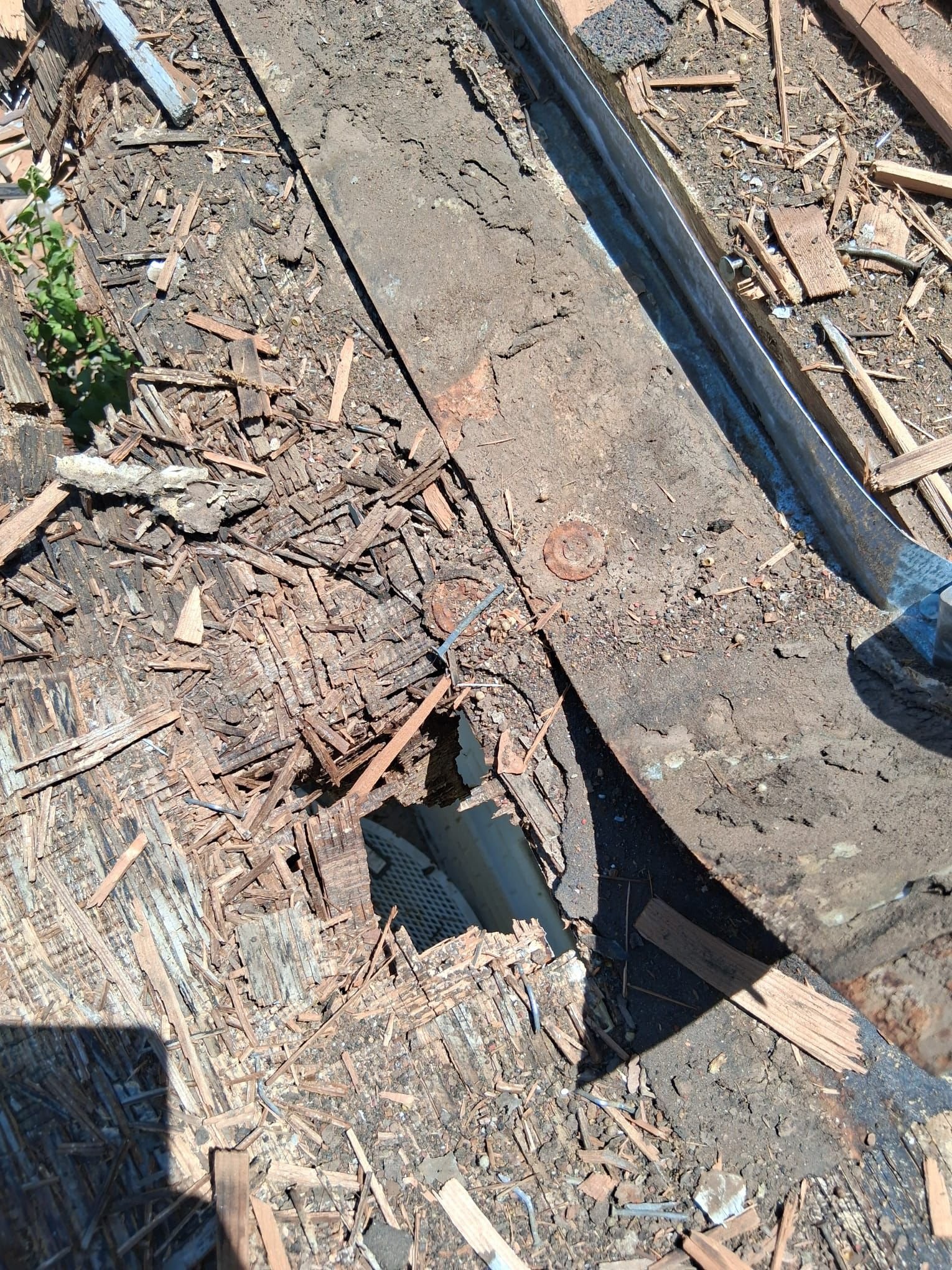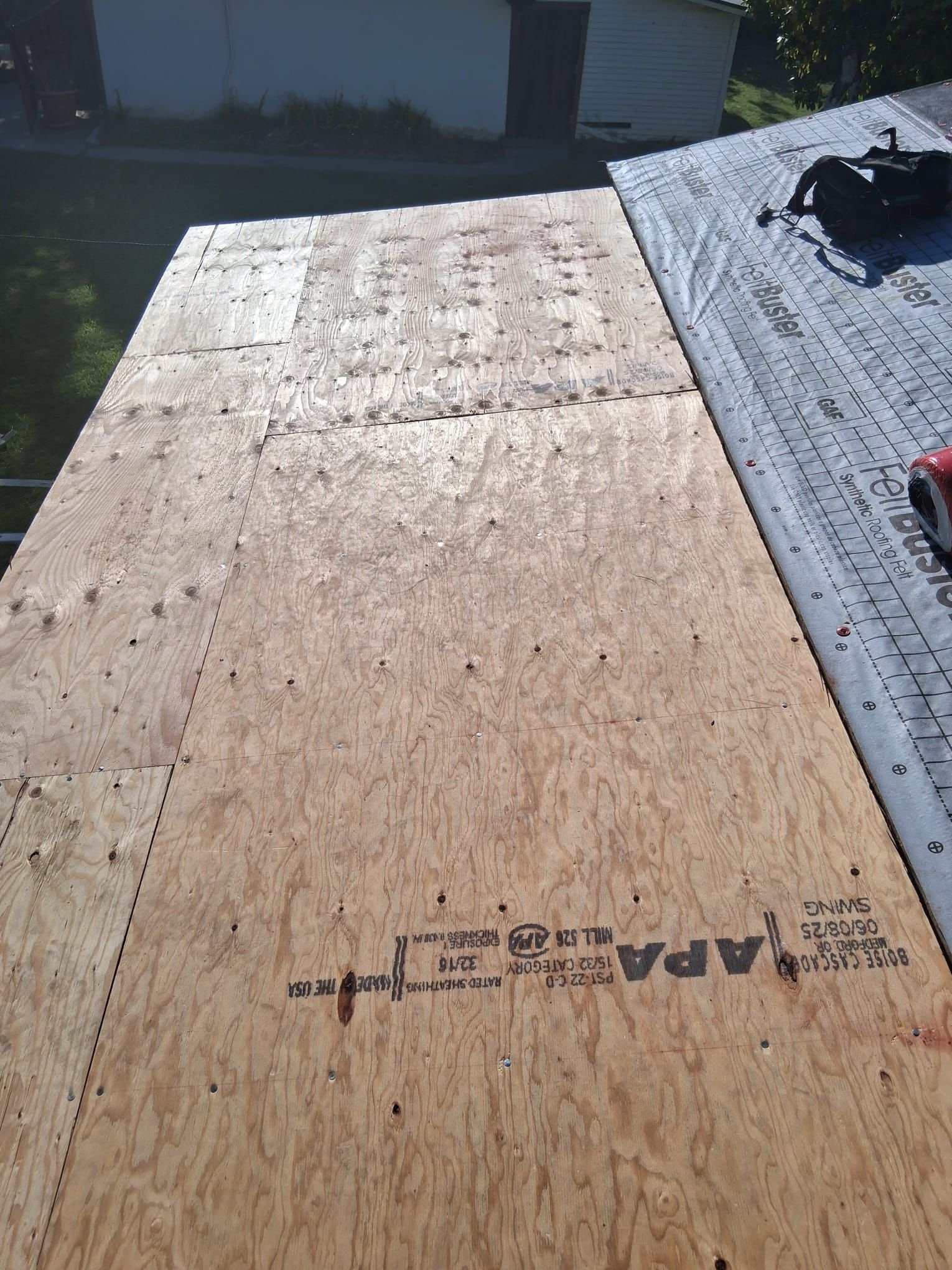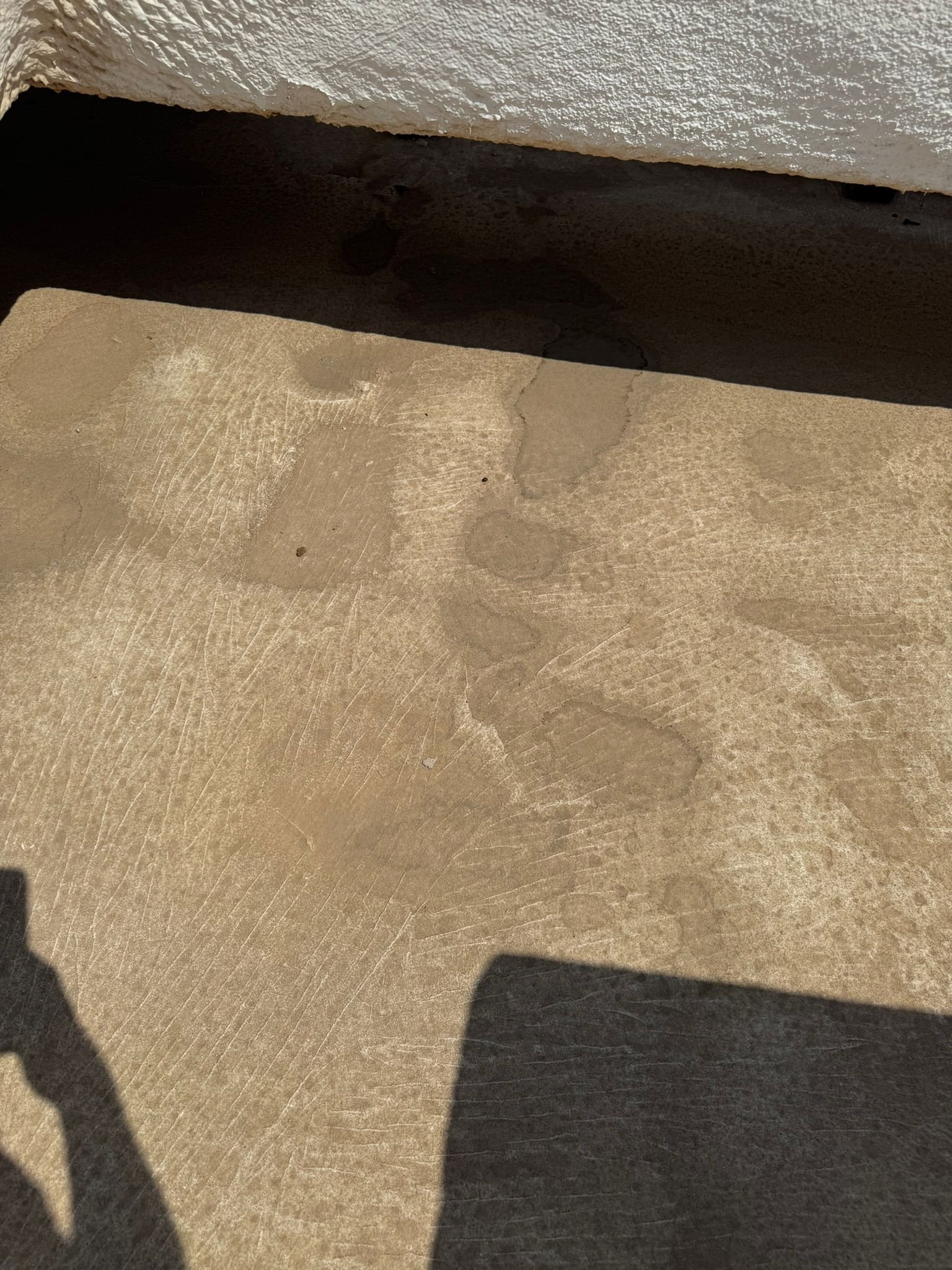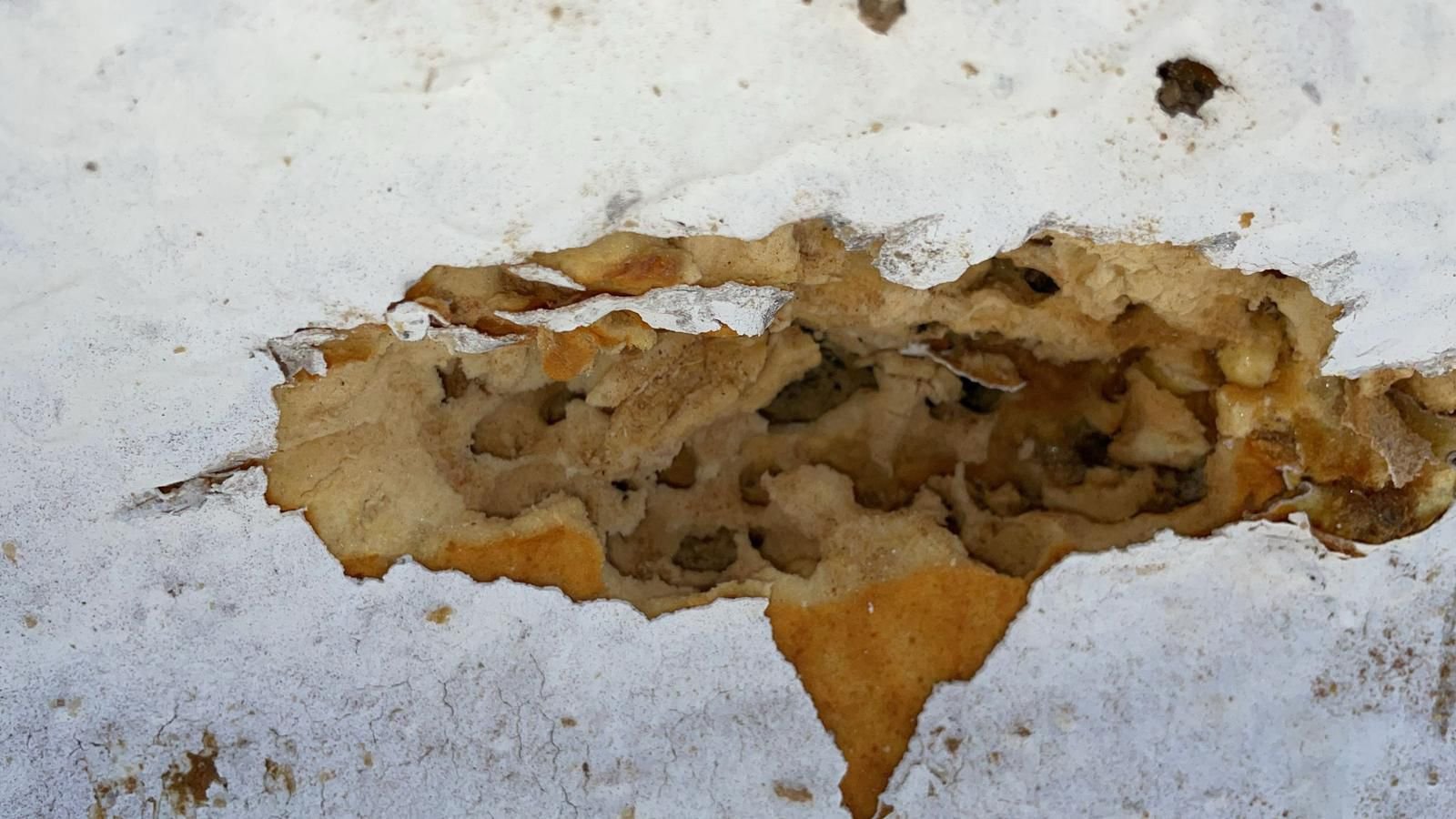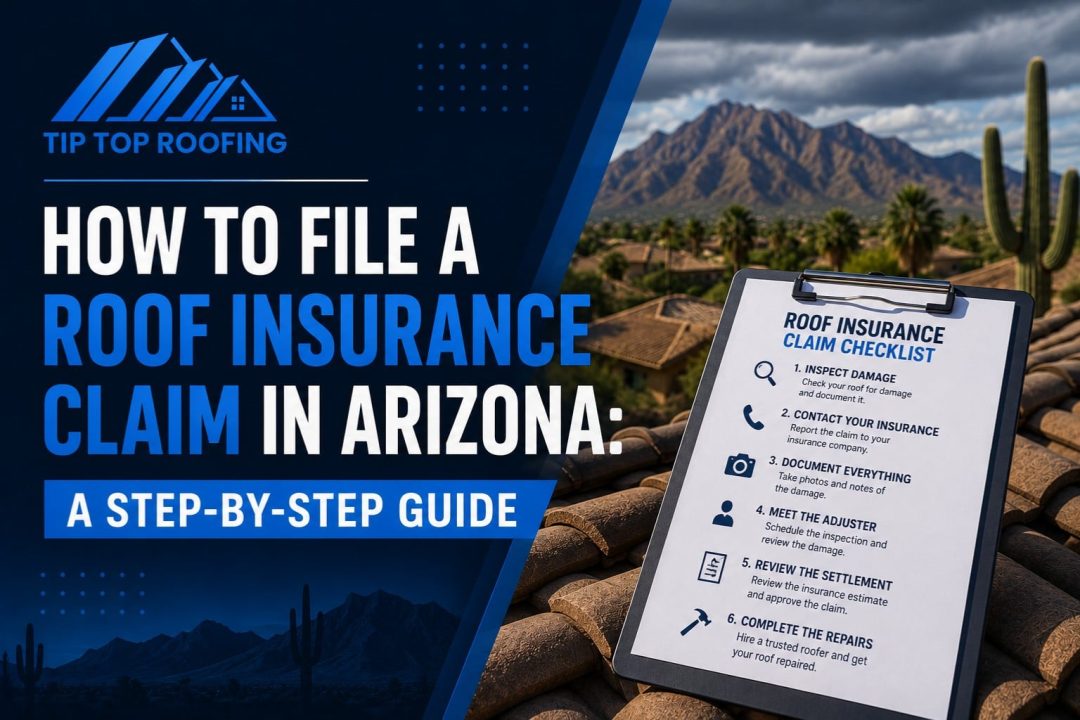
You pay your homeowner’s insurance premiums every month. When a monsoon storm tears through your neighborhood, takes out tiles, drives water under your roofline, or sends hail pounding against your shingles — that insurance is supposed to protect you. But actually getting a claim approved for a significant Arizona roof repair or replacement is rarely as simple as making a phone call.
Insurance companies are businesses. Their adjusters are trained to distinguish between covered sudden storm damage and uncovered gradual wear — and in Arizona’s extreme climate, that line can be blurry. Homeowners who do not document damage correctly, do not understand their policy terms, or make procedural mistakes during the claim process routinely see claims denied or underpaid that should have been covered in full.
This guide gives Arizona homeowners a complete, step-by-step blueprint for filing a roof insurance claim after storm damage — from the moment the storm ends to receiving your settlement check — including the Arizona-specific factors that affect how claims are evaluated and paid in this state.
What Arizona Homeowner’s Insurance Typically Covers for Roof Damage
Before filing any claim, understanding what your policy is and is not designed to cover sets realistic expectations and helps you frame your claim correctly from the start.
Standard Arizona homeowner’s insurance policies are designed to cover sudden, accidental damage from covered perils. For roofing, the most common covered events in Arizona are:
- Monsoon wind damage: High winds from monsoon storms — including microbursts that can exceed 80 mph in localized areas — that lift and displace tiles, tear away flashing, strip shingles, or cause structural damage. Wind damage from monsoon events is one of the most common covered claims in Arizona. Important note: Arizona law prohibits insurers from applying hurricane deductibles to monsoon damage. Your standard deductible applies.
- Hail damage: Hailstorms across the Phoenix metro, East Valley, and higher-elevation communities like Sedona and Flagstaff produce hail damage claims every year. Cracked tiles, bruised shingles, dented metal flashing, and damaged skylights from hail impact are typically covered. The challenge is that hail damage is often invisible from the ground — professional inspection is essential to document it properly.
- Falling objects and debris: A tree branch, utility pole, or storm-driven debris that strikes and damages the roof is typically covered. Document the cause and impact point clearly with photographs before removing anything.
- Fire damage: Roof damage from fire — whether from a structure fire or wildfire — is typically covered under standard homeowner’s policies.
What standard Arizona homeowner’s insurance does not cover:
- Damage from normal wear, aging, and UV degradation — even when extreme by national standards
- Damage resulting from lack of maintenance or deferred repairs
- Flood damage — flood coverage requires a separate flood insurance policy
- Pre-existing damage that preceded the claimed storm event
The critical distinction adjusters evaluate in every Arizona claim is whether the damage resulted from a specific sudden storm event or from gradual deterioration over time. In Arizona’s climate — where UV exposure and heat accelerate material breakdown significantly — this distinction is sometimes genuinely difficult, and documentation quality often determines whether a borderline claim is approved or denied. Our full guide on what Arizona homeowner’s insurance covers for roof replacement covers the policy details in depth.
Understanding Your Policy Before You Need It
The best time to understand your insurance policy is before a storm, not after. Two policy terms in particular have a significant impact on how an Arizona roof insurance claim pays out:
Actual Cash Value (ACV) vs. Replacement Cost Value (RCV)
This is the single most important policy distinction for Arizona roof claims — and many homeowners do not know which type they have until they file a claim and are surprised by the payout.
Actual Cash Value (ACV) policies pay the depreciated value of the damaged roof at the time of the loss. Depreciation accounts for age, wear, and remaining useful life. An Arizona tile roof that is 20 years old and was damaged by a monsoon storm would receive a payout reflecting the current value of a 20-year-old tile roof — not what it costs to replace it with new materials today. On an older roof, ACV payouts can cover only a fraction of replacement costs, leaving the homeowner to pay the difference out of pocket beyond their deductible.
Replacement Cost Value (RCV) policies pay the full cost to replace the damaged roofing system with comparable new materials, regardless of the roof’s age. Most Arizona homeowner’s insurance policies are RCV — but even RCV policies typically pay in two stages. The first check covers the ACV amount. The second check — called the recoverable depreciation — is released only after the repair or replacement is actually completed and documented. Never spend the first check assuming the second will cover the rest before the work is done and documented.
Review your policy declarations page now and confirm whether you have ACV or RCV coverage. If you have ACV coverage and your roof is aging, discuss with your insurance agent whether upgrading to RCV coverage is available and what the cost difference would be.
Your Deductible
Know your deductible amount before filing any claim. Arizona homeowner’s policies typically have standard deductibles ranging from $500 to $2,500 or more. Some policies have percentage-based deductibles — for example, 1% or 2% of the home’s insured value — rather than a flat dollar amount. On a $400,000 insured home, a 1% deductible means $4,000 out of pocket before insurance contributes. File a claim for a $3,500 repair on that policy and you receive nothing while still having the claim on your record.
The general guidance is: do not file a claim unless the repair cost meaningfully exceeds your deductible. A claim filed and paid affects your premium renewal rates. A claim filed and then withdrawn still appears on your insurance record in many cases. Calculate whether the expected claim payout — minus the deductible — justifies the claim before calling your insurer.
Step-by-Step: How to File a Roof Insurance Claim in Arizona
Step 1 — Prioritize Safety and Immediate Interior Protection
Immediately after a storm, prioritize safety before anything else. Do not get on your roof during or immediately after a storm. Wet tile is extremely slippery, post-storm structural integrity may be compromised, and live electrical hazards from downed lines are a real risk in the first hours after a significant monsoon event.
If your roof has an active leak — water dripping or streaming into the home — place buckets under the drip points, move valuables out of the affected area, and if you can safely access the attic, assess from inside as described in our guide on how to find a roof leak from inside your Arizona home.
If your roof has sustained significant damage that leaves a large area of your home exposed — displaced tiles over a wide area, a structural failure, debris penetration — contact a roofing contractor for emergency tarping. Temporary protective measures are important both to prevent further damage and to demonstrate to your insurer that you took reasonable steps to mitigate losses. Photograph the temporary measures before and after installation.
Step 2 — Document Everything Immediately and Thoroughly
This step is where most Arizona homeowners either strengthen or critically weaken their future claim. Documentation quality directly correlates with claim approval rates and payout amounts. Do this before calling your insurance company and before any repairs are made.
Photograph from the ground first. Walk the full perimeter of your home and photograph the roofline from every angle. Capture visible displaced tiles, missing shingles, debris on the roof, damaged gutters, dented vents, and any impact marks on adjacent surfaces — fences, vehicles, AC units, window screens. These adjacent surface impacts are important evidence that the damage was caused by a significant storm event.
Photograph interior damage. Water stains on ceilings and walls, wet insulation visible through attic access, drip points — document all of it. Interior damage photographs taken immediately after the storm establish the timeline connection between the storm event and the water intrusion.
Note the date and time. Every photograph should be timestamped — most smartphone cameras do this automatically. Note in writing when the storm occurred, when you first observed the damage, and when each photo was taken.
Document the storm event independently. Check the National Weather Service, local news, and weather apps for records of the specific storm that affected your area. Note any official reports of wind speeds, hail size, or storm severity for your zip code. This independent documentation of the storm event is valuable evidence that damage occurred from a specific covered event rather than gradual wear.
Photograph collateral damage on other property features. Dented gutters, damaged AC condenser fins, cracked skylights, torn window screens — hail or wind strong enough to damage these surfaces was strong enough to damage your roof. Document every piece of corroborating evidence.
Step 3 — Schedule a Professional Roof Inspection Before Calling Your Insurer
This is the step that most Arizona homeowners skip — and it is the step that most frequently determines whether a borderline claim succeeds or fails.
Contact a licensed Arizona roofing contractor and schedule an inspection before you file the claim with your insurance company. A professional inspection performed before the claim is filed serves several critical purposes:
It identifies all damage, including what is invisible from the ground. Hail bruising on shingles, hairline tile fractures, failed flashing seals, and underlayment damage are routinely missed in homeowner ground-level assessments and sometimes missed even by insurance adjusters. A roofing contractor who physically accesses the roof surface and knows what storm damage looks like on Arizona’s specific roofing materials — tile, shingles, foam, metal — will find damage that a ground-level assessment misses entirely.
It gives you an independent assessment before the adjuster visits. Insurance adjusters work for the insurance company, not for you. Their job is to assess what is covered — not to advocate for the maximum payout you are entitled to. A licensed contractor’s inspection report gives you an independent, professional assessment of all storm-related damage that you can compare against the adjuster’s findings and use to support your claim if the adjuster’s assessment is incomplete.
It documents the distinction between storm damage and pre-existing wear. A professional inspection report that specifically identifies storm-related damage — as opposed to general wear — supports the core coverage argument that your claim requires. This documentation is particularly important in Arizona where insurers frequently attempt to attribute damage to gradual UV deterioration rather than storm impact.
At Tip Top Roofing Service, we provide free post-storm roof inspections with written reports and photographs that are specifically designed to support insurance claims. We attend adjuster meetings on behalf of Arizona homeowners to ensure all covered damage is identified and properly accounted for in the claim assessment.
Step 4 — Review Your Policy and Know Your Numbers Before Filing
Before calling your insurance company, confirm the following from your policy documents:
- Your deductible amount — flat dollar or percentage-based
- Whether you have ACV or RCV coverage
- Your claim filing deadline — most Arizona policies require claims to be filed within one year of the storm event, though some have shorter windows
- Whether your policy has any exclusions relevant to your specific damage type
- Your insurer’s claims phone number and whether online filing is available
If your estimated repair cost is less than or close to your deductible, carefully weigh whether filing is worthwhile. A filed claim that results in a minimal payout still affects your renewal premium and claims history.
Step 5 — File Your Claim Promptly
Once you have your documentation and understand your policy terms, file the claim promptly. Most Arizona homeowner’s policies require claims to be filed within a specific window after the storm event — commonly one year, though some policies have shorter timeframes. Do not assume you have unlimited time. The longer you wait, the harder it becomes to establish the connection between a specific storm event and the damage being claimed.
When you call to file:
- Have your policy number ready
- Note the date of the storm and a general description of the damage
- Provide the date your professional inspection took place and the name of the roofing contractor
- Ask specifically for the claim number and the assigned adjuster’s contact information
- Confirm the timeline for the adjuster’s inspection visit
- Ask specifically about the claim filing deadline under your policy
Document every communication with your insurer. Note the date, time, name of the representative, and a summary of what was discussed in every call.
Step 6 — Manage the Adjuster’s Inspection Visit
The adjuster inspection is one of the most consequential steps in the entire claims process — and one where homeowner preparation makes a significant difference in outcomes.
Request that your roofing contractor be present. This is your right as a homeowner, and it significantly improves claim outcomes. A licensed roofing contractor who is present during the adjuster’s inspection can point out specific damage that the adjuster might otherwise miss, explain the distinction between storm damage and pre-existing wear in technical terms the adjuster understands, and ensure that all covered damage is documented in the adjuster’s report rather than discovered and disputed later.
Share your contractor’s inspection report. Provide the adjuster with a copy of your contractor’s written inspection report and photographs. This gives the adjuster an independent professional assessment to compare against their own findings and reduces the likelihood that damage documented by the contractor is inadvertently omitted from the adjuster’s report.
Do not sign anything during the inspection visit. The adjuster’s role is to assess and document. Any documents presented for signature during the visit should be reviewed carefully — preferably with your contractor present — before signing. Signing a settlement agreement before understanding the full scope of what is being covered waives your ability to dispute the amount later.
Ask specific questions. What damage is the adjuster including in the claim? What is being excluded, and why? Is the assessment ACV or RCV? When will you receive the written estimate? These questions ensure you understand what the adjuster is recommending before the report is finalized.
Step 7 — Review the Adjuster’s Report and Compare It to Your Contractor’s Assessment
Once you receive the adjuster’s written estimate and scope of work, compare it line by line against your contractor’s inspection report. Look for:
- Damage items documented by your contractor that are not included in the adjuster’s scope
- Significant differences in the quantity of materials covered — number of tiles, square footage of underlayment, etc.
- Items described as pre-existing wear rather than storm damage that your contractor documented as storm-related
- Labor rates or material costs that appear significantly below current Arizona market rates
If discrepancies exist, do not simply accept the adjuster’s assessment as final. You have the right to dispute it.
Step 8 — Dispute Incomplete or Underpaid Assessments
A surprising number of Arizona homeowners accept adjuster assessments that are incomplete, underpriced, or improperly categorized as wear rather than storm damage. You are not required to accept the first assessment as final.
Request a re-inspection. If specific items documented by your contractor were omitted from the adjuster’s scope, request that the adjuster re-inspect with your contractor present to review the disputed items. Provide the contractor’s written report as supporting documentation.
Submit a supplemental claim. In many cases, damage discovered after the initial adjuster visit — sometimes during the repair process when materials are removed and underlying damage is revealed — can be submitted as a supplemental claim. A roofing contractor experienced with insurance claims will flag supplemental items during the repair process and help you document them properly for submission.
Request appraisal or mediation. Arizona homeowner’s insurance policies include dispute resolution mechanisms. If you and your insurer cannot reach agreement on the scope or value of a covered claim, the policy’s appraisal process allows each party to appoint an independent appraiser to assess the damage, with a neutral umpire breaking any deadlock. This is a formal process that typically requires an attorney or public adjuster — but it is available when the initial claims process produces an unjust outcome.
Consult a public adjuster. A licensed public adjuster works exclusively for policyholders — not insurance companies — and is compensated as a percentage of your final settlement. For large or heavily disputed claims, a public adjuster’s expertise in navigating the claims process can result in significantly higher settlements than homeowners achieve on their own. Public adjusters are licensed in Arizona through the Arizona Department of Insurance and Financial Institutions.
Step 9 — Proceed With Repairs and Document Completion for RCV Policies
Once the claim scope is agreed and approved, work can begin. For RCV policyholders, remember that the initial check covers the ACV amount — the depreciated value. The recoverable depreciation is released only after repairs are completed and you submit proof of completion to your insurer.
Required documentation for the depreciation release typically includes:
- A final invoice from your licensed roofing contractor showing the work completed and the total cost
- Photographs of the completed installation
- Proof of payment
- Permit inspection sign-off from the local building department, confirming the work was completed and inspected
Submit this documentation promptly after project completion. Delays in submitting depreciation release documentation delay your final payment. As covered in our guide on Arizona roof permit requirements, permitted and inspected roofing work is an important part of both the insurance claims process and the recoverable depreciation release.
Red Flags: Storm Chasers and Post-Storm Scams in Arizona
Every significant monsoon or hail event in Arizona brings a predictable wave of out-of-state contractors canvassing neighborhoods, offering free inspections, promising to “work with your insurance” to get you a free roof, and pressuring homeowners to sign assignment of benefits agreements on the spot.
These operators — often called storm chasers — create serious problems for Arizona homeowners. Assignment of benefits agreements that you sign immediately after a storm can transfer control of your insurance claim to the contractor, removing your ability to negotiate the scope or challenge inadequate settlements. Contractors who disappear after collecting insurance payments, or who complete substandard work that fails within months, are a consistent post-storm problem in Arizona markets.
Protect yourself by following these principles after any significant storm event:
- Never sign any document from a door-to-door contractor on the same day they contact you
- Verify any contractor’s active ROC license at azroc.my.site.com before agreeing to any work
- Do not sign an assignment of benefits agreement without understanding fully what rights you are transferring
- Work with a licensed local contractor you have independently selected — not one who appeared at your door after the storm
- Get a written, itemized estimate before authorizing any work beyond temporary protective measures
Our guide on the most common mistakes homeowners make when choosing a roofing company covers these warning signs in full detail.
Roof Insurance Claim in Arizona? Tip Top Roofing Service Is Your Advocate
Tip Top Roofing Service is a GAF-certified, BBB-accredited roofing contractor with over 10 years of experience assisting Arizona homeowners through the complete insurance claims process — from post-storm inspection and documentation through adjuster meetings, supplemental claims, and final settlement.
We understand Arizona’s specific storm damage patterns, what covered storm damage looks like on tile, shingle, metal, and foam roofing systems, and how to ensure every covered damage item is properly documented and included in your claim. We do not chase storms. We are a local Arizona company with an established track record and 130+ five-star Google reviews from verified homeowners across the Phoenix metro.
What you get when you work with us:
- Free post-storm roof inspection with written report and photographs — suitable for insurance claim submission
- Licensed and insured in Arizona: ROC License #355034
- Adjuster meeting attendance — we represent your interests during the inspection
- Supplemental claim documentation if additional damage is found during repairs
- Complete permit handling for all permitted work
- Recoverable depreciation documentation package for RCV policyholders
- Free estimates for new roof installations on qualifying projects
- 0% interest financing over 12 months — learn more about financing a new roof in Arizona
- Up to 30-year material warranties on qualifying systems
We serve Chandler, Mesa, Gilbert, Peoria, Surprise, Goodyear, Avondale, Sun City, Scottsdale, Phoenix, Tempe, and 40+ Arizona cities.
Call (480) 877-1643 or email info@tiptoproofingservice.com to schedule your free post-storm inspection today.
Frequently Asked Questions: Roof Insurance Claims in Arizona
How long do I have to file a roof insurance claim in Arizona?
Most Arizona homeowner’s insurance policies require storm damage claims to be filed within one year of the storm event, though some policies have shorter filing windows. Review your specific policy’s claim reporting requirements and do not assume you have unlimited time. In practice, filing as soon as possible after the storm — ideally within days rather than weeks — strengthens your claim by establishing a clear timeline connection between the storm event and the damage. Waiting months before filing significantly increases the risk of missing your window and gives insurers grounds to argue that damage resulted from ongoing deterioration rather than a specific storm.
Should I get a roof inspection before calling my insurance company?
Yes — and this is one of the most important steps Arizona homeowners skip. Scheduling a professional roof inspection before filing a claim gives you an independent, documented assessment of all storm-related damage before the insurance adjuster visits. This serves two purposes: it ensures you understand the full scope of damage before the claim is filed, and it gives you a professional report to compare against the adjuster’s findings and use to support the claim if the adjuster misses or minimizes covered damage. At Tip Top Roofing Service, we provide free post-storm inspections with written reports specifically designed to support insurance claims.
What is the difference between ACV and RCV roof insurance coverage in Arizona?
Actual Cash Value (ACV) coverage pays the depreciated value of your damaged roof at the time of the loss — accounting for its age and remaining useful life. On an older Arizona roof, this can be significantly less than what replacement actually costs. Replacement Cost Value (RCV) coverage pays the full cost to replace the damaged roofing system with comparable new materials, regardless of the roof’s age. Most Arizona policies are RCV, but RCV policies typically pay in two stages — an initial ACV payment followed by the recoverable depreciation released after documented completion of the repair or replacement. Know which type you have before a storm occurs.
What should I do if the insurance adjuster’s assessment is lower than my contractor’s estimate?
Do not simply accept a low assessment as final. Request a re-inspection with your roofing contractor present so all covered damage can be reviewed together. Submit your contractor’s written inspection report as supporting documentation for disputed items. If the discrepancy is significant, consider consulting a licensed public adjuster — a professional who works exclusively for policyholders and is compensated as a percentage of the final settlement. Arizona homeowner’s policies also include formal appraisal processes for resolving disputes that cannot be settled through direct negotiation.
Can I do temporary repairs before the adjuster comes?
Yes — and in fact you have an obligation under most policies to take reasonable steps to prevent further damage after a covered loss. Temporary tarping, sealing active leak points with emergency sealant, and securing displaced tiles are all appropriate temporary measures. Document all temporary repairs with photographs before and after, and keep receipts for any materials purchased. These temporary repair costs are typically reimbursable as part of the claim. What you should not do before the adjuster’s inspection is any permanent repair work — completing permanent repairs before the adjuster assesses the damage can complicate or void coverage for the affected areas.
Does filing a roof insurance claim raise my premiums in Arizona?
A filed claim — whether approved or withdrawn — typically appears in your claims history and can affect your premium at renewal. The impact varies by insurer, the number of prior claims, and the size of the claim. Multiple claims in a short period can result in premium increases or policy non-renewal. This is one of the primary reasons to calculate whether your expected payout minus your deductible actually justifies filing before calling your insurer. For a repair cost close to or below your deductible, paying out of pocket and preserving your clean claims record is often the better financial decision.
Tip Top Roofing Service | (480) 877-1643 | info@tiptoproofingservice.com | tiptoproofingservice.com | 6830 E 5th Ave #205, Scottsdale, AZ 85251 | ROC License #355034