Sun City is unlike any other community in the Phoenix metro — or in the country. Developed by Del Webb beginning in 1960 as America’s first large-scale planned retirement community, Sun City is home to nearly 40,000 residents across more than 27,000 homes, seven recreation centers, eleven golf courses, and dozens of clubs and social organizations. It is a community defined by its sense of self, its pride in its homes, and its expectation that every contractor who works here understands what makes Sun City different.
For roofing, what makes Sun City different is significant. The community’s homes were built primarily between 1960 and 1978 — making them 47 to 65 years old. The roofs on those homes, even those that have been replaced once or twice in the decades since, face a specific combination of age-related wear, Arizona’s extreme UV and heat exposure, and a seasonal occupancy pattern that means many vulnerabilities go undetected for months at a time while residents travel.
This guide covers everything Sun City homeowners need to know about maintaining, repairing, and replacing their roofs — including the one roofing issue that is almost unique to Sun City’s housing stock and that every homeowner here should understand before the next monsoon season arrives.
The Sun City Roofing Reality: Age, Heat, and Seasonal Absence
Three factors combine to create a roofing environment in Sun City that is genuinely different from any newer Arizona community — and that demands a roofing contractor who understands all three.
The age of the housing stock. Sun City’s homes were built in waves between 1960 and 1978. Even homes that received a roof replacement in the 1990s or early 2000s now have roofs that are 25 to 35 years old — squarely in or past the replacement window for most roofing systems under Arizona’s desert conditions. Homes that have never had a full roof replacement are working with original or near-original construction that deserves urgent professional assessment.
Arizona’s climate compresses roofing lifespans. Sun City receives approximately 300 sunny days per year and sees summer temperatures regularly exceeding 106°F. UV radiation and surface heat degrade roofing materials at a significantly faster rate than manufacturers’ ratings suggest. To understand exactly how Arizona’s climate affects roofing timelines compared to national averages, read our detailed guide on how long a roof lasts in Arizona. The short version: a shingle system rated for 25 years in a northern state realistically delivers 15 to 20 years of reliable service in Sun City’s conditions. Tile roofs last far longer, but the underlayment beneath them has a finite desert lifespan of 20 to 30 years regardless of how intact the tile surface appears.
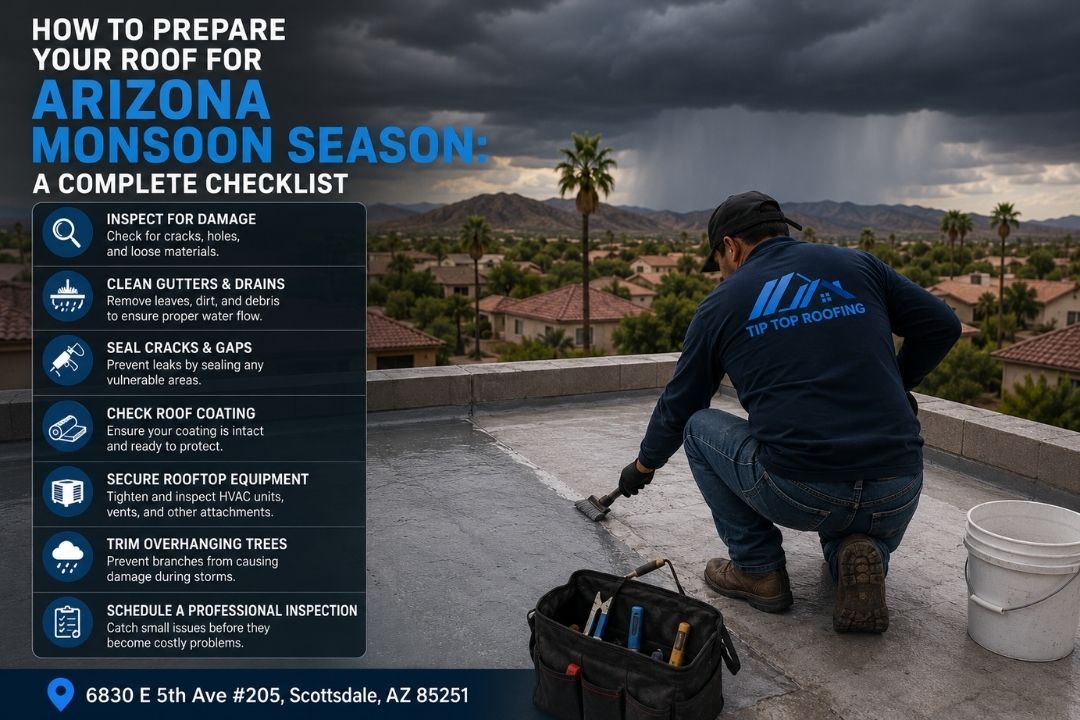
Seasonal occupancy leaves damage undetected. A large portion of Sun City’s residents spend part of the year — typically the hottest summer months — traveling or staying at secondary residences in cooler climates. This is exactly when Arizona’s monsoon season causes the most roof damage, running from July through September, and exactly when heat stress does its most intense work on roofing materials. A leak that develops in August on a home whose owners are in Minnesota may not be discovered until October — by which point water has been working through insulation, framing, and drywall for two to three months. Undetected summer damage is one of the most consistent roofing problems in Sun City, and it is one that regular pre-departure inspections in spring can largely prevent.
The Most Important Roofing Issue in Sun City: Tile Underlayment Failure
If there is one thing every Sun City homeowner with a tile roof needs to understand, it is this: your tiles are probably fine. Your underlayment may not be.
Clay and concrete tiles are highly durable roofing materials that can last 50 years or more in Arizona’s desert climate. They handle UV exposure, extreme heat, and high winds exceptionally well. But the underlayment beneath them — the waterproof barrier that actually keeps moisture out of your home — has a much shorter effective lifespan in the desert. In Sun City’s conditions, tile underlayment typically reaches the end of its reliable service life somewhere between 18 and 30 years after installation, depending on the product quality and conditions.
For a community whose homes were built between 1960 and 1978, and whose roofs have often been serviced but not always fully relaid, this creates a specific and widespread vulnerability. A Sun City home whose tile roof was installed in 1995 may have tiles that look excellent from the ground while the underlayment beneath them has been failing for years. The first sign of that failure is typically an interior water stain on the ceiling — appearing after a monsoon storm, sometimes without any visible exterior damage at all.
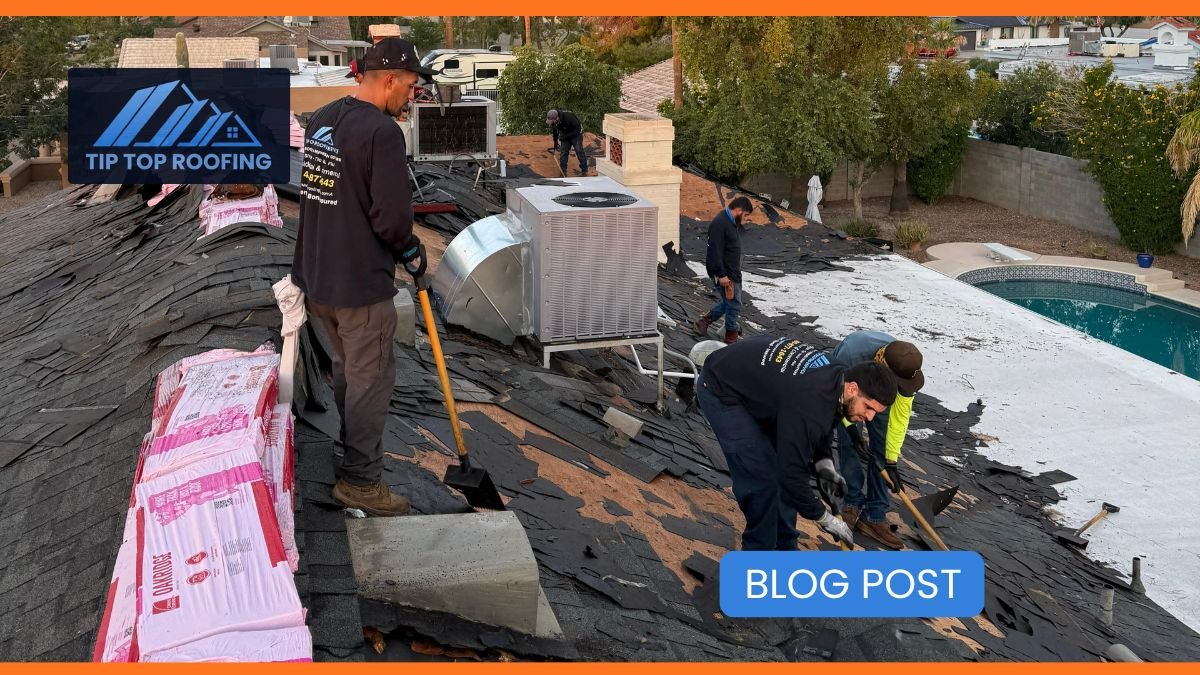
The solution for this situation is a lift-and-relay project — a specialized process in which a roofing contractor carefully removes the existing tiles intact, replaces the deteriorated underlayment with a modern high-performance system, and reinstalls the original tiles. When done correctly, a lift-and-relay extends the life of a tile roof by 20 to 30 years without the cost of purchasing entirely new tile. It is the most appropriate and cost-effective solution for the majority of Sun City’s tile-roofed homes whose underlayment has reached the end of its service life.
Not every roofing contractor performs lift-and-relay work competently. It requires care, patience, and experience with the specific tile profiles common across Sun City’s various neighborhood phases. If your contractor’s first recommendation for an aging tile roof is full replacement without discussing underlayment-only options, ask specifically about lift-and-relay before agreeing to anything.
Common Roofing Problems Across Sun City Neighborhoods
Beyond underlayment failure, these are the issues that show up most frequently on Sun City roofs. For a broader look at why Arizona roofs fail faster than homeowners expect, we cover the full picture in a separate guide — but here are the issues most specific to Sun City:
Brittle and Cracked Shingles on Mid-Century Homes
Some Sun City homes — particularly those with additions or garage conversions from earlier decades — have asphalt shingle sections that have undergone multiple cycles of Arizona summer heat. Shingles that have been subjected to 40 or more summers in Sun City’s climate become brittle, lose their granule protection entirely, and develop cracks that allow water entry. Unlike newer shingle products designed for high-heat climates, the materials used in Sun City’s earlier eras were not engineered for the UV intensity the desert delivers. These sections typically call for replacement rather than repair.
Flashing Failure at Skylights and Added Structures
Sun City’s residents have historically been active in personalizing their homes — adding covered patios, Arizona rooms, and in some cases skylights to bring in natural light. Every one of those additions created new penetration points and roofline transitions. The flashing and sealant at those transitions dries and cracks in the desert heat over decades. Leaks at skylights and at the junction between original rooflines and added structures are among the most frequent repair calls in Sun City.
Foam Roof Aging and Deferred Recoating
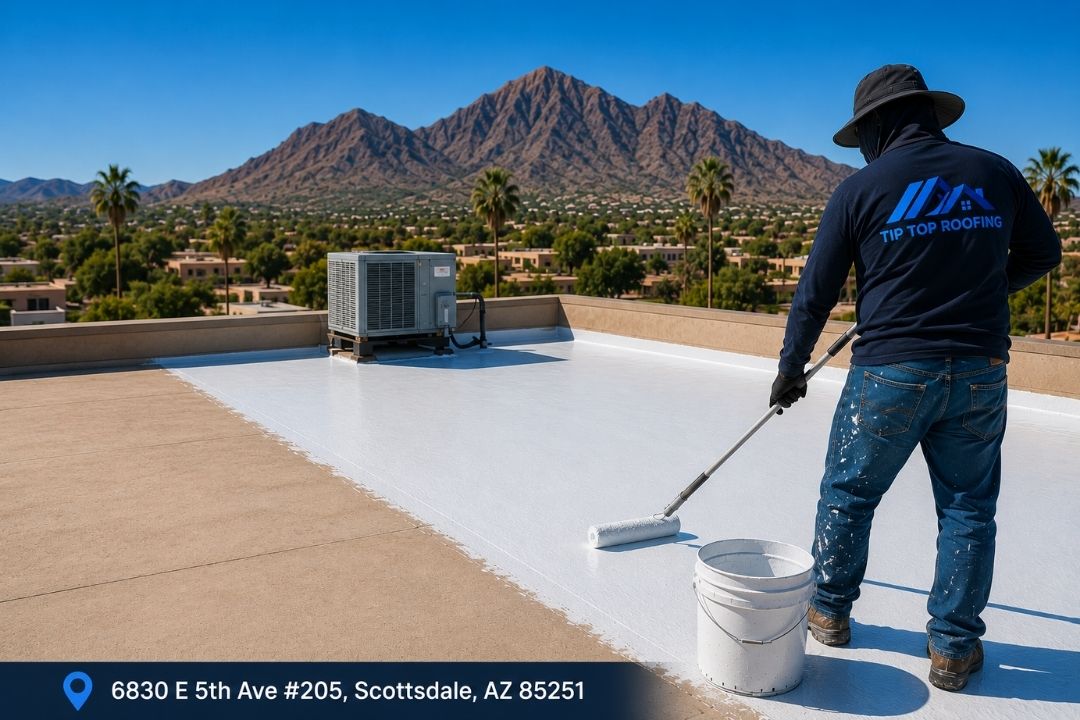
Many Sun City homes have flat or low-slope sections — patio covers, Arizona rooms, and some original architectural features — that were finished with spray polyurethane foam roofing. To understand the full pros and cons of flat roofs in Arizona, including foam systems, we have a dedicated guide. Foam performs exceptionally well in Arizona’s desert climate when maintained properly. The required maintenance is elastomeric recoating — learn more about how foam roof coating works and what it saves you — every five to ten years. Many Sun City homes have foam sections that have gone well beyond that recoating interval. When you see orange or yellow blistering on a foam surface, or when the coating has worn thin enough to expose the underlying foam to direct UV light, recoating has been deferred too long and the system needs attention before the next monsoon season.
Gutter Deterioration and Drainage Blockage
Sun City’s mature landscaping — including many homes with established trees that add to the community’s distinctive character — means gutters accumulate debris at a higher rate than homes in newer, less vegetated neighborhoods. Gutters that overflow during monsoon downpours allow water to back up under the roofline, causing fascia rot and potential water intrusion at the roof edge. For Sun City’s seasonal residents, having gutters cleaned before departing for the summer is a simple step that prevents a common and entirely avoidable problem.
HVAC Penetration Seal Failures
Sun City’s homes often have HVAC equipment that has been added, upgraded, or repositioned over the decades — each change creating new roof penetrations whose seals degrade over time. A professional roof inspection that checks every HVAC penetration, conduit, and associated flashing is the only reliable way to identify these failures before they become active leaks. Our guide on how regular roof inspections prevent thousands in storm damage explains exactly what that inspection process should cover.
Roofing Materials That Work for Sun City Homes
Choosing the right material for a Sun City roof requires balancing the home’s existing architectural character, community standards, and the performance demands of Arizona’s desert climate. For a complete comparison of the best roofing materials for Arizona homes, see our full guide — here is the Sun City-specific picture:
Clay and Concrete Tile
Tile remains the dominant material throughout Sun City’s established neighborhoods and the most appropriate choice for maintaining the community’s architectural character. For homes with existing tile roofs whose underlayment has failed, lift-and-relay is almost always the most appropriate and economical path. For homes that need full replacement, concrete tile offers excellent performance at a lower price point than clay, while clay tile delivers superior longevity for homeowners focused on the longest possible service life.
Asphalt Shingles — High-Heat Rated
For sections of Sun City homes where shingles are appropriate — typically additions, garages, or patios — modern architectural shingles specifically rated for high-heat desert climates offer meaningfully better performance than the standard-grade products that were available during Sun City’s original construction era. If you are weighing asphalt versus foam for flat sections, our guide on asphalt vs foam roof replacement breaks down both options in detail.
Spray Polyurethane Foam
For flat and low-slope sections throughout Sun City — patio covers, Arizona rooms, and some original home designs — foam roofing with proper elastomeric coating is an outstanding performer in the desert climate. Sun City homeowners with existing foam sections that have not been recoated recently should prioritize an assessment before the next monsoon season.
Modified Bitumen and TPO
For flat commercial sections on Sun City’s recreation centers, clubhouses, and golf course facilities — as well as on some residential properties — modified bitumen and TPO systems provide reliable waterproofing performance with appropriate heat resistance for the West Valley climate.
What Does Roofing Cost in Sun City, AZ?
Roofing costs in Sun City broadly align with the Northwest Valley and Maricopa County market, with some variation based on the age-specific work that Sun City’s housing stock often requires:
| Service | Estimated Cost Range | Notes |
|---|---|---|
| Professional roof inspection | Free – $200 | Critical given age of housing stock |
| Minor tile repair (cracked or displaced) | $150 – $500 | Matching original tile profile matters |
| Flashing repair at skylight or addition | $250 – $700 | Per junction or penetration point |
| Foam roof recoat (flat section) | $700 – $2,500 | Size and existing condition dependent |
| Gutter cleaning and repair | $150 – $600 | Annual pre-departure maintenance |
| Lift-and-relay underlayment replacement | $8,000 – $20,000+ | Existing tiles removed, underlayment replaced, tiles reset |
| Full tile replacement (new tile) | $14,000 – $30,000+ | When tiles are beyond reuse |
| Full shingle replacement | $9,000 – $15,000 | High-heat rated products recommended |
All pricing reflects current Sun City and Northwest Valley market conditions. Costs vary based on roof size, pitch, tile condition and reusability, accessibility, and extent of any structural damage found during inspection. Always request a written itemized estimate before any work begins.
Repair or Replace? Making the Right Call for a Sun City Roof
One of the most important decisions Sun City homeowners face is whether a repair is still sufficient or whether replacement is the smarter investment. We cover the full repair-vs-replacement framework in our dedicated guide on whether to repair or replace your roof in Arizona — but the Sun City-specific answer often comes down to underlayment condition, not tile condition.
If the underlayment has failed in multiple areas, lift-and-relay is the repair that makes sense. If the tiles themselves are cracked or broken across large sections, full replacement is warranted. If damage is truly isolated — one failed flashing seal, one cracked tile — targeted repair is appropriate. A licensed contractor who physically inspects the roof should always present you with both options in writing before recommending a course of action.
A Special Note for Sun City’s Seasonal Residents
If you leave Sun City for the summer months, a pre-departure roof inspection in spring — ideally between February and April — is one of the most important maintenance steps you can take.
Here is why it matters: monsoon season runs from July through September. Your roof is exposed to its most intense stress — both from heat and from storm events — while you are away. If a vulnerability exists when you leave, it will almost certainly be found by monsoon conditions while you are gone. The water intrusion that results can damage interior ceilings, insulation, wall cavities, and flooring for weeks or months before you return in fall to discover it.
A spring inspection before departure gives you the opportunity to address any vulnerabilities while you are still present, on your timeline, at planned repair costs — rather than returning in October to emergency repairs and insurance claims on a home that has been slowly water-damaged through an entire monsoon season.
If you are a seasonal resident and have not had your Sun City roof professionally inspected in the past two years, scheduling that inspection before your summer departure is the single highest-value roofing maintenance action available to you.
How to Choose a Roofing Contractor in Sun City
Sun City homeowners are understandably discerning about who they allow to work on their homes. Here is what to look for when evaluating contractors:
Active ROC license. All Arizona roofing contractors must be licensed through the Arizona Registrar of Contractors. Verify at azroc.my.site.com before signing anything. The license must be current and free of disciplinary actions.
Specific Sun City and West Valley experience. Sun City’s homes require contractors familiar with the tile profiles used across the community’s different construction phases, the lift-and-relay process for aging tile underlayment, and the specific standards expected in an active adult community setting. Ask directly whether they have worked in Sun City and request references from local projects.
Respect for the community environment. Sun City is a tight-knit community where roofing work is visible and neighbors notice. A contractor who maintains a clean, organized job site, works within appropriate hours, and communicates clearly throughout the project demonstrates the professionalism this community expects.
Written estimates with full detail. A professional estimate covers all materials, labor, disposal, permit fees if applicable, and timeline — in writing before any work begins.
No high-pressure sales. Sun City’s residents are experienced consumers who do their research. Any contractor who applies pressure to sign immediately, inflates damage assessments to drive replacement decisions, or is unwilling to discuss repair options alongside replacement deserves immediate skepticism.
Why Sun City Homeowners Choose Tip Top Roofing Service
Tip Top Roofing Service is a GAF-certified, BBB-accredited roofing contractor with over 10 years of experience serving Sun City and the greater Phoenix metro. We understand the specific roofing challenges of Sun City’s housing stock — aging tile underlayment, foam recoating, seasonal occupancy patterns — and we bring the transparent, no-pressure approach that Sun City homeowners expect from every professional they work with.
What you get when you work with us:
- Free roof inspection and written estimate — no pressure, no obligation
- Licensed and insured in Arizona: ROC License #355034
- Experienced with Sun City’s tile profiles and lift-and-relay underlayment replacement
- Pre-departure spring inspection scheduling for seasonal residents
- Up to $2,000 off new roof installations
- 0% interest financing over 12 months
- Up to 30-year material warranties on qualifying systems
- Full insurance claim assistance — documentation through settlement
- More than 100 five-star Google reviews from verified Arizona homeowners
We serve all Sun City zip codes including 85351, 85372, 85373, and 85375 — as well as Sun City West and Surprise, Peoria, Glendale, Phoenix, Scottsdale, and 40+ Arizona cities.
Call (480) 877-1643 or email info@tiptoproofingservice.com to schedule your free Sun City roof inspection today.
Frequently Asked Questions: Roofing in Sun City, AZ
What is a lift-and-relay, and does my Sun City tile roof need one?
A lift-and-relay is a process where a roofing contractor carefully removes your existing tile intact, replaces the deteriorated underlayment beneath it with a new high-performance waterproof barrier, and reinstalls your original tile. It extends your roof’s service life by 20 to 30 years without the cost of purchasing new tile. If your Sun City tile roof is 20 or more years old and you have not had an underlayment assessment, there is a strong probability this is what your roof needs — particularly if you have noticed any interior moisture signs or leaks after monsoon rain.
My roof looks fine from the outside. Does it still need an inspection?
Yes — especially in Sun City. Tile roofs can appear completely intact from the ground while the underlayment beneath them has failed entirely. The only reliable way to assess underlayment condition is a professional inspection that examines the roof from above and, where necessary, lifts tiles to assess what is beneath them. In Sun City’s aging housing stock, exterior appearance is not a reliable indicator of waterproofing integrity.
I leave Sun City for the summer. When should I schedule a roof inspection?
Schedule your inspection in spring before departing — ideally between February and April. This gives you time to address any vulnerabilities found before monsoon season arrives and before you are away from the property. Returning in fall to discover a summer of undetected water damage is one of the most avoidable and costly situations in Sun City homeownership.
How much does tile underlayment replacement cost in Sun City?
Lift-and-relay underlayment replacement in Sun City typically runs $8,000 to $20,000 or more depending on roof size, the condition and reusability of the existing tiles, and any structural damage found beneath the surface. While this is a significant investment, it is generally far less expensive than full tile replacement and extends the life of the roof by two to three decades. A free inspection and written estimate is the only way to know the accurate cost for your specific home.
Does homeowner’s insurance cover roof damage in Sun City?
Standard Arizona homeowner’s insurance policies cover storm damage from covered events — monsoon winds, hail, and falling debris. They generally do not cover damage from normal wear, aging, or deferred maintenance. For a full breakdown of what Arizona home insurance covers for roof replacement, see our dedicated guide. If you have seasonal absence during monsoon season, review your policy carefully for any conditions related to unoccupied property periods.
Does Tip Top Roofing Service serve Sun City West as well as Sun City?
Yes. We serve both Sun City and Sun City West, as well as Surprise, Peoria, Glendale, Phoenix, Scottsdale, and more than 40 Arizona cities across the metro area.
Tip Top Roofing Service | (480) 877-1643 | info@tiptoproofingservice.com | tiptoproofingservice.com | 6830 E 5th Ave #205, Scottsdale, AZ 85251 | ROC License #355034