You notice a water stain on your ceiling. Maybe it appeared after last night’s monsoon storm, or maybe it has been slowly growing for weeks and you are only now paying attention to it. The instinct is to look straight up — to assume the leak is entering the roof directly above the stain. In most cases, that assumption is wrong, and acting on it leads to missed repairs and continued water intrusion.
Finding a roof leak from inside is one of the most useful skills an Arizona homeowner can have — not because you should repair it yourself, but because understanding where the water is actually coming from helps you describe the problem accurately, document it for insurance purposes, and make sure the contractor you call addresses the real source rather than just the visible symptom.
This guide walks you through the complete process of tracing a roof leak from the interior of your Arizona home — step by step, in order — including the Arizona-specific factors that make leak detection here different from anywhere else in the country.
Why Arizona Roof Leaks Are Harder to Trace Than You Think
Before getting into the steps, it helps to understand why roof leaks in Arizona behave the way they do — and why the ceiling stain you are looking at is almost never directly below the entry point.
Water travels before it drips. When water enters through a roofing vulnerability — a cracked tile, a failed flashing seal, a deteriorated section of underlayment — it does not fall straight down through the structure. It follows the path of least resistance, which means it runs along rafters, drips down nails, follows the slope of roof sheathing, and absorbs into insulation. By the time it reaches your ceiling and becomes visible, it may have traveled several feet horizontally from where it entered. The ceiling stain tells you water is getting in — it does not tell you where.
Arizona’s monsoon storms drive water horizontally. Unlike steady vertical rainfall in moderate climates, Arizona’s monsoon storms frequently deliver wind-driven rain at significant angles — sometimes nearly horizontal during high-wind events. This means water can be forced under tiles or shingles from the windward side in ways that would not occur under vertical rain. A flashing seal that handles light rain perfectly may admit wind-driven water during a monsoon, which is why Arizona leaks that appear during storms often cannot be reproduced with a simple overhead water test.
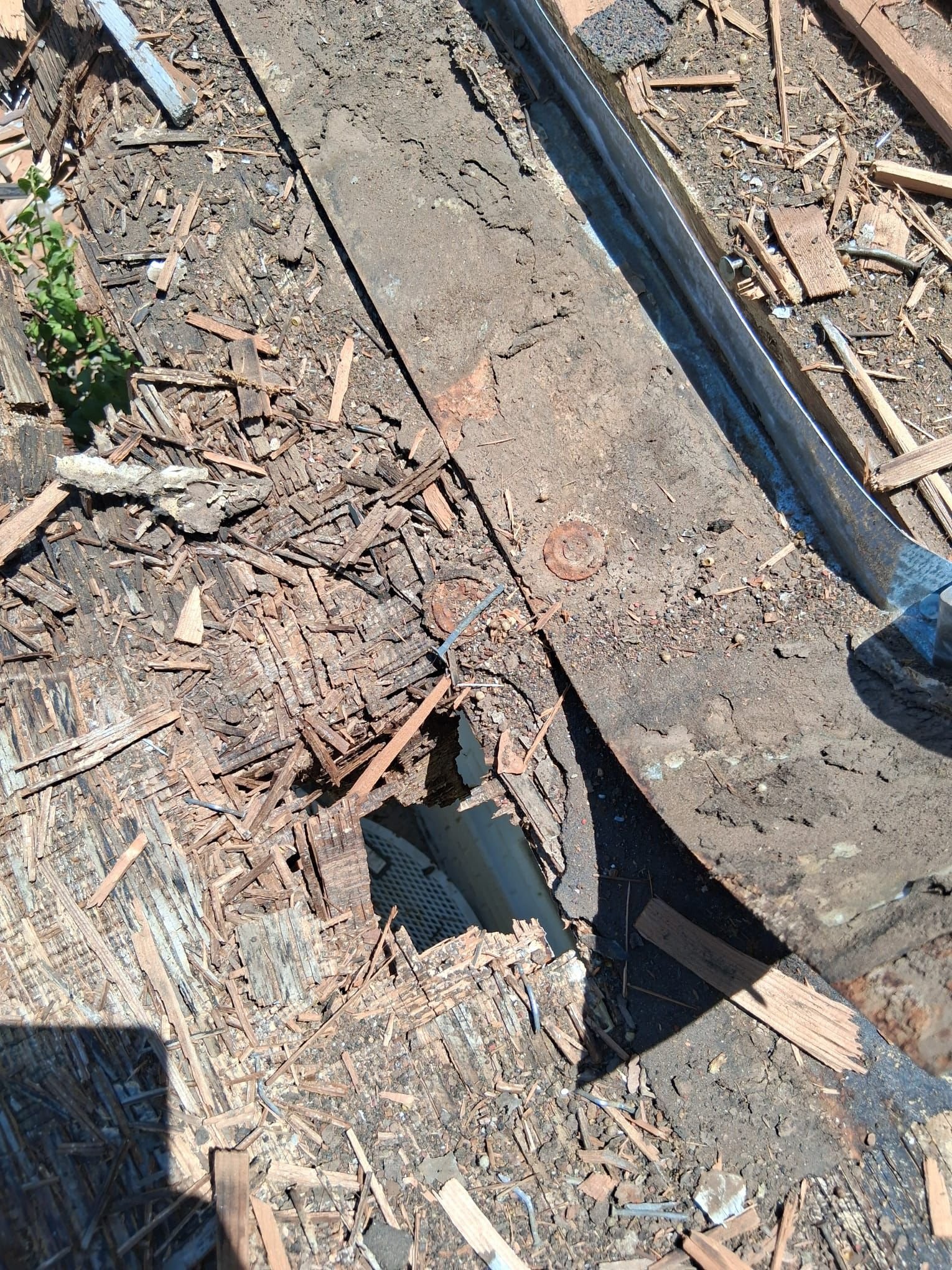
Underlayment failure is the hidden culprit on most Arizona tile roofs. In much of the country, a visible roof surface problem — a missing shingle, a cracked tile — is the most common leak source. In Arizona, underlayment failure beneath intact-looking tile is the most frequent cause of roof leaks, particularly on homes over 15 years old. The tile can be perfect. The underlayment beneath it can be completely failed. This is one reason why exterior visual inspection alone is often insufficient to diagnose Arizona tile roof leaks — the source is invisible until the tile is lifted.
Heat creates condensation leaks that mimic roof leaks. Arizona’s extreme attic temperatures — which can reach 150°F or more in summer — combined with air conditioning running hard inside the home, create significant temperature differentials. In some cases, condensation forming on cold HVAC ducts, exhaust fans, or plumbing pipes running through the attic can drip onto the ceiling below and create stains that appear identical to roof leak stains. Ruling out this possibility is an important early step in any Arizona roof leak investigation.
Step 1 — Rule Out Non-Roof Sources First
Before assuming you have a roof leak, rule out the other common sources of interior moisture that can produce identical symptoms.
HVAC condensation. Check whether the stained area is near or below an HVAC duct, air handler, or return air plenum in the attic. Condensation on cold metal surfaces during Arizona’s summer is common and can drip steadily onto the ceiling below. If the staining appears during hot weather when your air conditioning is running hard but not during or after rain events, HVAC condensation is a likely culprit rather than a roof leak.
Bathroom exhaust fans. Exhaust fans that are venting into the attic rather than through the roof or an exterior wall create moisture accumulation in the attic space that can appear as ceiling staining near the bathroom. Check whether a bathroom is located near or below the stained area.
Plumbing pipes in the attic. Any plumbing that runs through the attic — particularly cold water supply lines — can sweat condensation in Arizona’s extreme attic heat if insulation has shifted or degraded. Check whether the staining correlates with plumbing locations.
The rain correlation test. The clearest indicator that you have a roof leak rather than a condensation or plumbing issue is whether the staining appears or worsens specifically after rain events. If the stain grew after last night’s monsoon storm, you almost certainly have a roof leak. If the staining appears during dry weather or hot periods without rain, investigate non-roof sources first.
Step 2 — Document Everything Before You Touch Anything
Before entering the attic or doing anything else, photograph the interior staining thoroughly. This documentation matters for two reasons.
First, if an insurance claim becomes relevant — particularly if the leak resulted from monsoon storm damage — having dated photographs of the interior damage taken immediately after the storm event is one of the most important pieces of evidence you can provide. For a full understanding of what Arizona homeowner’s insurance covers for roof damage, our dedicated guide covers the full picture.
Second, photographing the stain’s size and location before any investigation or temporary mitigation gives you a baseline to compare against. If the stain grows between your initial observation and a contractor’s visit, that comparison documents active and ongoing water intrusion.
Photograph the stain from multiple angles. Note the size, shape, and location relative to fixed reference points — ceiling fans, light fixtures, walls. Note the date and whether a rain event preceded the appearance or growth of the stain.
Step 3 — Enter the Attic and Trace the Water Path
The attic is the most valuable space for diagnosing a roof leak from inside, because it gives you direct visual access to the underside of the roof deck — the surface where water first appears after entering through the roofing system above.
What you need: a flashlight or headlamp, a phone or camera for additional photographs, and appropriate footwear. Move carefully in the attic — step only on ceiling joists, never between them, or you risk stepping through the ceiling below.
Start above the ceiling stain and work uphill toward the ridge. Position yourself above the ceiling stain you observed below, then look upward at the underside of the roof sheathing. The critical rule of roof leak tracing is this: the entry point is almost always uphill — closer to the ridge — from where water first appears on the ceiling. Water that enters at the ridge can travel downward several feet along the sheathing before dripping onto the insulation below. Never assume the stain is directly below the entry point.
What to look for on the underside of the sheathing:
- Water stains or dark streaks on wood. These are the primary indicators — dried water marks on the underside of the sheathing or along rafter surfaces show you the path water has traveled. Follow the stain trail uphill toward the ridge to find its highest visible point, which is closest to the actual entry location.
- Active dripping or wet spots. If you are in the attic during or shortly after a rain event, active dripping confirms a current leak. Note exactly where the drip originates on the sheathing surface.
- Daylight through the sheathing. In daylight hours, any point of light visible through the roof deck indicates a gap, crack, or hole in both the roofing material above and the sheathing — an obvious and serious entry point.
- Rusted nails. Nails in the sheathing that show significant rust discoloration indicate chronic moisture exposure at that location — a reliable indicator of long-term water infiltration near that point.
- Mold growth on wood surfaces. Dark mold growth on rafters or sheathing confirms that moisture has been present long enough to support biological growth — meaning the leak predates your current awareness of it, sometimes by months.
- Wet or clumped insulation. Insulation that is visibly wet, compressed, or discolored indicates water has been saturating it — both confirming the leak and flagging potential mold risk in the insulation itself.
Follow the water trail to its highest visible point. Using your flashlight, trace any visible staining on the sheathing uphill from where you started — following the rafter lines and sheathing seams — until you reach the highest point where the stain or moisture appears. That highest visible point is your best interior indication of where the water is entering the roofing system above. Mark or photograph that location relative to a fixed reference — a specific rafter, the distance from the ridge, or a visible rooftop feature above.
Step 4 — Identify the Most Likely Entry Point Category
Once you have traced the water trail to its highest interior point, you can begin to identify what is most likely causing it based on what roofing features are located at that position above the attic. Arizona roof leaks cluster around a consistent set of culprits.
Penetration Points — The Most Common Arizona Leak Source
Every pipe, vent, HVAC unit, exhaust fan, skylight, and chimney that passes through the roof is a potential leak point. The metal flashing and sealant that seal these penetrations dry out and crack in Arizona’s extreme heat — often long before any visible surface damage appears. If the highest point of your interior water trail is below or near a rooftop penetration, that penetration’s flashing is the most likely leak source.
Skylight leaks are particularly common in Arizona’s older housing stock. The sealant around skylight frames degrades in the desert sun and eventually allows wind-driven rain to enter — producing ceiling staining that appears directly below or adjacent to the skylight. Our guide on what a professional roof inspection covers explains how every penetration point should be assessed during a proper inspection.
Roof Valleys
Valleys — the V-shaped channels where two roof planes meet — concentrate water flow during rain events. Valley flashing that has corroded, shifted, or been damaged by debris accumulation is a common leak source, particularly in Arizona where haboob debris accumulates in valleys year-round. If your water trail leads to a valley location, valley flashing failure is a strong candidate.
Ridge and Hip Lines
Ridge caps and hip tiles are often mortared or sealed at installation — and that mortar and sealant deteriorates over time in Arizona’s UV and heat exposure. Cracked ridge cap mortar allows wind-driven monsoon rain to enter at the very peak of the roof and run downhill inside the sheathing, producing staining well below the actual entry point. This is a particularly deceptive leak type because the entry point — at the ridge — is as far as possible from where the stain eventually appears.
Underlayment Failure Beneath Intact Tile
This is the most uniquely Arizona roof leak scenario. On homes with tile roofs over 15 years old, the underlayment beneath the tile may have failed in one or more areas — allowing water that gets under the tile during wind-driven rain to pass through to the deck below. The tiles above look perfect. The sheathing below shows staining. There is no obvious exterior damage. This scenario requires professional diagnosis — a licensed contractor who physically lifts tiles to assess underlayment condition. Our guide on tile roofing in Arizona covers the underlayment failure timeline in detail.
Step 5 — The Garden Hose Test (When You Cannot Find It During Rain)
If your attic investigation does not reveal a clear water trail — perhaps because the leak has not been active recently or because the staining is older — a controlled hose test can help confirm the leak location when the next rain event is not imminent.
This test requires two people: one in the attic with a flashlight, phone, and a way to communicate with the person outside, and one person outside with a garden hose. The process is methodical and requires patience.
Start low and work upward. Begin spraying the roof below and to the downhill side of the suspected leak area — not directly above it. Soak each section thoroughly for two to three minutes before moving uphill. Starting too high wastes time and can produce false results because water from an upper section can run down and appear to come from a lower entry point.
Work section by section around penetrations. Spend particular time soaking around every vent, pipe, skylight, and flashing transition in the suspected area. Have your attic spotter watch continuously and communicate the moment they see any dripping or wet spot appear on the sheathing.
When the spotter sees water, stop and mark the location. The section of roof being soaked when the interior drip appears is the general zone of the leak entry point. This narrows the professional inspection area significantly and helps your roofing contractor go directly to the most likely source.
Important limitation in Arizona: The garden hose test cannot reproduce wind-driven rain. Leaks that only appear during high-wind monsoon events — when rain is being driven horizontally under tile edges or through gaps that would not admit vertical water — will not be found with a garden hose test. If your leak only appears during storms with significant wind, mention this specifically to your roofing contractor so they assess wind-exposure areas and tile edge sealing rather than only vertical rain entry points.
Step 6 — Temporary Mitigation While You Wait for Professional Repair
Once you have identified the approximate area of the leak — or even if you have not — protecting your interior from further damage while waiting for a professional repair is a worthwhile step.
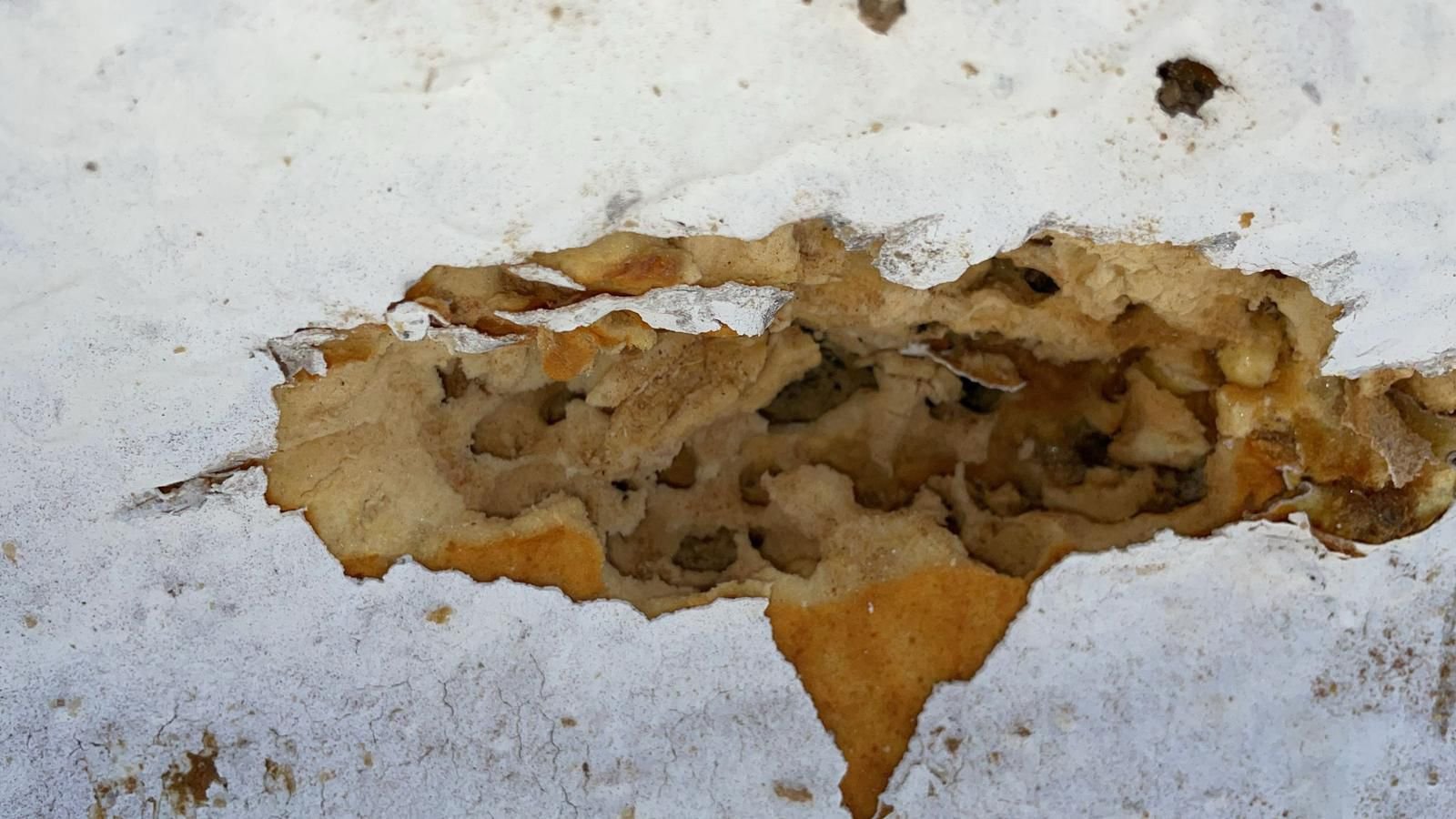
Relieve ceiling bulges carefully. If your ceiling drywall is bulging from trapped water, carefully puncture a small hole at the lowest point of the bulge with a screwdriver to allow the accumulated water to drain in a controlled stream into a bucket below. A ceiling full of trapped water can collapse suddenly and cause significantly more damage than a controlled drain.
Place buckets or containers under active drip points. If water is actively dripping through the ceiling, contain it. Use buckets, towels, or plastic sheeting to protect flooring, furniture, and belongings below.
Move valuables away from the affected area. Electronics, documents, and irreplaceable items should be relocated out of the risk zone until the leak is professionally repaired.
Do not attempt to repair the roof yourself. Temporary patches applied by homeowners — caulk, sealant, roofing tape — almost always miss the actual entry point, void manufacturer warranties, and can complicate the professional diagnosis when the contractor arrives. Document and contain the interior damage, and call a licensed contractor as soon as possible. The true cost of ignoring roof damage in Arizona compounds quickly — what is a manageable repair today becomes structural damage if water continues working through the system through multiple monsoon events.
When to Call a Professional Immediately
Some situations go beyond what interior investigation can accomplish and require an immediate professional response rather than a systematic self-investigation:
- Active water streaming — not just dripping — from the ceiling
- Ceiling bulging across a large area indicating significant water accumulation above
- Multiple stains appearing in different areas of the home after a single storm
- Any sign of mold — dark patches, musty odors — in the attic or living spaces
- Visible daylight through the roof deck from the attic
- Sagging or soft ceiling areas indicating structural saturation
- A leak that appears during a storm on a tile roof over 15 years old with no obvious exterior damage
These situations indicate damage that has progressed beyond surface-level investigation and require a licensed contractor with the ability to physically assess the roofing system from above. Our guide on how regular roof inspections prevent thousands in storm damage explains why professional assessment after any significant storm event is the most cost-effective approach available to Arizona homeowners.
Active Roof Leak in Arizona? Tip Top Roofing Service Is Ready
Tip Top Roofing Service is a GAF-certified, BBB-accredited roofing contractor with over 10 years of experience diagnosing and repairing roof leaks across the Phoenix metro and Arizona. We understand Arizona’s specific leak patterns — monsoon-driven underlayment failures, wind-driven flashing penetrations, tile roofs that look perfect from the outside while leaking inside — and we bring the diagnostic experience to find the real source rather than patching the visible symptom.
What you get when you work with us:
- Free roof inspection and written assessment — no pressure, no obligation
- Licensed and insured in Arizona: ROC License #355034
- Same-day or next-day response for active leaks and urgent storm damage
- Written inspection report with photographs suitable for insurance filing
- Full insurance claim assistance — documentation through settlement
- Free estimates for new roof installations
- 0% interest financing over 12 months — learn more about financing a new roof in Arizona
- Up to 30-year material warranties on qualifying systems
- 130+ five-star Google reviews from verified Arizona homeowners
We serve Chandler, Mesa, Gilbert, Peoria, Surprise, Goodyear, Avondale, Sun City, Scottsdale, Phoenix, Tempe, and 40+ Arizona cities.
Call (480) 877-1643 or email info@tiptoproofingservice.com to schedule your free inspection or get same-day response for an active leak.
Frequently Asked Questions: Finding a Roof Leak From Inside in Arizona
Why is the ceiling stain not directly below the roof leak?
Because water follows the path of least resistance once it enters the roofing system. It runs along the slope of the roof sheathing, drips down rafter surfaces, follows nail lines, and absorbs into insulation before eventually saturating the ceiling material below and becoming visible as a stain. In Arizona, where wind-driven monsoon rain frequently forces water in from unexpected angles, this horizontal travel can be significant — sometimes several feet between entry point and visible stain. Always trace uphill from the stain toward the ridge to find the actual source.
My tile roof looks perfect from the outside but I have a ceiling stain. What is causing it?
This is the most common Arizona tile roof leak scenario and the one that surprises homeowners most. The tiles themselves are highly durable and rarely show visible damage — but the underlayment beneath them has a finite lifespan of 20 to 30 years in Arizona’s desert heat. When underlayment fails, water that gets under the tile during wind-driven rain passes directly through to the deck below and eventually reaches the ceiling. The tiles look perfect. The leak is real. Only a professional inspection that physically lifts tiles to assess the underlayment can confirm this diagnosis. Our guide on what roof underlayment is and why it matters covers this failure mode in full detail.
How do I know if the ceiling stain is from a roof leak or a plumbing or HVAC problem?
The most reliable indicator is the rain correlation — does the stain appear or grow specifically after rain events? If yes, it is almost certainly a roof leak. If the staining appears during dry weather, during periods of heavy air conditioning use, or in locations directly below HVAC equipment or bathroom exhaust fans, investigate condensation and plumbing sources first. HVAC condensation on cold ductwork in Arizona’s extreme attic heat is a common source of ceiling staining that mimics roof leaks.
Should I try to repair the leak myself after I find it?
No — and this is particularly important in Arizona where DIY roof repairs almost universally void manufacturer warranties. Even if you identify the approximate entry point, the actual repair requires licensed contractor work using approved materials and proper technique to remain warranty-compliant and to actually fix the root cause rather than the visible symptom. Document your findings thoroughly, share them with your roofing contractor to help them go directly to the source, and let the professional handle the repair. Our guide on what voids a roof warranty in Arizona covers exactly why DIY repairs are particularly costly decisions.
How long can I wait before getting a roof leak professionally repaired?
In Arizona’s climate, the answer is: as little time as possible. Monsoon season means you will face additional rain events in the weeks following any leak discovery. Each subsequent event drives more water through the same vulnerability, expanding saturation in insulation, accelerating wood rot in sheathing and rafters, and potentially initiating mold growth — which the EPA notes can begin in as little as 24 to 48 hours in moist conditions. A leak that costs a few hundred dollars to repair today can cost thousands in structural and mold remediation if allowed to continue through multiple monsoon events. Our roof leak repair guide covers exactly what the repair process involves and what to expect.
Does homeowner’s insurance cover the interior damage from a roof leak?
It depends on the cause and the timing. If the roof leak resulted from a covered storm event — monsoon wind damage, hail, or a sudden accidental event — most Arizona homeowner’s insurance policies cover both the roof repair and the resulting interior damage, subject to your deductible. If the leak resulted from normal wear, aging, or deferred maintenance, coverage is typically denied. Document all damage promptly after any storm event and contact your insurer quickly. For a complete guide to what Arizona homeowner’s insurance covers for roofing, see our detailed breakdown. Tip Top Roofing Service assists Arizona homeowners with the full documentation and claims process.
Tip Top Roofing Service | (480) 877-1643 | info@tiptoproofingservice.com | tiptoproofingservice.com | 6830 E 5th Ave #205, Scottsdale, AZ 85251 | ROC License #355034