Concrete and clay tile have earned their reputation in Arizona, but tile roof maintenance is still part of owning one. The tiles shed most of the water, while the underlayment, flashing, and fasteners underneath do quiet work that you cannot see from the driveway. This checklist covers concrete tile roof maintenance and clay tile care for Arizona homes, built from Tile Roofing Industry Alliance guidance, NRCA, InterNACHI, and manufacturer care guides.
Last updated: November 4, 2026. By Lior Gabay, Tip Top Roofing Service, ROC #355034.
What Does Tile Roof Maintenance Involve?
Tile roof maintenance means inspecting tiles, flashing, and underlayment, clearing debris from valleys and eaves, replacing broken tiles, and rechecking penetrations at least twice a year and after severe weather. Concrete and clay tile are durable, but the underlayment beneath them is a secondary barrier that needs checking too, as Tip Top Roofing Service and industry groups note.
- Tile Roofing Industry Alliance (May 19, 2023): TRI president Richard K. Olson lists maintenance items for eaves, ridge, rake, valleys, roof-to-wall transitions, penetrations, solar and HVAC areas, field tile, and underlayment, including removing a tile to assess underlayment condition. Source: Richard K. Olson, Tile Roofing Industry Alliance, Tile Talk: Maintenance Program (May 19, 2023).
- NRCA (November 1, 2020): Scheduled roof inspections at least twice a year, preferably in spring and fall, with additional inspections after severe weather. Source: NRCA, Professional Roofing, A new resource for consumers (November 1, 2020).
- Eagle Roofing (March 4, 2021): A routine inspection covers cracked tile, drainage problems, and the attic for leaks and damage to underlayment and deck, followed by a condition report and repair estimates. Source: Eagle Roofing, How To Maintain Your Concrete Tile Roof this Spring (March 4, 2021).
- InterNACHI (accessed November 2026): Cracked tiles are unreliable and prone to leaks, and interlocking edges are cast thinner than the rest of the tile, so they tend to break first. Source: InterNACHI, Concrete Tile Roof Inspection Guide.
Tip Top Roofing Service perspective
Leaks on tile roofs often trace back to flashing, penetrations, or underlayment rather than the tile itself. A maintenance checklist exists to catch those spots early, which is why it goes beyond looking for broken tiles.
Tile Roof Maintenance Checklist
Use this list as a guide for what a thorough tile roof maintenance visit covers. Items come from the Tile Roofing Industry Alliance maintenance program and InterNACHI’s concrete tile inspection guide unless noted.
| Area | What to check or do |
|---|---|
| Field tiles | Identify and replace broken, cracked, slipped, or missing tiles during routine maintenance |
| Tile edges and interlocks | Look for chips at the thinner interlocking edges, which break first |
| Ridge and hip | Check attachment to the ridge riser and the weather blocking where field and ridge tiles meet; ridge pieces installed backwards do not divert water down the slope; open ends should be filled with a bird stop or mortar |
| Rake | Check fasteners and weather blocking |
| Eaves | Remove debris so water that gets under the tile is not trapped; where a raised edge could let water back up against wood, anti-ponding material is recommended to protect underlayment performance |
| Valleys | Clean out valleys and remove obstacles; on batten installations, confirm batten extenders are used so water does not channel under the tile |
| Penetrations and flashing | Inspect installation, sealing, and flashing at vents, pipes, and chimneys, because sealants and flexible materials degrade over time and create leak paths |
| Roof-to-wall and solar or HVAC areas | Confirm water is directed onto the tile or off the roof without obstruction, and that flashing covers all sides of any boxed-out area |
| Underlayment | Remove a tile to assess underlayment condition, note it, and discuss repair options |
| Attic and ceilings | On a sunny day, look for daylight at roof penetrations and water stains on decking, and check ceilings for stains |
| Cleaning | Water only, at no more than 1200 psi per Eagle Roofing, using a licensed, bonded, and insured contractor |
Attic daylight check, from the Florida Division of Emergency Management checklist: no light at a penetration means the seal is tight, some light means cracks or gaps, and lots of light means deterioration that needs a roofer (Florida Division of Emergency Management, Tile Roof Checklist).
Concrete Tile Roof Maintenance
Concrete tile is heavy and durable, and most of its care is cleaning, replacing broken pieces, and watching what is underneath. Eagle Roofing recommends a power washer using only water at no more than 1200 psi, noting that higher pressure can affect the pH of the concrete tile and discolor it (Eagle Roofing, How To Maintain Your Concrete Tile Roof this Spring (March 4, 2021)). InterNACHI adds two things to look for: fasteners wedged in tile seams, which should be removed, and manufacturing defects such as spalling, voids, and shrinkage cracks.
If you are comparing materials, our concrete tile vs. clay tile guide for Arizona covers the differences.
Clay Tile Roof Maintenance and Roof Tiles Maintenance in General
Clay tile care is similar, with two points specific to the material. Haag Engineering notes that clay tiles can show pitting, spalling, lack of glazing, or voids from manufacturing, and that these are not hail damage (Haag Engineering, Hail Damage to Tile Roofing (2004)). Haag’s testing also found clay tile edges and corners are more vulnerable to impact than the field of the tile, which is a reason to be careful with foot traffic near edges.
For roof tiles maintenance of any kind, see our page on clay tile roof maintenance in Scottsdale and our roof maintenance services.
Should You Walk on a Tile Roof to Check It?
Generally no. The Florida Division of Emergency Management checklist advises against walking on a tile roof because improper walking can cause more damage than re-attaching loose tiles fixes. The Tile Roofing Industry Alliance technical brief notes that most manufacturers specifically do not warrant breakage due to foot traffic (Tile Roofing Industry Alliance, Technical Brief 2014-02). If a professional must walk it, Eagle Roofing advises stepping on the bottom three inches of the installed tile, where the tile beneath provides support, with feet parallel to the ridge and weight spread evenly (Eagle Roofing, Step lightly: The right way to walk on a tile roof (April 30, 2025)). Our guide on whether you can walk on your tile roof in Arizona goes deeper.
Underlayment: The Part You Cannot See
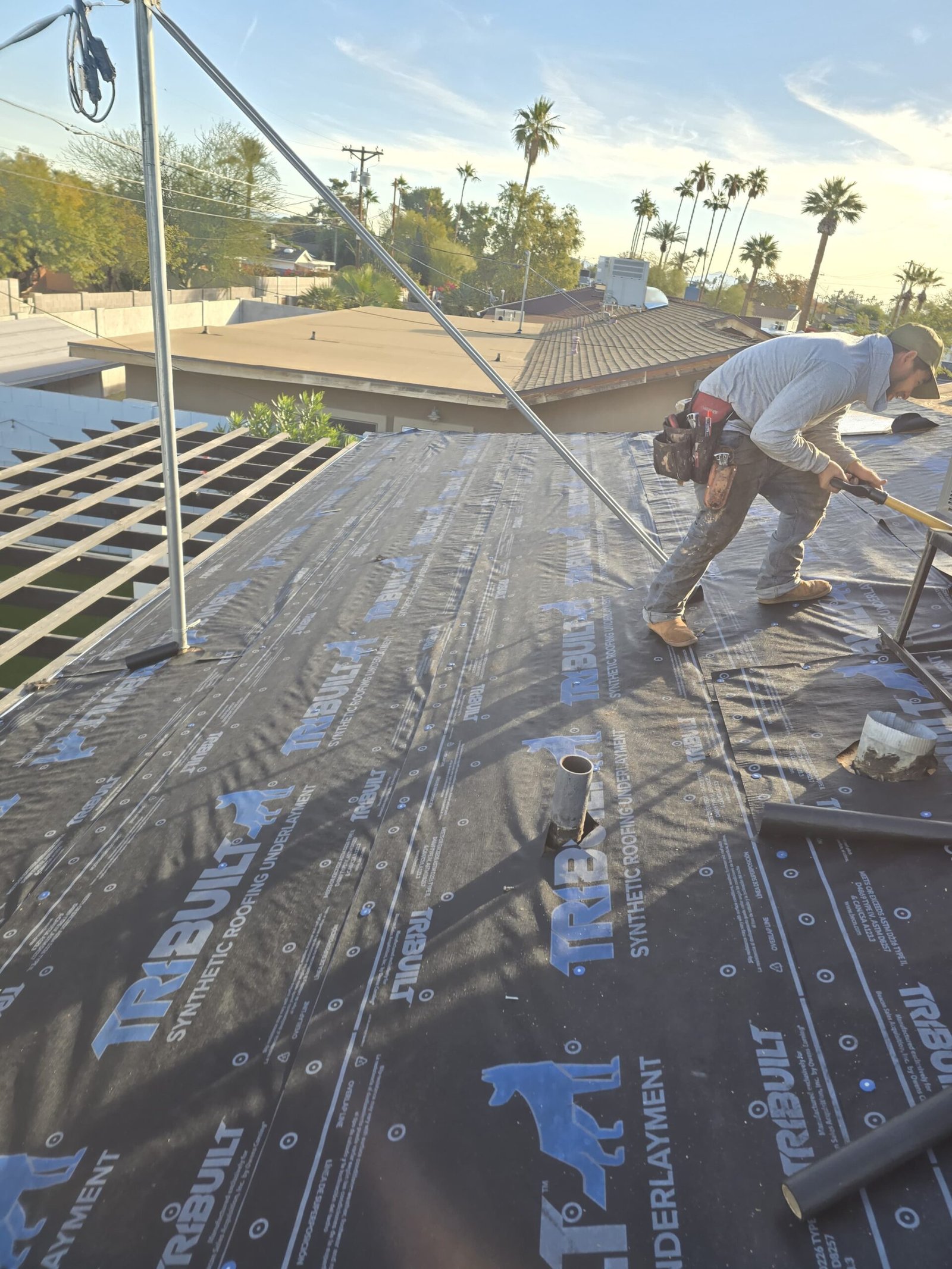
On a tile roof, the tile is the primary water-shedding layer and the underlayment is a secondary barrier. Eagle Roofing notes that contractors should check underlayment during any maintenance or repair, with extra attention to eaves, hips, ridges, and penetrations exposed to wind-driven rain. It also notes that when the tile is in good condition, replacing the underlayment alone can often be delayed, and that a lift and re-lay can be a viable option (Eagle Roofing, Underlayment Maintenance (January 23, 2020)).
To understand the materials, read our guides on felt, synthetic, and self-adhering underlayment and what roof underlayment is.
When Tile Roof Maintenance Turns Into Repair
Maintenance finds problems; repair fixes them. Cracked or slipped tiles, failed flashing, and exposed underlayment are repair items. Our guide to cracked tiles and roof repair in Scottsdale explains what is involved.
Tip Top Roofing Service perspective
A good maintenance visit ends with a written condition report: what was checked, what was found, and the repair options. That is the same standard Eagle Roofing describes for a routine inspection, and it is what we aim to give you with a free estimate.
Frequently Asked Questions About Tile Roof Maintenance
What maintenance does a tile roof need?
A tile roof needs regular inspection of tiles, flashing, and underlayment, debris removal from eaves and valleys, replacement of broken tiles, and rechecking of penetrations and sealants. The Tile Roofing Industry Alliance also lists removing a tile to assess underlayment condition as part of a maintenance program.
How often should a tile roof be inspected?
NRCA recommends scheduled roof inspections at least twice a year, preferably in spring and fall, with extra inspections after severe weather. That applies to tile roofs as well as other types.
Can I pressure wash a concrete tile roof?
Eagle Roofing recommends a power washer using only water at no more than 1200 psi, because higher pressure can affect the pH of the concrete tile and discolor it. It also recommends hiring a licensed, bonded, and insured contractor because walking on any roof is dangerous.
Can I walk on my tile roof to check it?
It is best not to. Improper walking can break tiles, and most manufacturers do not warrant breakage due to foot traffic. If a professional must walk the roof, the recommended method is to step on the bottom three inches of the installed tile.
Does tile roof underlayment need maintenance?
Yes. Underlayment is a secondary barrier under the tile, and contractors should check it during any maintenance or repair, especially at eaves, hips, ridges, and penetrations. Whether it needs spot repair or replacement depends on buckling, tearing, or worn areas.
How do I know if my tile roof needs repair?
Warning signs include cracked, broken, slipped, or missing tiles, water stains on ceilings, and daylight visible through the roof at penetrations when you check the attic on a sunny day. If you see them, have a roofer who works on tile evaluate the roof.
Schedule Tile Roof Maintenance With a Free Estimate
As a local roofing company serving Scottsdale, AZ, Tip Top Roofing Service inspects tile roofs, replaces broken tiles, and checks flashing and underlayment, and we provide a free estimate for the work. See our roof maintenance services.
📞 Call Tip Top Roofing Service today at (480) 877-1643
📧 Email: info@tiptoproofingservice.com
🌐 Website: https://tiptoproofingservice.com/
🕓 Hours: Open 7 days, 8 AM to 6 PM (Fridays until 4 PM)
References
- Tile Roofing Industry Alliance via Western States Roofing Contractors Association: Tile Talk, Maintenance Program (May 19, 2023)
- NRCA, Professional Roofing: A new resource for consumers (November 1, 2020)
- Eagle Roofing: How To Maintain Your Concrete Tile Roof this Spring (March 4, 2021)
- Eagle Roofing: Underlayment Maintenance (January 23, 2020)
- Eagle Roofing via RoofersCoffeeShop: Step lightly, the right way to walk on a tile roof (April 30, 2025)
- InterNACHI: Concrete Tile Roof Inspection Guide
- Florida Division of Emergency Management: Tile Roof Checklist
- Haag Engineering: Hail Damage to Tile Roofing (AMS, 2004)
- Tile Roofing Industry Alliance: Technical Brief 2014-02