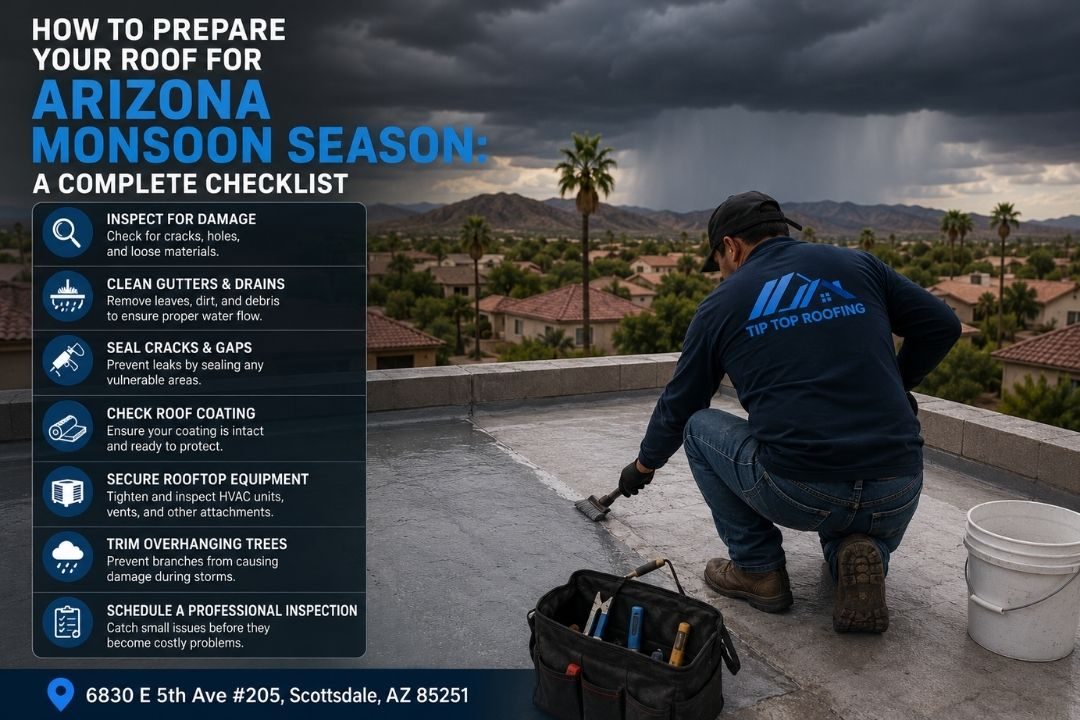
The National Weather Service defines Arizona’s monsoon season as the period from June 15 through September 30, a stretch that brings intense thunderstorms, sudden dust storms, damaging winds, and heavy rainfall in a very short window of time. For homeowners across Scottsdale, Phoenix, Mesa, and the surrounding valley, this is the single most important time of year to make sure your roof is ready. A roof that has spent a full year baking under Arizona’s summer sun is often more vulnerable than homeowners realize, and small issues that seem harmless in dry weather can turn into major leaks the moment the first real storm hits. This checklist walks through exactly what to inspect and prepare before monsoon season arrives.
Why Pre-Monsoon Roof Prep Matters in Arizona
Arizona roofs face a different set of stresses than roofs in most other parts of the country. Nine months of intense UV exposure and surface temperatures that regularly exceed 150°F dry out sealants, warp flashing, and make roofing materials brittle. Then, within a matter of weeks, that same roof is expected to withstand heavy downpours, wind gusts that can exceed 50 miles per hour, and hail in some storms. This rapid transition from extreme heat to sudden heavy rain is exactly why so many roof leaks and failures in the Phoenix metro happen during the first few major monsoon storms of the season rather than gradually over time. For a full breakdown of monsoon-specific risks, see our Arizona monsoon roof safety guide.
The Pre-Monsoon Roof Checklist
1. Schedule a Professional Roof Inspection
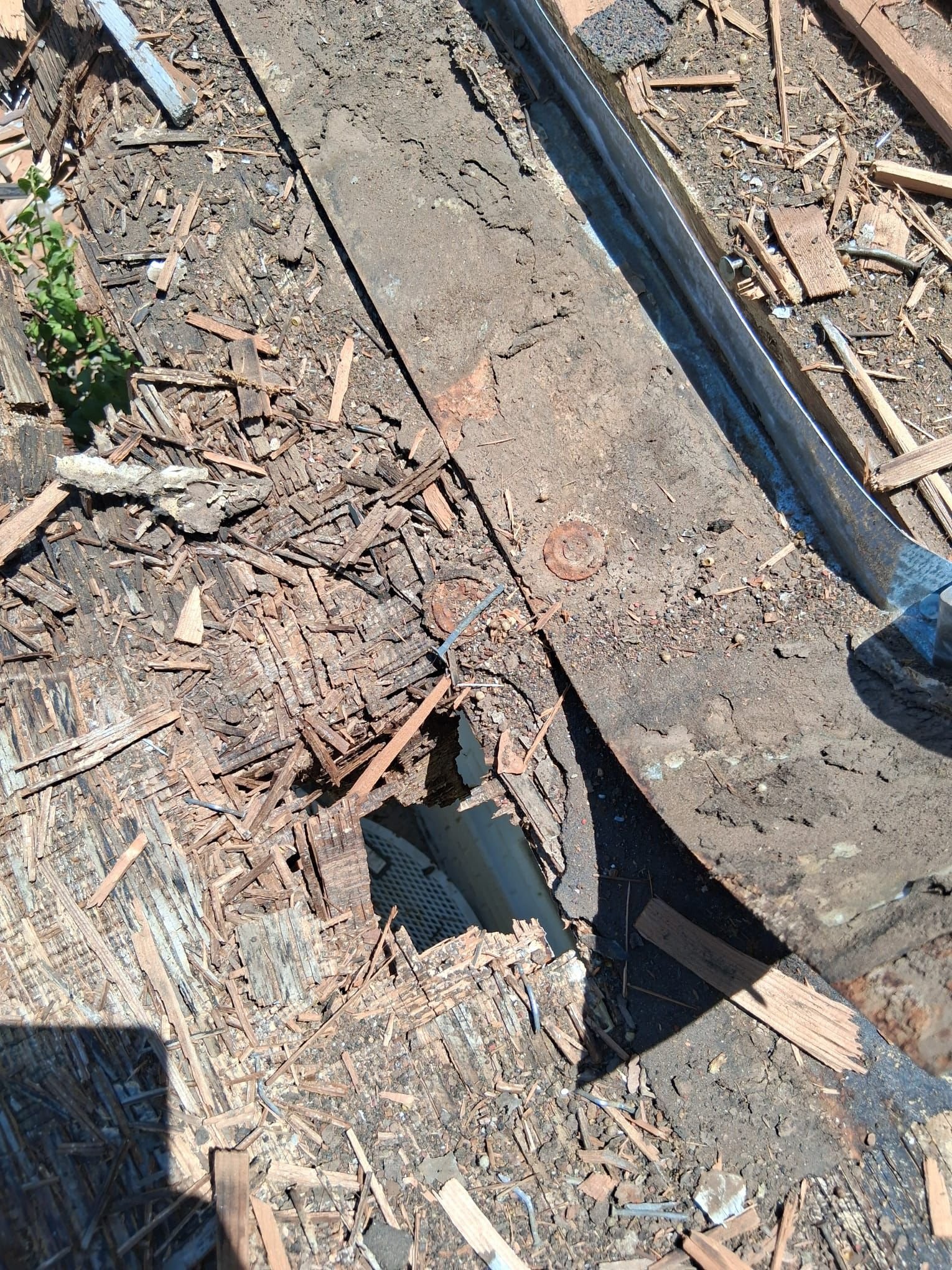
The single most effective step is a professional inspection before the season starts, ideally in May or early June. A qualified roofer can spot cracked tiles, lifted shingles, worn flashing, and early signs of wear that are difficult to see from the ground. Most contractors, including Tip Top Roofing Service, offer free inspections specifically because catching a small issue in June is far cheaper than repairing storm damage in August.
2. Clear Gutters and Downspouts Completely
Gutters clogged with dust, leaves, and debris from Arizona’s dry season cannot handle the sudden volume of water a monsoon storm produces. Clogged gutters back water up under roofing materials and against fascia boards, which is one of the most common causes of water intrusion during monsoon season. Clean gutters and downspouts thoroughly, and confirm that downspouts direct water at least several feet away from the foundation.
3. Check and Reseal Roof Flashing
Flashing is the thin metal material installed around chimneys, vents, skylights, and roof valleys to direct water away from seams and joints. Arizona’s heat cycles cause flashing sealant to dry out and crack over time, creating small gaps that a heavy monsoon downpour will find immediately. Have a professional check all flashing points and reseal or replace any sections showing gaps, rust, or lifted edges. Our guide on what roof flashing is and why it matters explains where these problem points typically show up.
4. Inspect Tile Roofs for Cracked or Displaced Tiles
If your home has a clay or concrete tile roof, which is common throughout Scottsdale and the East Valley, walk the property line and visually check for tiles that are cracked, slipped out of place, or missing entirely from wind or thermal stress. A single displaced tile creates an entry point for water once storms arrive. Never attempt to walk on tile roofs yourself to inspect them closely, since improper foot placement can crack additional tiles. Our guide on whether you can walk on your tile roof in Arizona covers the safe way to handle this.
5. Check Drainage on Flat and Low-Slope Roofs
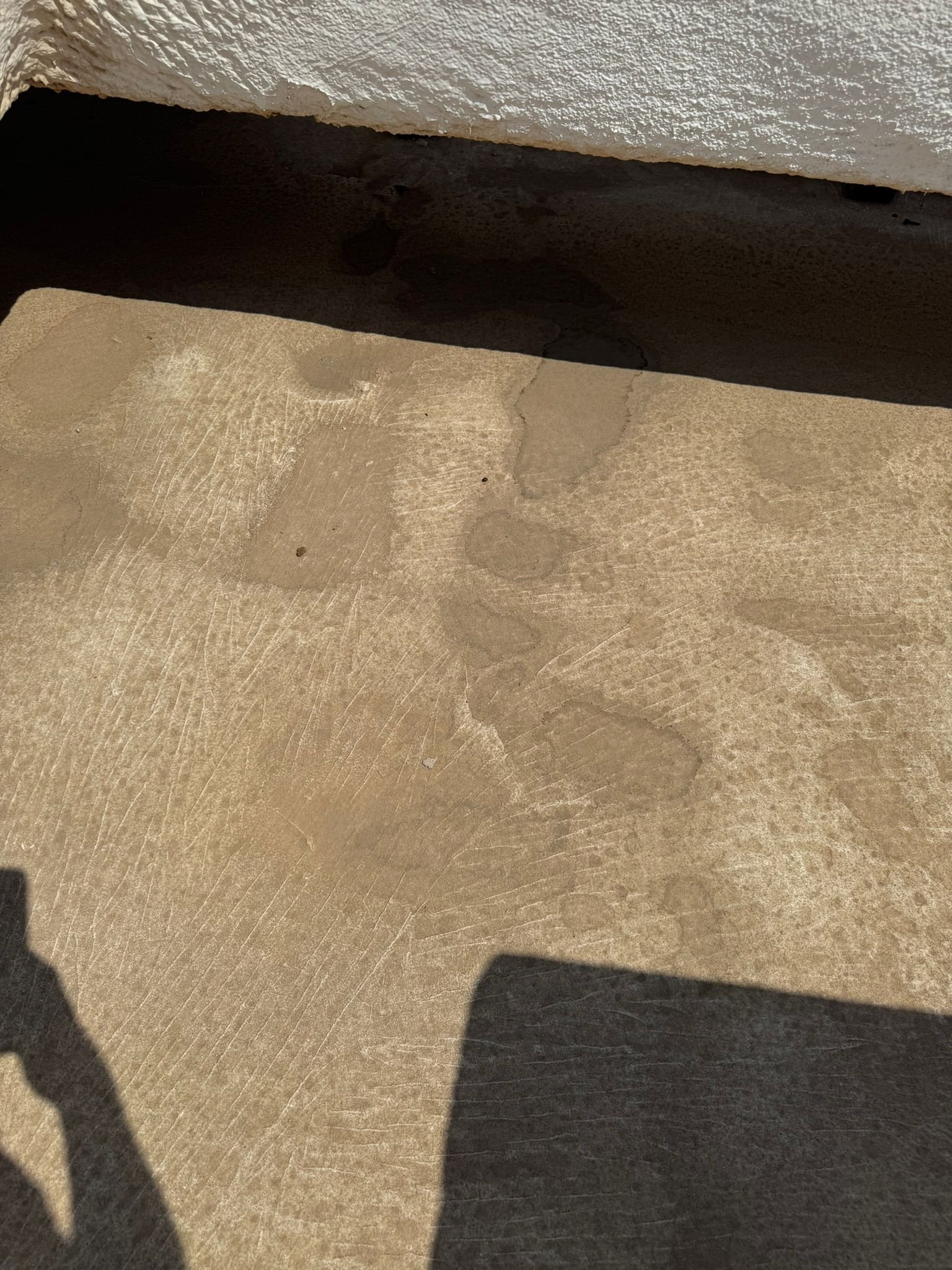
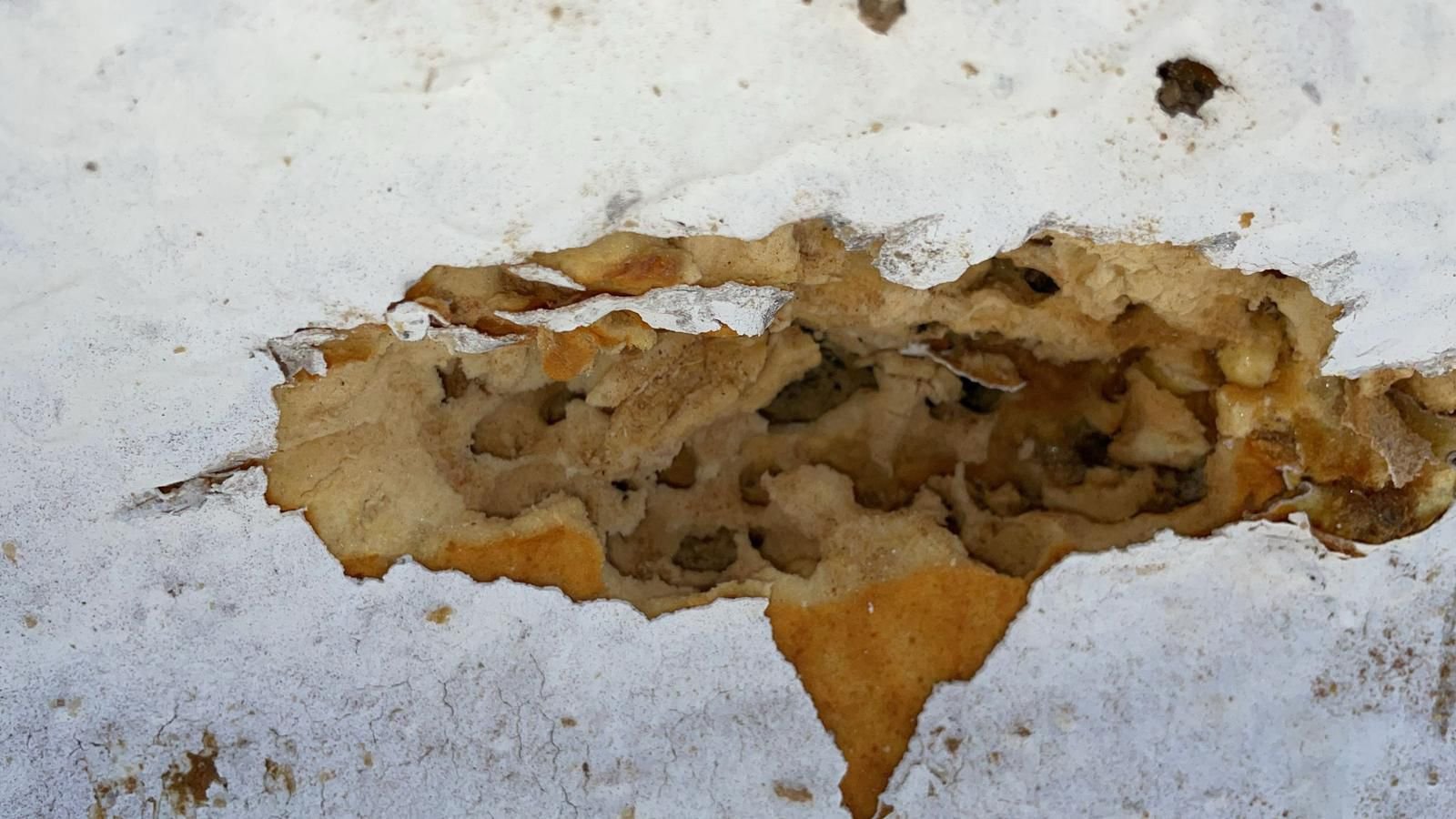
Flat roofs, common on many commercial buildings and some residential properties in the Phoenix metro, depend entirely on proper drainage to survive monsoon season. Confirm that roof drains and scuppers are completely clear of debris, and check for any areas where water tends to pool for more than 24 to 48 hours after rain. Standing water is one of the fastest ways to shorten the life of a flat roof coating. If your flat roof coating is more than 7 to 10 years old, this is a good time to have it evaluated. See our guide on flat roof coating costs in Arizona to understand your options.
6. Trim Trees and Secure Loose Debris
Monsoon winds regularly reach 40 to 60 miles per hour, and overhanging branches can scrape shingles, crack tiles, or snap entirely onto the roof during a storm. Trim back any branches hanging over the roofline, and secure or store loose patio furniture, decorations, and equipment that could become airborne debris.
7. Check the Attic for Existing Water Stains
Before the season starts is the ideal time to check your attic for water stains, mold, or discoloration on the underside of the roof deck, since these are signs of an existing slow leak that will only get worse under monsoon rainfall. Our guide on how to find a roof leak from inside your home walks through exactly what to look for.
8. Confirm Your Roof Warranty Is Still Valid
Many homeowners are surprised to learn that certain DIY repairs, unlicensed contractor work, or skipped maintenance can void a manufacturer’s roof warranty. Before monsoon season, it is worth confirming your warranty status, especially if any work has been done on the roof since installation. See our guide on what voids a roof warranty in Arizona for details.
9. Review Your Homeowners Insurance Coverage
Confirm what your policy covers before storm season, not after a claim is already needed. Understanding your deductible, coverage limits, and the claims process in advance makes a real difference if your roof does sustain damage. Our guide on how to file a roof insurance claim in Arizona covers the documentation you will need.
What to Do During an Active Monsoon Storm
Once a storm is underway, avoid going on the roof under any circumstances, even to inspect damage. Wait until the storm has fully passed and winds have calmed. If you notice active leaking indoors during a storm, place containers to catch water and move furniture and electronics away from the affected area. Document any visible exterior damage with photos once it is safe to do so, since this documentation supports any insurance claim that follows.
What to Do Immediately After a Monsoon Storm
After any significant storm, do a visual walk-around of your property looking for displaced tiles, shingles in the yard, damaged gutters, or debris on the roof. Check the attic again for any new water stains. If you suspect damage but cannot confirm it visually, schedule a professional post-storm inspection rather than waiting for the next storm to reveal the problem. Arizona’s monsoon season typically brings multiple significant storms between June and September, and minor undetected damage from an early storm often becomes major damage by the third or fourth event of the season.
Monsoon Roof Prep FAQ
When does monsoon season start and end in Arizona?
The National Weather Service officially defines Arizona’s monsoon season as June 15 through September 30. The actual start of storm activity varies each year based on weather patterns, but homeowners should have roof prep completed before June 15.
How often should I inspect my roof during monsoon season?
Have your roof professionally inspected once before the season begins, and again after any significant storm that produces heavy rain, high winds, or hail. A quick visual check from the ground after every storm is also a good habit throughout the season.
What is the most common cause of roof leaks during Arizona monsoons?
Clogged gutters, cracked or dried-out flashing sealant, and displaced or cracked roof tiles are the most common causes of monsoon-related roof leaks in Arizona. Most of these issues develop gradually from UV exposure during the dry season and are only exposed once heavy rain arrives.
Can monsoon winds actually damage a roof?
Yes. Monsoon winds regularly reach 40 to 60 miles per hour and can lift shingles, crack or displace roof tiles, and snap tree branches onto the roof. Wind damage is one of the most common reasons for insurance claims following Arizona monsoon storms.
Should I go on my roof during a monsoon storm to check for damage?
No. Never go on a roof during an active storm or high winds under any circumstances. Wait until the storm has completely passed and conditions are calm, then do a visual inspection from the ground before deciding whether a professional inspection is needed.
Is flat roof drainage more important than pitched roof drainage during monsoon season?
Flat roofs depend entirely on proper drainage since they have no slope to shed water naturally, making clear drains and scuppers critical before monsoon season. Standing water that sits for more than 24 to 48 hours significantly shortens the life of a flat roof coating and increases leak risk.
Schedule Your Free Pre-Monsoon Roof Inspection
Tip Top Roofing Service is a GAF Certified roofing contractor with a 4.9-star customer rating, verifiable directly on GAF’s own contractor directory. Our free inspections catch small problems before the storms find them.
Call (480) 877-1643 or email info@tiptoproofingservice.com to schedule your inspection before monsoon season begins. Financing options are available and reviewed during your estimate. Licensed Arizona ROC #355034.