Queen Creek is Arizona’s fastest-growing community by year-over-year percentage — and it is not slowing down. The population has more than doubled in the past decade, now approaching 84,000 residents, with a median household income of over $134,000 and a median home price around $615,000. Major employers like LG Energy Solution are establishing facilities in the area, and new construction is visible across nearly every corner of the southeast Valley.
But beneath that growth story is a roofing reality that a large portion of Queen Creek homeowners are starting to face: the community’s earliest wave of homes — built primarily between 2000 and 2009 — are now 15 to 25 years old. In Arizona’s extreme desert climate, that places tens of thousands of Queen Creek roofs squarely in the window where replacement becomes not a future consideration but an immediate one.
Whether your home is in Seville, Power Ranch, Sossaman Estates, Encanterra, Trilogy, Hastings Farms, or one of Queen Creek’s newer subdivisions, this guide covers everything you need to know about roof replacement — from when the time is right to what it costs and how to choose a contractor you can trust.
Queen Creek’s Housing Timeline and What It Means for Your Roof
Understanding when Queen Creek’s housing stock was built is the single most useful piece of context for assessing whether your roof needs replacement.
About 32% of homes in Queen Creek were built between 2000 and 2009. That puts them at 15 to 25 years of age — the exact window where asphalt shingle roofs in Arizona’s desert climate reach and surpass their reliable service life. In milder climates, shingles rated for 25 to 30 years often live up to their rating. In Queen Creek’s extreme UV environment and intense summer heat, that timeline compresses significantly. Many shingle roofs installed in 2003 or 2004 are already showing the kinds of widespread granule loss, cracking, and underlayment degradation that signal replacement.
Another 40% of Queen Creek homes were built between 2010 and 2019. These are now 5 to 15 years old — largely still within a reliable service window, but approaching the point where annual professional inspections become critical. Small issues identified and addressed at the 10-year mark are inexpensive to fix. The same issues ignored until year 15 or 18 often require full replacement.
The remaining 18% represent Queen Creek’s newest wave of construction. These homeowners should understand their builder warranties, establish an annual inspection schedule, and know what their roofing system requires for long-term performance. Just because a roof is new does not mean it requires zero attention — particularly in a climate that stresses materials year-round.
The bottom line: no matter which wave your home belongs to, there is a roofing conversation you should be having right now.
Why Arizona’s Climate Accelerates Roof Aging in Queen Creek
Queen Creek sits at the southeastern edge of the Phoenix metro, near the San Tan Mountains. Like all Arizona desert communities, it faces roofing conditions that are fundamentally more demanding than anywhere in moderate climates.
UV radiation without relief. Queen Creek receives intense solar radiation nearly year-round. UV exposure is the primary cause of roofing material failure in Arizona — it dries out sealants, breaks down asphalt underlayment, fades and cracks tile coatings, and degrades granule adhesion on shingles far faster than northern or coastal climates. A shingle rated for 25 years in Ohio may realistically perform for 18 to 20 years in Queen Creek.
Triple-digit summer heat. Summer air temperatures in Queen Creek regularly exceed 110°F, and roof surface temperatures on dark materials can reach 150°F to 160°F or more. This surface heat does not just degrade the top layer — it works its way through the roofing system, drying out underlayment from below and stressing every adhesive and sealant.
Thermal cycling every single day. The difference between a Queen Creek afternoon at 112°F and the same night at 75°F represents a 35+ degree swing that every roofing material experiences daily. Year after year, this expansion and contraction cycle loosens fasteners, separates flashing seals, and works gaps open in underlayment that eventually become active leak points.
Monsoon season. Queen Creek’s monsoon season brings violent storms with high winds, sudden intense rain, and occasional hail from July through September. Roofs already compromised by years of UV and thermal stress are highly vulnerable when these storms arrive. What looked like minor surface wear in May can become active interior water damage by August.
Proximity to San Tan Mountains. Properties in the eastern sections of Queen Creek, near San Tan Mountain Regional Park, can experience storm exposure that differs from valley floor properties further west — particularly during monsoon events that intensify as they interact with elevated terrain.
The Most Common Roof Problems on Queen Creek Homes
These are the issues that show up most frequently on Queen Creek roofs across its various housing eras:
Widespread Granule Loss on Aging Shingles
Granule loss is the clearest early warning sign on Queen Creek’s 2000s-era shingle roofs. When granules — the protective coating on the surface of asphalt shingles — shed into gutters in significant quantities, it means the shingles have lost most of their UV protection and are in accelerated decline. This is not a patchable problem. It indicates material-wide breakdown that calls for replacement planning rather than repair.
Underlayment Failure on Tile Roofs
Spanish and Mediterranean-style architecture is common throughout Queen Creek’s established neighborhoods, and terracotta tile roofs are a dominant feature of the community’s aesthetic. Like elsewhere in Arizona, the tiles themselves are durable — but the underlayment beneath them has a limited lifespan in desert conditions. Homes with tile roofs built in the early 2000s should have their underlayment professionally assessed. Many will show significant deterioration even while the tile surface appears intact.
Cracked or Lifted Tiles
Thermal cycling causes individual tiles to crack over time, particularly in areas of direct west or south sun exposure. High winds during monsoon events can lift tiles that have lost their bond — leaving sections of bare underlayment directly exposed to rain. After any significant monsoon storm, a visual exterior inspection from the ground is a worthwhile first step before calling for a professional assessment.
Flashing Failures at Penetrations
Every vent, pipe, chimney, and HVAC penetration on a Queen Creek roof is sealed with flashing and sealant that dries out and cracks under the desert sun. These failures often go undetected until water intrusion appears on interior ceilings — sometimes seasons after the seal has actually failed. Professional inspections that assess every penetration point are the only reliable detection method.
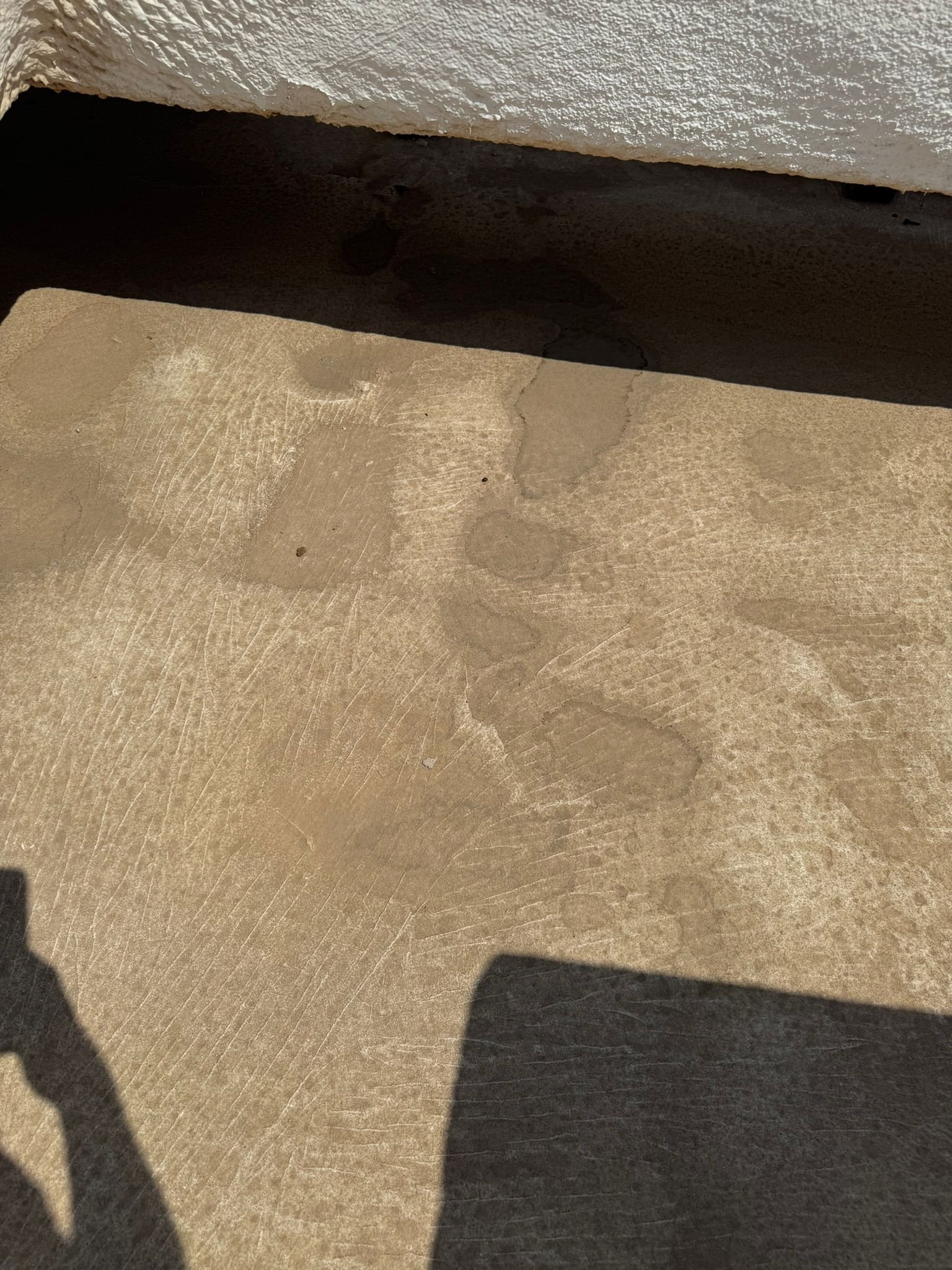
Ponding and Drainage Issues on Flat Sections
Many Queen Creek homes include flat-roof patio covers, rear additions, or modern design elements with low-slope sections. After monsoon storms, these sections are prone to ponding water that accelerates membrane wear. Homeowners should check flat sections after every significant rain and ensure drainage pathways are clear and functioning.
Best Roofing Materials for Queen Creek Homes
Queen Creek’s dominant architectural styles — Spanish, Mediterranean, and new traditional — naturally pair with specific roofing materials. Here is an honest breakdown of your main options.
Concrete and Clay Tile
Tile is the most appropriate roofing material for Queen Creek’s prevailing architectural styles and its desert climate. Properly installed tile with quality underlayment handles UV exposure, extreme heat, and monsoon winds better than any other mainstream residential roofing option. Tile roofs in Arizona can last 50 years or more with underlayment replacement every 20 to 30 years. The upfront cost is higher but the lifetime cost-per-year is often the lowest of any material option.
Architectural Asphalt Shingles
Shingles remain the most affordable roof replacement option in Queen Creek and are appropriate for homes where tile does not suit the architectural style or budget. Modern architectural shingles designed for high-heat climates offer meaningfully better performance than standard products in Arizona’s conditions. Expect a realistic lifespan of 18 to 25 years in Queen Creek’s desert environment with a well-specified product and proper installation.
Metal Roofing
Metal is gaining adoption in Queen Creek’s newer construction wave, particularly on desert modern and contemporary-style homes. Standing seam metal handles thermal cycling better than any other material, performs well in high-wind conditions, and reflects solar heat in a way that can reduce cooling costs significantly. Metal roofs carry a realistic 40 to 70-year lifespan in Arizona’s climate. The upfront investment is higher, but for homeowners planning to stay long-term it often makes strong financial sense.
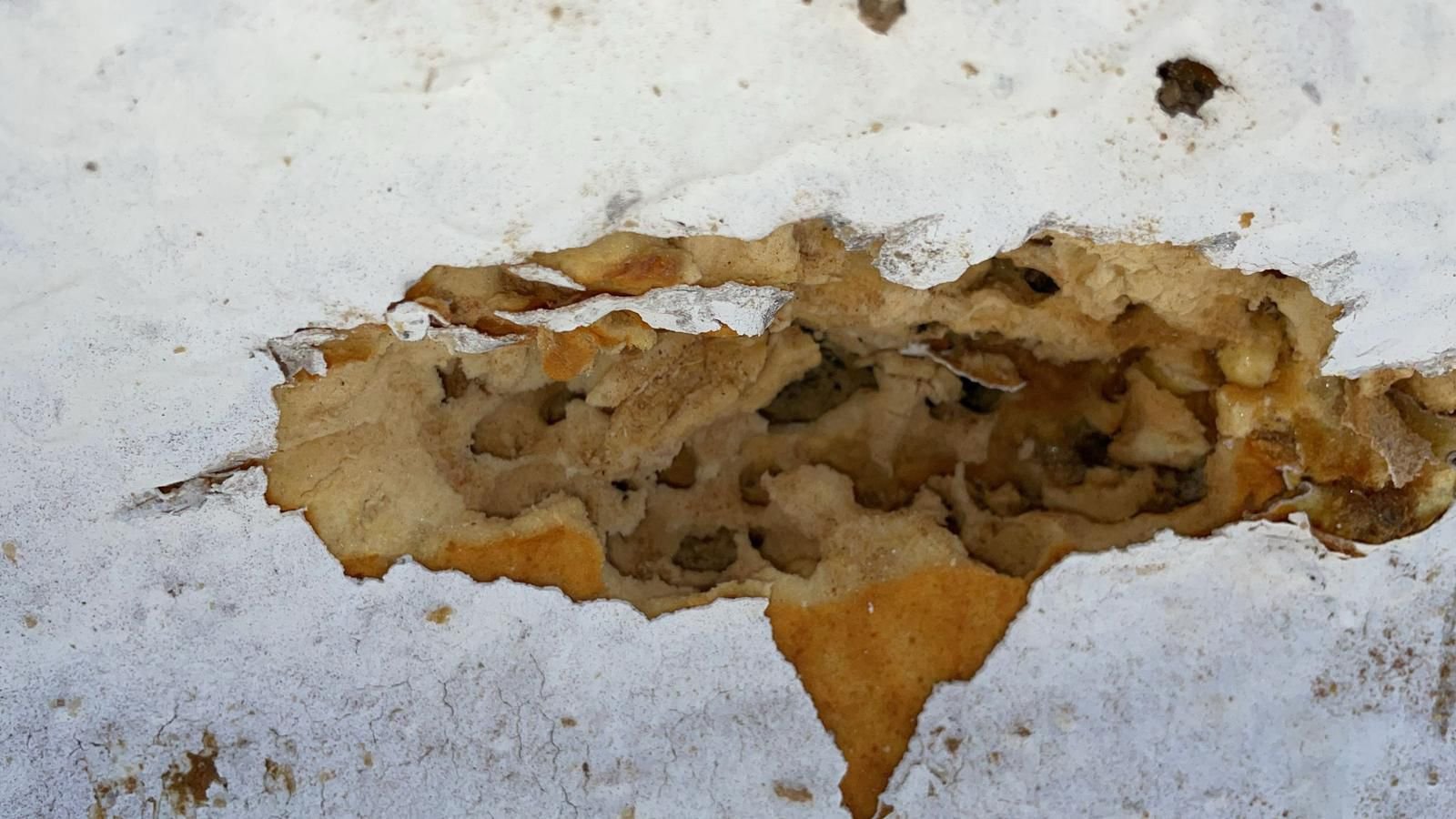
Spray Polyurethane Foam
For flat and low-slope sections on patios, additions, and covered outdoor living areas, spray foam is the preferred solution in Queen Creek’s climate. Seamless application eliminates the penetration points that cause most flat-roof failures, and foam’s reflective and insulating properties are particularly valuable in Arizona’s intense summer heat. Recoating every five to seven years is the primary maintenance obligation.
How Much Does Roof Replacement Cost in Queen Creek, AZ?
Queen Creek roofing costs fall in line with the broader East Valley and Maricopa County market. Here is a realistic cost guide:
| Material | Installed Cost Per Sqft | Typical Total (2,000 sqft home) | Realistic Lifespan in AZ |
|---|---|---|---|
| Architectural asphalt shingles | $4.85 – $7.00 | $9,700 – $14,000 | 18 – 25 years |
| Concrete or clay tile | $8.00 – $15.00 | $16,000 – $30,000 | 50+ years (underlayment every 20–30 yrs) |
| Metal roofing | $9.00 – $18.00 | $18,000 – $36,000 | 40 – 70 years |
| Spray foam (flat/low-slope section) | $4.00 – $7.00 | $4,000 – $10,000 | 30+ years with recoat |
Additional costs to factor in:
- Tear-off and disposal of existing roof: $1.00 – $3.00 per sqft
- Maricopa County roofing permit: approximately $150 – $400
- Structural repairs if deck damage is found: $500 – $3,000+
- Gutter replacement or repair (often needed alongside roof work): $400 – $2,000
All pricing reflects current Queen Creek and East Valley market conditions. Costs vary based on roof size, pitch, complexity, and any issues found during tear-off. Always get a written itemized estimate before work begins.
What Happens During a Professional Roof Replacement in Queen Creek
Knowing what a properly managed replacement looks like helps you evaluate the contractor you hire and know what to expect throughout the process.
Free inspection and estimate. Before anything else, a licensed contractor assesses your current roof, photographs damage and wear, and provides a written estimate covering all materials, labor, disposal, and permits. You should receive this in writing before signing anything.
Maricopa County permit. Full roof replacements in Queen Creek require a building permit through Maricopa County. A legitimate contractor handles the permit application on your behalf. Never allow a contractor to skip this step — unpermitted roofing work creates problems when you sell or file an insurance claim.
Material delivery. Roofing materials are typically delivered the morning of the project or the day before. For tile projects, structural assessment of the deck is important before delivery because tile is significantly heavier than shingles.
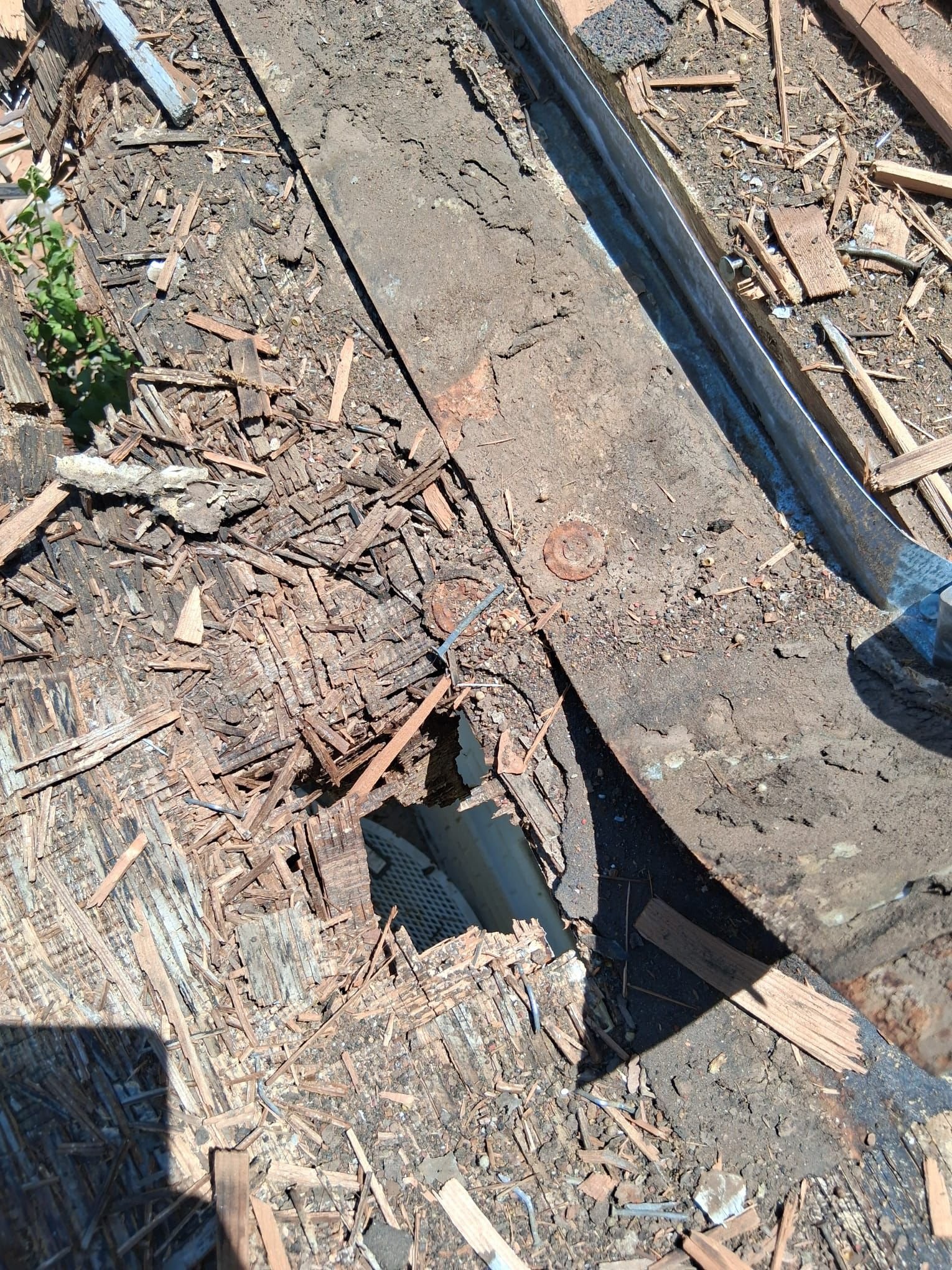
Tear-off. The existing roof is stripped to the deck. This stage reveals any hidden rot, structural damage, or deck deterioration that was not visible during inspection. Any issues found are addressed before new materials go on — your contractor should show you and document any additional scope before proceeding.
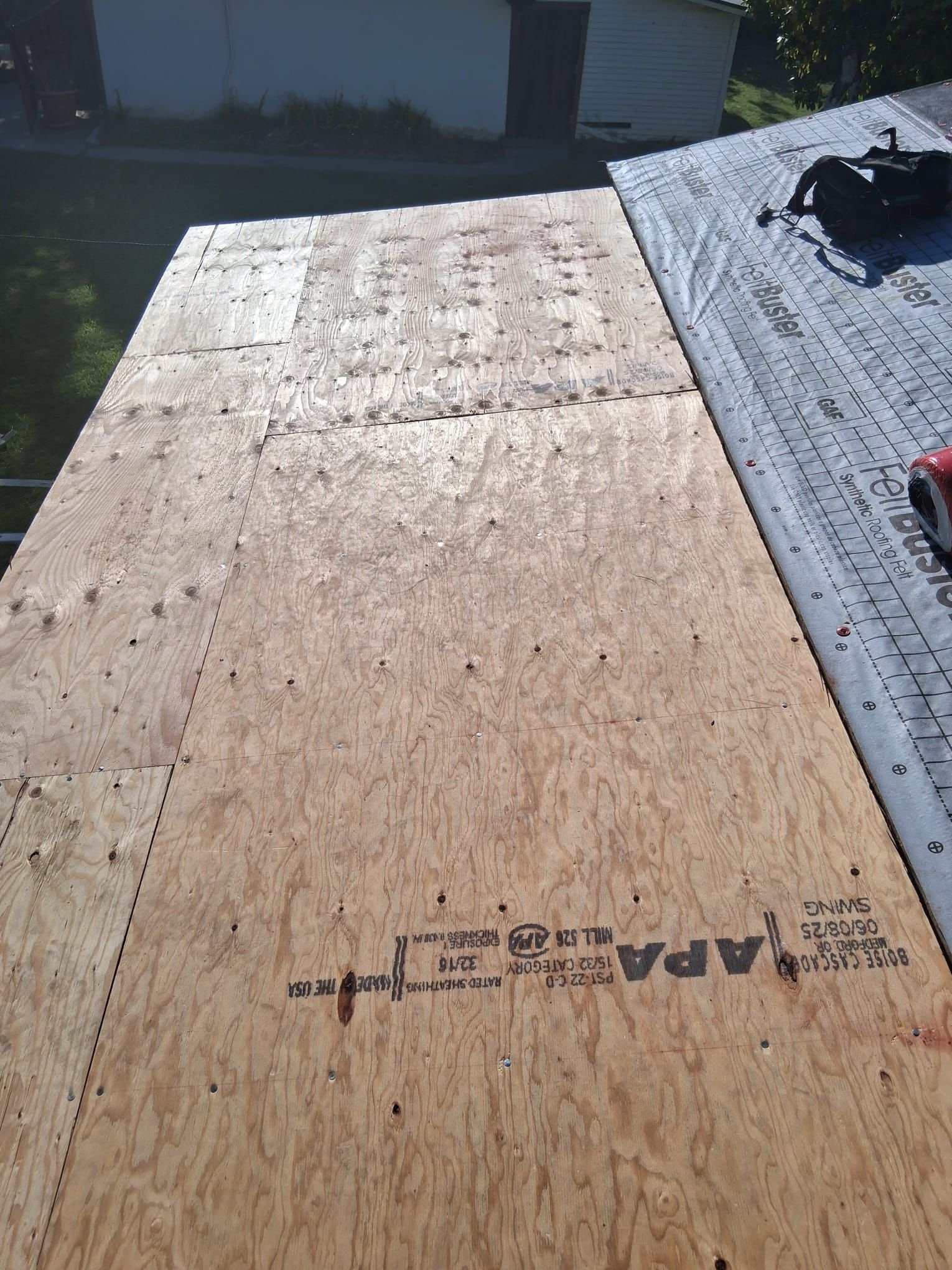
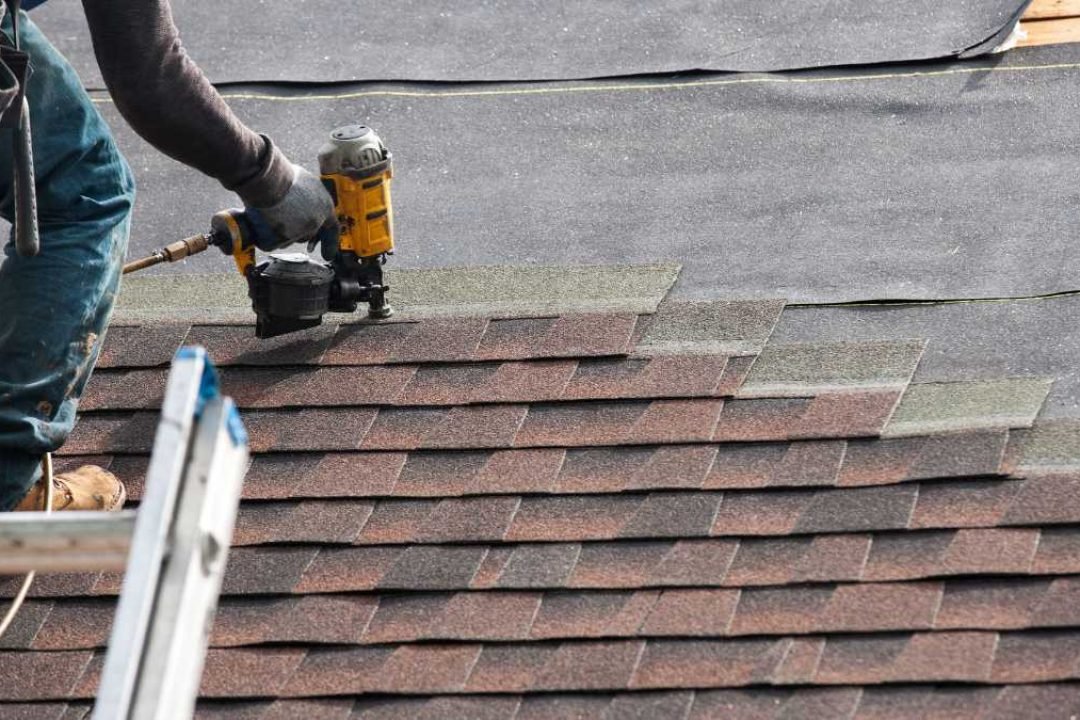
Installation. New underlayment, materials, flashing at all penetration points, ridge caps, and drip edge are installed to manufacturer specifications and Maricopa County code requirements.
County inspection. The county inspector visits and signs off on the completed installation. Your contractor schedules this.
Final walkthrough and cleanup. Your contractor walks the property with you, confirms the work is complete to specifications, and performs thorough cleanup — including magnetic sweeps for nails in driveways, walkways, and lawns.
Most Queen Creek residential replacements take one to three days for shingles and three to five days for tile or metal.
Insurance, Permits, and HOA: What Queen Creek Homeowners Should Know
Insurance claims. If your roof sustained damage from a monsoon storm, high winds, or hail, your homeowner’s insurance may cover part or all of the replacement cost. Document damage immediately after any significant storm — photographs of both exterior damage and interior water signs are important. Contact your insurance carrier promptly and request a professional inspection before an adjuster visits your property. Tip Top Roofing Service assists Queen Creek homeowners through every step of the insurance claim process.
Maricopa County permits. Roof replacement in Queen Creek requires a permit. The permit fee varies based on project scope but typically runs $150 to $400. Any contractor who suggests skipping the permit to save time or money is exposing you to significant risk — unpermitted work can void your homeowner’s insurance coverage and create disclosure obligations when selling.
HOA requirements. Several Queen Creek communities — including Encanterra, Seville, and others — have active HOAs with specific requirements about roofing materials, colors, and contractor credentials. Before signing a contract, confirm whether your community requires HOA architectural approval and how long that process typically takes. A knowledgeable contractor helps you prepare and submit the necessary documentation.
Why Queen Creek Homeowners Choose Tip Top Roofing Service
Tip Top Roofing Service is a GAF-certified, BBB-accredited roofing contractor with over 10 years of experience serving Queen Creek, Gilbert, Chandler, and the greater Phoenix metro. We understand the East Valley’s roofing landscape, Maricopa County’s permitting requirements, and the specific challenges that Queen Creek’s mix of 2000s-era and new construction homes presents.
What you get when you work with us:
- Free roof inspection and written estimate — no pressure, no obligation
- Licensed and insured in Arizona: ROC License #355034
- HOA documentation support for Queen Creek communities
- Full Maricopa County permit handling
- Free estimates for new roof installations
- 0% interest financing over 12 months
- Up to 30-year material warranties on qualifying systems
- Full insurance claim assistance — documentation through settlement
- 130+ five-star Google reviews from verified Arizona homeowners
We serve all Queen Creek zip codes including 85140 and 85142 — covering Power Ranch, Seville, Sossaman Estates, Trilogy, Encanterra, Hastings Farms, Cortina, Montelena, Combs Farm, and all surrounding communities. We also serve Gilbert, Chandler, Mesa, Scottsdale, Phoenix, Tempe, and 40+ Arizona cities.
Call (480) 877-1643 or email info@tiptoproofingservice.com to schedule your free Queen Creek roof inspection today.
Frequently Asked Questions: Roof Replacement in Queen Creek, AZ
My Queen Creek home was built in the early 2000s — is it time to replace the roof?
Quite possibly. Homes built between 2000 and 2009 are now 15 to 25 years old, which puts them squarely in the replacement window for asphalt shingles in Arizona’s climate — and into underlayment-assessment territory for tile roofs. The best first step is a professional inspection. A licensed contractor can assess whether your specific roof is still serviceable, approaching end of life, or already past it.
How long does a roof replacement take in Queen Creek?
Most asphalt shingle replacements take one to three days. Tile roofs typically take three to five days depending on size and pitch. Metal installations run a similar timeline to tile. Factors that can extend the schedule include permit inspection timing, structural repairs discovered during tear-off, and weather delays.
Does Maricopa County require a permit for roof replacement in Queen Creek?
Yes. A permit is required for full roof replacements. The typical fee runs $150 to $400 depending on project scope. Tip Top Roofing Service handles the permit application on your behalf and coordinates the required county inspection. Never allow a contractor to skip this step.
What roofing material is best for Queen Creek’s climate and home styles?
Tile is the strongest long-term performer in Queen Creek’s desert climate and the best match for the community’s dominant Spanish and Mediterranean architectural styles. Architectural shingles are the most affordable option and perform well when properly specified for high-heat conditions. Metal roofing offers the best combination of longevity and energy performance for homeowners planning to stay long-term. We help you weigh the options honestly based on your home, budget, and timeline.
Will my HOA need to approve my roof replacement in Queen Creek?
It depends on your community. Several Queen Creek neighborhoods — including Encanterra and Seville — have active HOAs that require architectural approval before roofing work begins. This typically includes approval of material type, color, and contractor documentation. Tip Top Roofing Service helps homeowners navigate and submit HOA approval requirements.
Does homeowner’s insurance cover roof replacement in Queen Creek?
Insurance typically covers storm damage from covered events — monsoon winds, hail, or falling debris. It generally does not cover damage from normal wear, aging, or deferred maintenance. We assist Queen Creek homeowners with inspection documentation and work directly with adjusters to ensure all covered damage is properly identified and accounted for.
Tip Top Roofing Service | (480) 877-1643 | info@tiptoproofingservice.com | tiptoproofingservice.com | 6830 E 5th Ave #205, Scottsdale, AZ 85251 | ROC License #355034