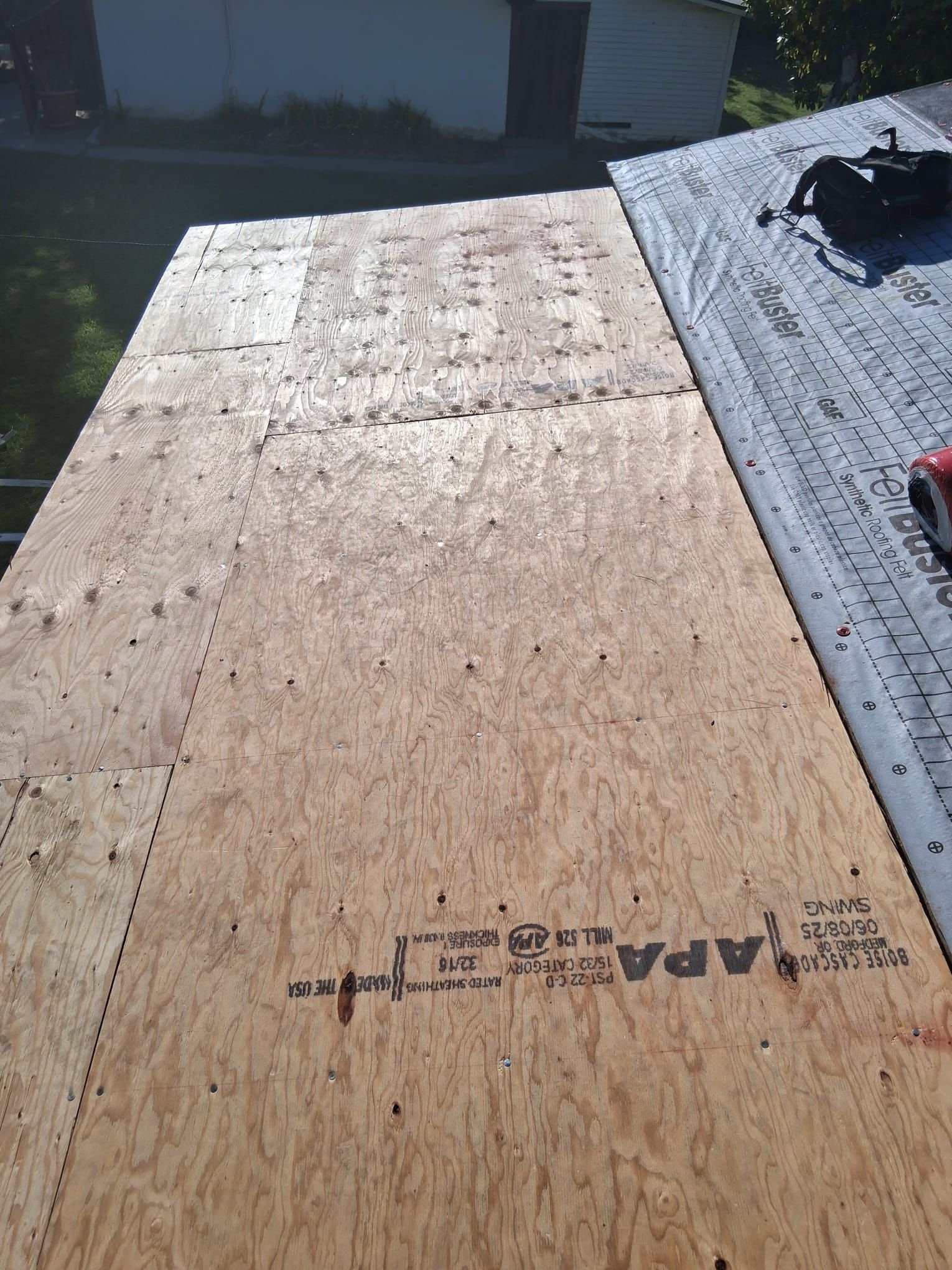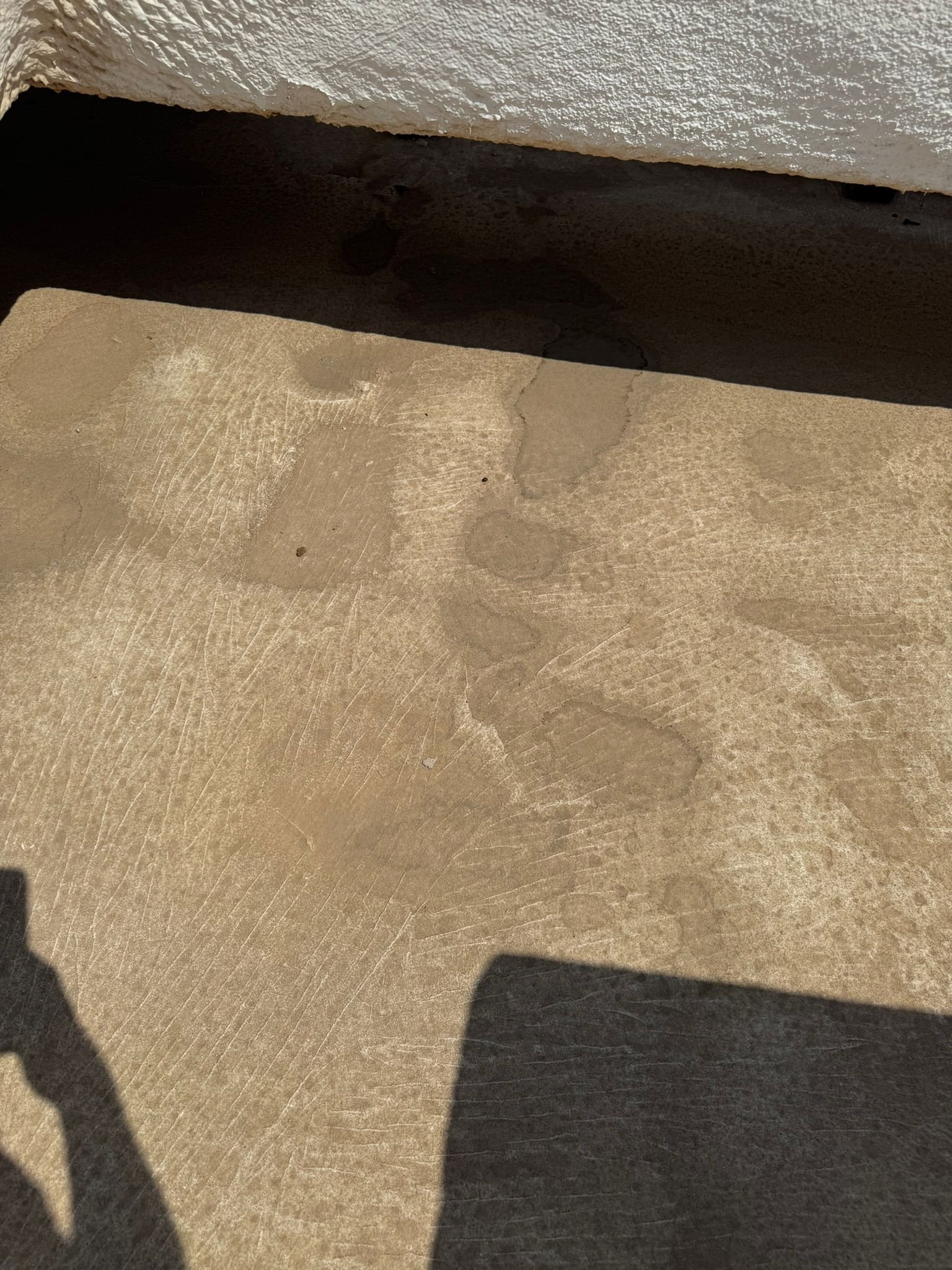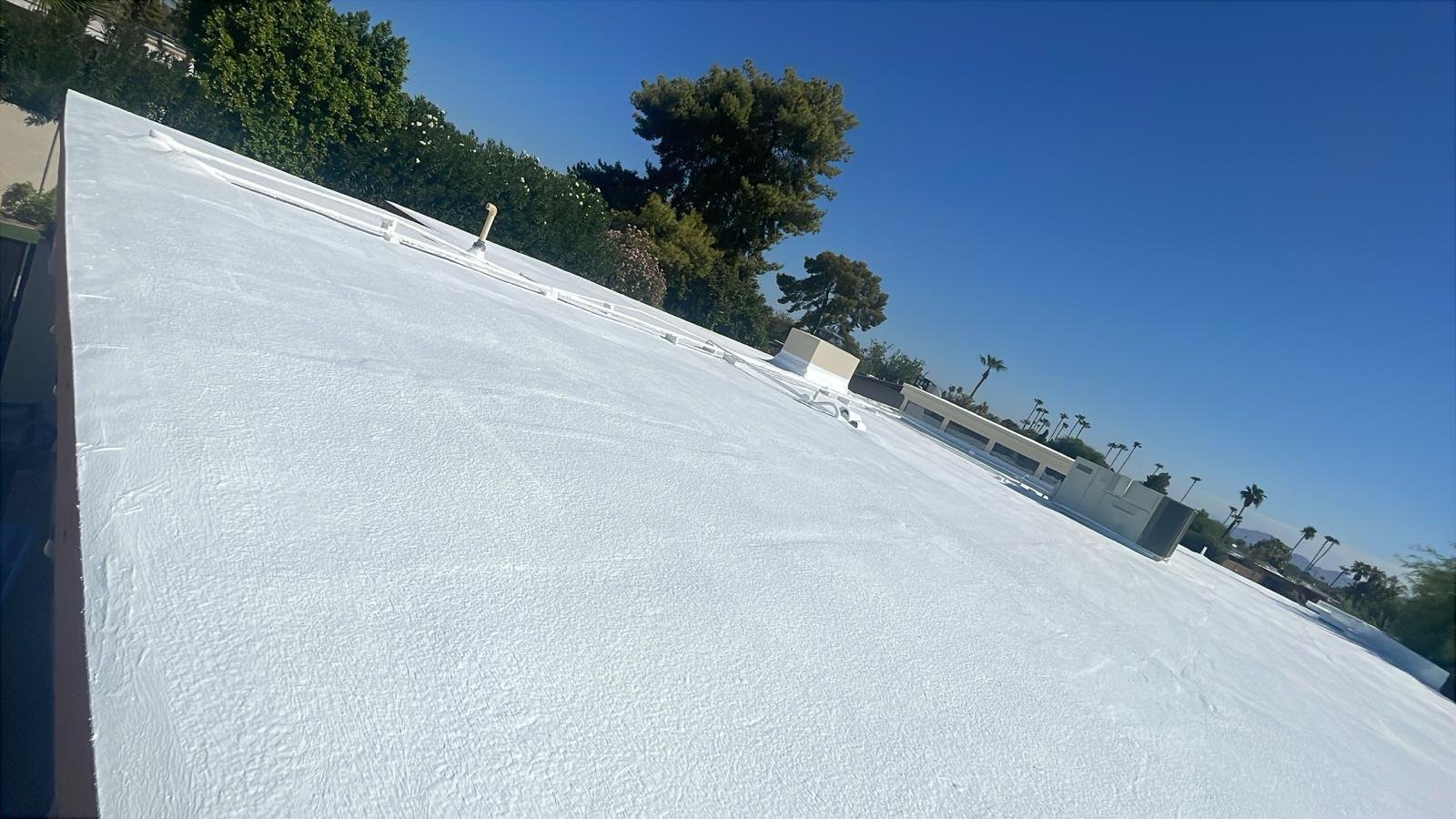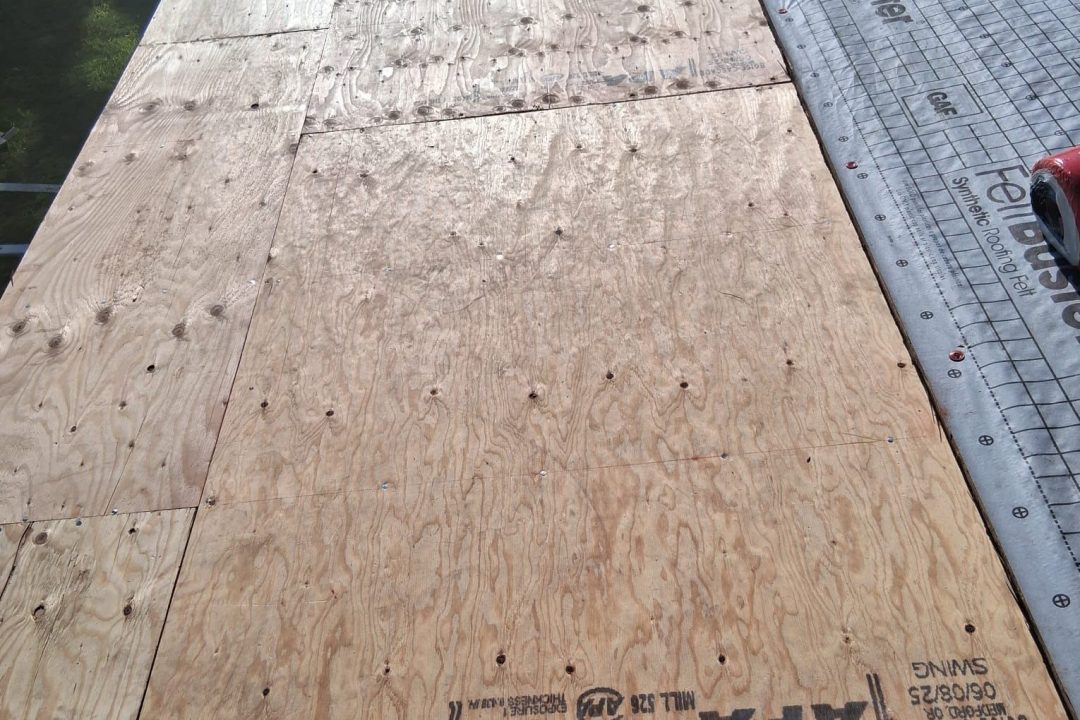
Decking is the structural layer everything else attaches to, and the OSB-versus-plywood decision matters more than most homeowners realize since it’s invisible once the roof is finished. Here’s how they actually compare, and why Arizona’s climate changes the calculus compared to a humid region.
What Each Material Actually Is
Plywood is built from thin wood veneer layers glued with alternating grain direction, which gives it strength and a structure that handles moisture cycles by drying relatively quickly and returning close to its original shape. OSB (oriented strand board) is made from wood strands compressed with resin under heat and pressure, cheaper to produce and sold in larger, more uniform panels.
Cost Difference
OSB typically runs $2.00 to $3.50 per square foot installed, while plywood (CDX grade) runs $2.50 to $5.00 per square foot installed. On a standard 2,000 sq ft roof deck, that’s commonly a difference of $1,000 to $3,000 in material and labor between the two.
The Moisture Difference Is the Real Story
This is where the two materials genuinely diverge. OSB absorbs moisture more slowly than plywood, but once wet, it dries far more slowly and can swell significantly at the edges, sometimes by 30% or more after repeated wet-dry cycles, and that swelling is frequently permanent even after the panel dries out. Plywood absorbs moisture faster but also dries faster and returns closer to its original dimensions afterward. In practice: if a deck gets rained on during tear-off before the new roofing goes down, OSB left exposed overnight is considerably more likely to suffer lasting edge damage than plywood would from the same exposure.
Why This Plays Out Differently in Arizona
Hot, very low-humidity climates like Arizona and Texas are specifically identified in industry comparisons as OSB’s best value case in the country. The moisture risk that makes plywood the safer choice in humid regions is far less relevant here: a Scottsdale roof deck isn’t sitting in chronic ambient dampness the way a coastal or Southeast roof would. OSB’s main vulnerability, the one real exception, is a deck exposed to monsoon rain during a tear-off before underlayment goes down, which is a scheduling and weather-timing issue more than a reason to avoid OSB broadly in this climate.
Weight and Handling
OSB is generally heavier than plywood at comparable thickness, which adds a small amount to the structural load and can make it marginally harder to handle on a steep roof. Both materials, when properly rated for roof application and correctly installed, meet code structural requirements.
When to Upgrade From OSB to Plywood Regardless of Climate
- A tile roof. The added weight and repeated batten fastener penetrations benefit from plywood’s slightly better fastener-holding performance over time.
- A history of attic ventilation problems. If the attic has had condensation or ventilation issues before, plywood’s better tolerance for moisture accumulation is the safer long-term bet.
- A roof section with chronic past leaks. Replacing decking in an area that has seen repeated water intrusion is a reasonable place to spend the extra cost on plywood’s moisture resilience.
Signs Decking Needs Replacing, Regardless of Material
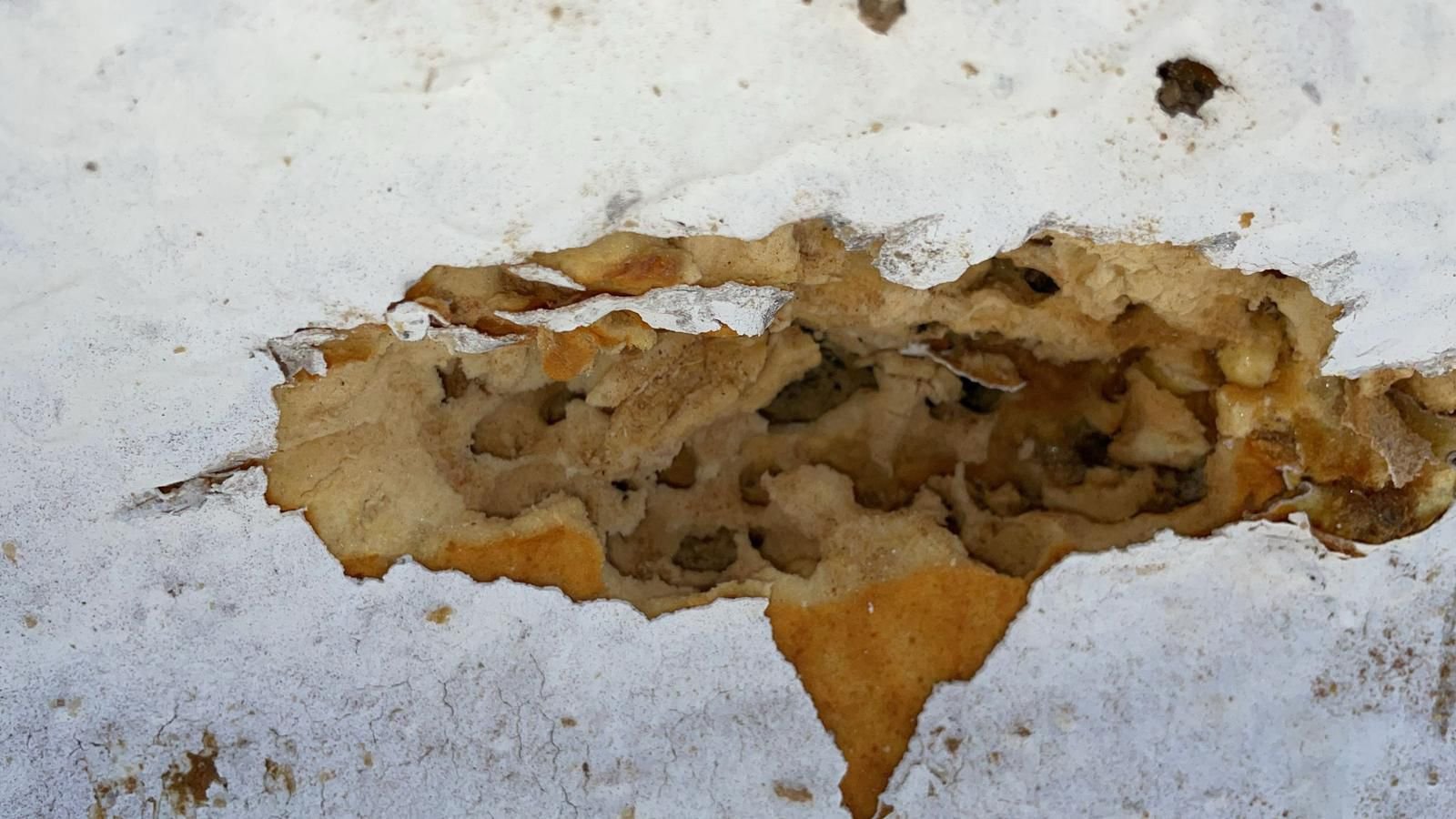
Soft or spongy spots when walked on, visible sagging between rafters, dark staining or mold on the underside visible from the attic, and delamination (plywood) or crumbling edges (OSB) all signal decking that needs replacing rather than repairing around.
Frequently Asked Questions About OSB vs. Plywood Decking
Is OSB a bad choice for roof decking in Arizona?
No. Hot, low-humidity climates like Arizona are specifically where OSB performs as a strong value choice, since the chronic moisture exposure that disadvantages OSB in humid regions is far less of a factor here.
What’s the main risk with OSB decking?
Edge swelling from water exposure, which is often permanent even after the panel dries. This matters most if the deck gets rained on during tear-off before underlayment is installed, not from ordinary climate exposure once the roof is finished.
Should I pay extra for plywood under a tile roof?
It’s a reasonable upgrade. Tile’s weight and the repeated fastener penetrations from batten installation benefit from plywood’s slightly better long-term fastener-holding performance.
How much more does plywood decking cost than OSB?
Typically $0.50 to $1.50 more per square foot installed, which adds up to roughly $1,000 to $3,000 more on a standard 2,000 sq ft roof deck.
Get the Right Decking Spec for Your Roof
As a local roofing company serving Scottsdale, AZ, Tip Top Roofing Service inspects your existing decking during tear-off and recommends OSB or plywood based on your roof type and condition, not a blanket default.
📞 Call Tip Top Roofing Service today at (480) 877-1643
📧 Email: info@tiptoproofingservice.com
🌐 Website: https://tiptoproofingservice.com/