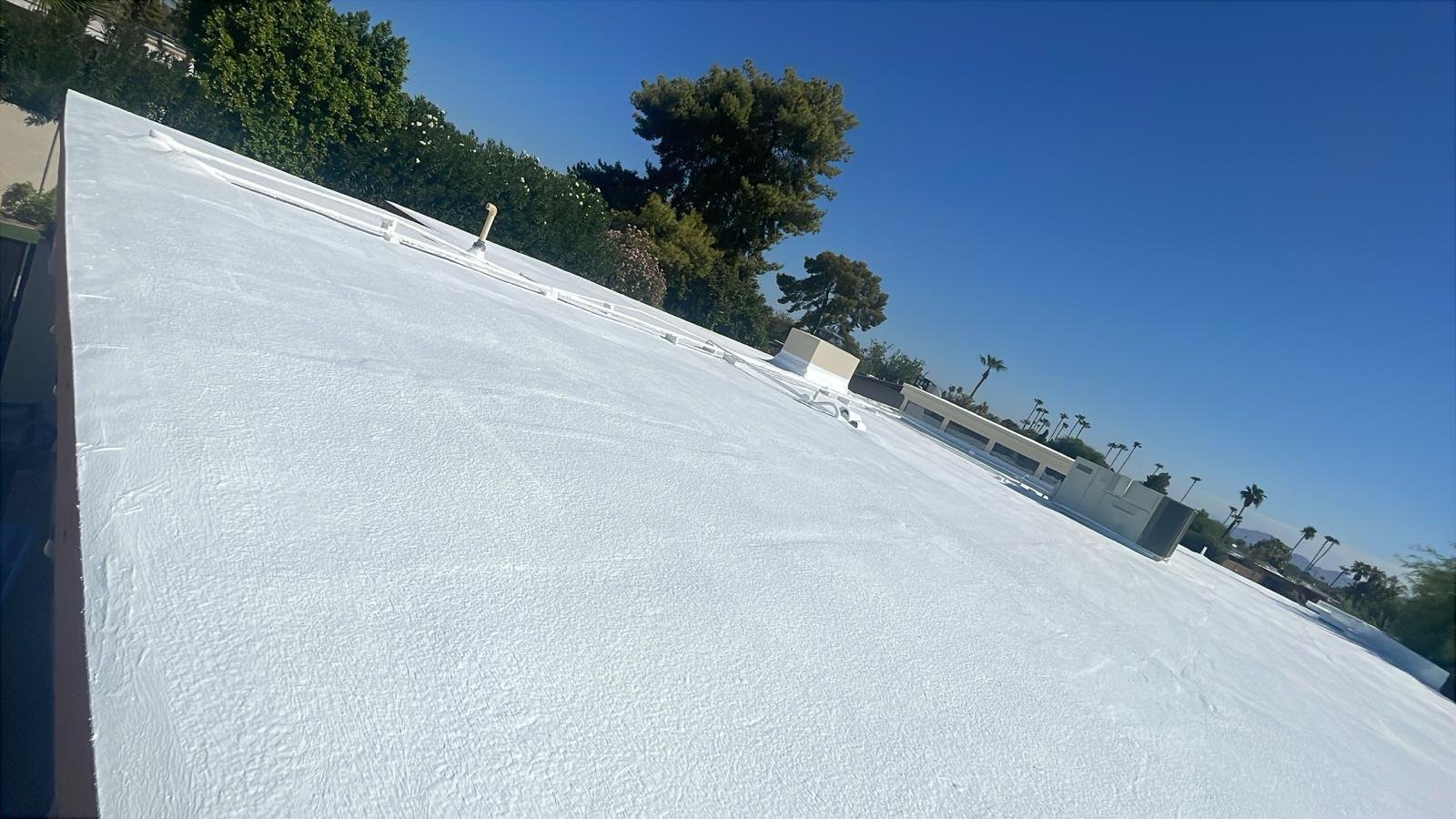
“Elastomeric” isn’t a fourth coating type alongside silicone and acrylic, it’s the umbrella category both belong to, along with polyurethane. All three are elastomeric coatings, meaning they stretch and recover rather than crack as a roof expands and contracts. The real choice is between the three chemistries themselves. Here’s how they actually compare.
Acrylic: The Budget-Friendly Default
Water-based acrylic is the most widely installed roof coating by volume, commonly $0.65 to $1.75 per square foot installed. It’s reflective, UV resistant, easy to apply, and easy to recoat later with more acrylic. Its real weakness is standing water: acrylic softens and eventually fails under water that sits on the roof for extended periods, and most acrylic product warranties explicitly exclude ponded areas.
Silicone: The Ponding Water Specialist
Silicone is a moisture-cure elastomer rated for permanent ponding water exposure, the only one of the three chemistries that genuinely holds up under water sitting for days at a time. It’s also more UV-stable over the long run and applies in cooler, damper conditions that would stop acrylic application. Typical installed cost runs $1.50 to $2.50 per square foot. Its real downsides: it picks up dirt over time, which reduces reflectance, and it can only be recoated with more silicone, not acrylic, limiting future options compared to starting with acrylic.
Polyurethane: The Durability and Traffic Choice
Polyurethane outperforms both acrylic and silicone on tensile strength, tear resistance, and abrasion resistance, making it the strongest option for roofs with foot traffic or mechanical wear. On ponding water, it sits in the middle: it handles brief, draining ponding under roughly 48 hours reasonably well, but chronic standing water causes slow hydrolysis damage that silicone simply doesn’t experience. A roof that ponds for days after every storm is a silicone job, not a polyurethane one.
Quick Comparison
| Property | Acrylic | Silicone | Polyurethane |
|---|---|---|---|
| Ponding water resistance | Poor | Excellent | Fair to Good (short-term) |
| Cost per sq ft installed | $0.65–$1.75 | $1.50–$2.50 | Similar to silicone |
| Abrasion/traffic resistance | Lowest | Moderate | Highest |
| Recoat options | Acrylic or silicone over it | Silicone only | Polyurethane only |
ASTM Standards to Look For
- ASTM D6083 covers liquid-applied acrylic roof coatings, including minimum tensile, elongation, and reflectance values.
- ASTM D6694 covers liquid-applied silicone coatings, including water immersion and accelerated weathering performance.
- ASTM D6947 covers liquid-applied polyurethane coatings, including impact and abrasion resistance.
The Recoat Compatibility Rule
This matters more than most homeowners realize going in: silicone can generally be recoated over cured acrylic, but acrylic cannot be successfully recoated over cured silicone without abrasion or a specialized tie-coat primer first. If there’s a real chance you’ll want to switch chemistries down the road, starting with acrylic keeps that option open; starting with silicone generally locks you into silicone for future recoats.
Which One Fits Your Roof
- No ponding, budget-conscious: acrylic is the straightforward choice.
- Chronic ponding water, days at a time: silicone is the only chemistry rated for sustained standing water without degrading.
- Heavy foot traffic or mechanical wear, minimal ponding: polyurethane’s abrasion resistance is the strongest fit.
Frequently Asked Questions About Roof Coating Types
Is elastomeric a type of roof coating, or a category?
A category. Acrylic, silicone, and polyurethane are all elastomeric coatings, meaning they stretch and recover with the roof’s expansion and contraction. “Elastomeric” describes the property, not a specific chemistry.
Which roof coating is best for ponding water?
Silicone. It’s the only chemistry of the three rated for permanent, sustained ponding without softening or degrading, while acrylic fails under standing water and polyurethane only tolerates brief, draining ponding.
Can I recoat a silicone roof with acrylic later?
Not successfully without abrasion or a specialized tie-coat primer. Acrylic generally doesn’t bond well to cured silicone, which is why the recoat direction matters when choosing your initial coating.
What coating handles foot traffic best?
Polyurethane, which outperforms both acrylic and silicone on abrasion and tear resistance, making it the preferred choice for roofs with regular foot traffic or mechanical equipment movement.
Get the Right Coating Chemistry for Your Roof
As a local roofing company serving Scottsdale, AZ, Tip Top Roofing Service specifies coating chemistry based on your roof’s actual drainage and traffic conditions, not a one-size-fits-all default.
📞 Call Tip Top Roofing Service today at (480) 877-1643
📧 Email: info@tiptoproofingservice.com
🌐 Website: https://tiptoproofingservice.com/