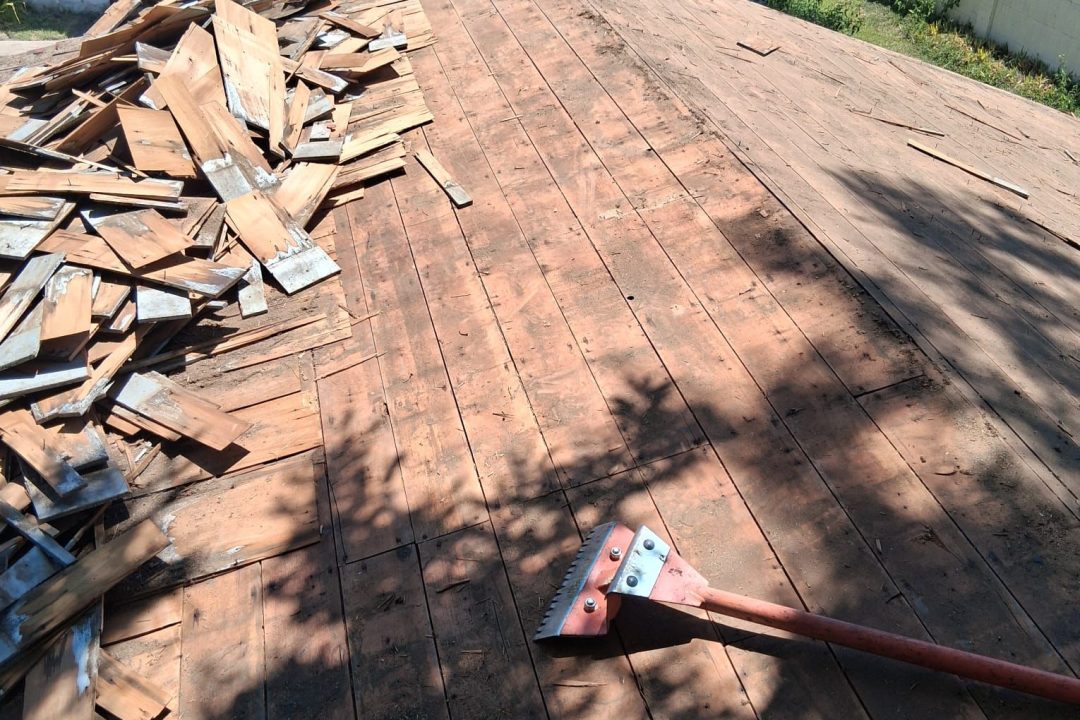
Landscaping is one of the biggest worries homeowners have before a roof replacement, and for good reason: falling tile, nails, and debris land directly on whatever’s below the roofline. Here’s what a good crew protects, and what you can do yourself before they arrive.
What’s Actually at Risk
- Flower beds and shrubs directly below the eaves, where falling material concentrates during tear-off.
- Irrigation lines and sprinkler heads, which can be crushed by foot traffic or falling debris if not flagged in advance.
- Pool and spa surfaces, which need a full cover to keep tile dust and debris out of the filtration system.
- HVAC units, which need airflow-safe covering, not a flat board that blocks ventilation while the unit is running.
- Soil and mulch beds, where nails and small debris fragments can embed and stay hidden long after cleanup.
What a Good Crew Does Before Work Starts
- Tarps over plant beds along the eaves, letting debris slide off rather than crush what’s underneath.
- Plywood or angled boards over fragile plants where a flat tarp alone wouldn’t hold up to falling tile.
- A full pool cover, put on fresh, not reused from a previous job.
- Vehicles and equipment kept on paved surfaces to avoid soil compaction and turf damage.
- A final magnetic sweep of the yard and driveway to pull loose nails and metal fragments out of the grass after cleanup.
What You Can Do Before the Crew Arrives
- Move portable items. Potted plants, patio furniture, and decorations should come in from the work zone entirely, not just get covered.
- Flag anything hidden. Irrigation valves, low-voltage lighting, and drip lines aren’t always visible from the surface. A small flag or marker helps the crew avoid them.
- Mention anything unusual up front. Rare or newly planted vegetation, a scheduled gardener, or a specific tree you’re protective of are all worth flagging before work starts, not after something’s damaged.
- Trim back access points. If a bush or tree limb blocks ladder placement, trimming it beforehand (where safe) speeds up setup and reduces incidental damage.
After the Job: What to Check
Walk the property once the crew is done. Check plant beds for embedded debris, confirm irrigation heads and drip lines are undamaged, and look over the lawn and driveway for anything the magnetic sweep might have missed. A reputable contractor welcomes this walkthrough and will address anything you find.
Frequently Asked Questions About Landscaping Protection During Roof Work
Will my sprinkler system be damaged during roof replacement?
It shouldn’t be, if irrigation heads and drip lines are flagged before work starts. Flagging hidden components is one of the simplest ways to prevent accidental damage from foot traffic or falling material.
Do I need to cover my pool during a roof replacement?
Yes. A full pool cover keeps tile dust and roofing debris out of the water and filtration system, and a good contractor will put on a fresh cover rather than reuse one from a previous job.
What should I move before the crew arrives?
Anything portable, potted plants, patio furniture, and decorations, should be moved out of the work zone entirely rather than just covered in place.
How does a crew check for leftover nails in the yard afterward?
A magnetic roller sweep across the yard, driveway, and landscaping after cleanup pulls up loose nails and metal fragments that visual inspection alone would miss.
Work With a Crew That Protects Your Property
As a local roofing company serving Scottsdale, AZ, Tip Top Roofing Service tarps, covers, and flags the right areas before work starts, and does a final sweep before calling the job done.
📞 Call Tip Top Roofing Service today at (480) 877-1643
📧 Email: info@tiptoproofingservice.com
🌐 Website: https://tiptoproofingservice.com/