Fountain Hills presents a roofing environment unlike anywhere else in the Phoenix Metro.
Perched on elevated terrain northeast of Scottsdale, Fountain Hills is defined by dramatic desert views, hillside topography, and a community aesthetic that strongly favors clay and concrete tile roofing. The combination of intense sun exposure, temperature extremes, seasonal monsoon activity, and sloped terrain creates a set of roofing challenges that require genuine local expertise — not a generic approach imported from a contractor who primarily works in flat valley neighborhoods.
This guide is written for Fountain Hills homeowners who want accurate, detailed information about roofing materials, costs, and contractor selection in their specific community.
Unique Roofing Challenges in Fountain Hills
Hillside Terrain and Roof Pitch
A significant portion of Fountain Hills homes are built on elevated lots with varied grades. This topology affects roofing in two important ways. First, steeper roof pitches — common on hillside properties — increase labor complexity and time. Roofing crews working on steep-pitch roofs require additional safety equipment and move more slowly than on low-slope applications, which is reflected in project cost.
Second, hillside properties experience different wind exposure than valley floor homes. Higher elevation and less wind buffering from surrounding structures means that wind-driven rain, debris, and storm stress can be more significant on Fountain Hills roofs than on comparable homes in lower-elevation parts of the metro.
Desert Debris and Vegetation
Fountain Hills is surrounded by natural desert landscape, and many properties are close to vegetation including palo verde trees, saguaro cacti, and mesquite. Desert vegetation drops material onto roofs — seedpods, thorns, branches, and organic debris — that can accumulate in valleys and around penetrations, trap moisture, and accelerate deterioration of roofing materials if not maintained.
Regular inspection and debris clearance is more important in Fountain Hills than in more developed, tree-sparse neighborhoods. Homeowners should plan for professional inspection at least once per year, ideally before and after monsoon season.
Sun Exposure and UV Intensity
Fountain Hills receives exceptional sun exposure due to its elevation and open desert setting. UV radiation is one of the most damaging forces acting on roofing materials in Arizona, and it acts faster and more aggressively on elevated sites with less atmospheric filtering. This is one of the primary reasons that clay and concrete tile — both highly UV-resistant — are so dominant in Fountain Hills. Materials with lower UV resistance, such as standard asphalt shingles, simply do not hold up over time in this environment.
Best Roofing Materials for Fountain Hills Homes
Clay Tile — The Community Standard
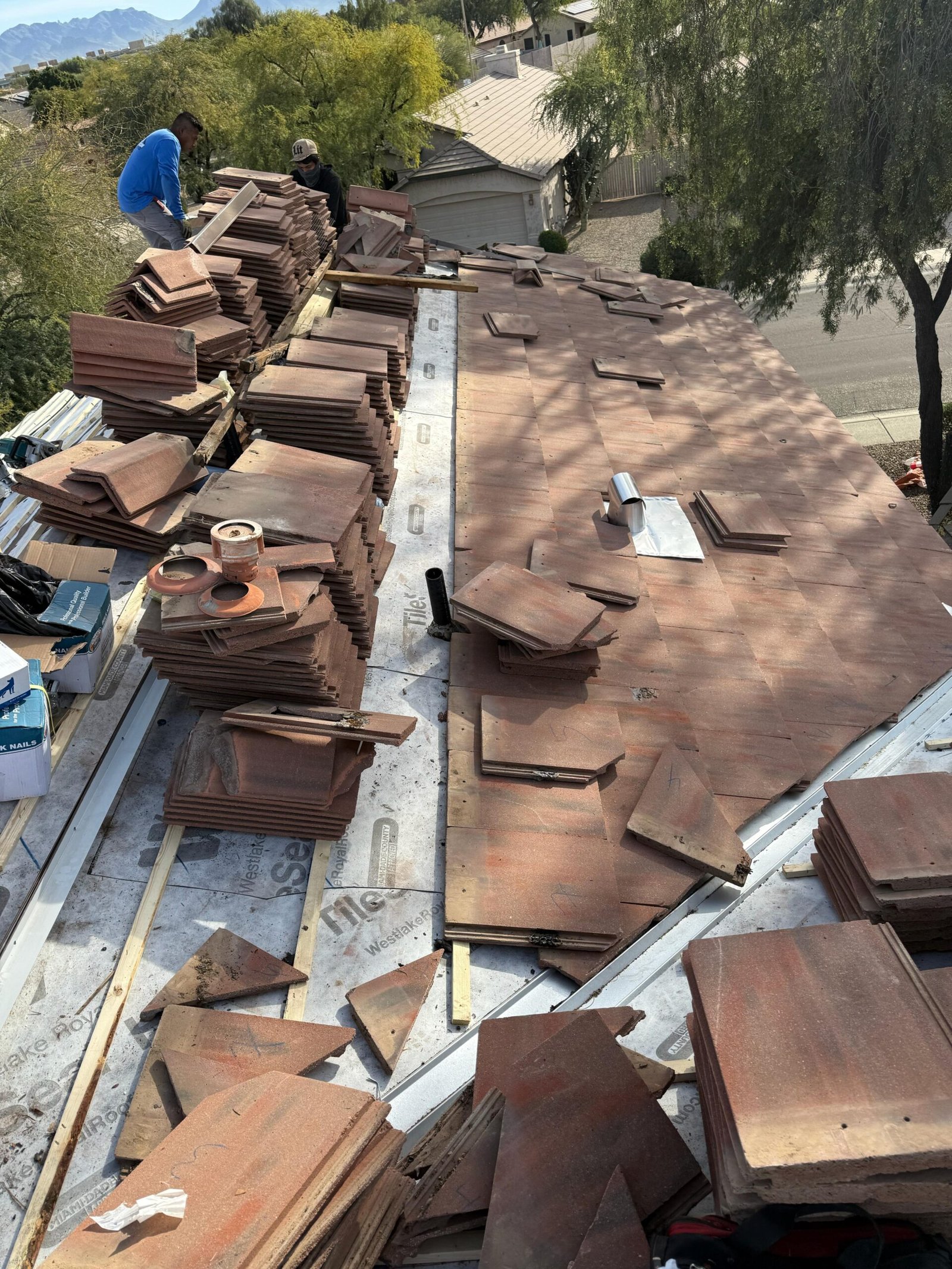
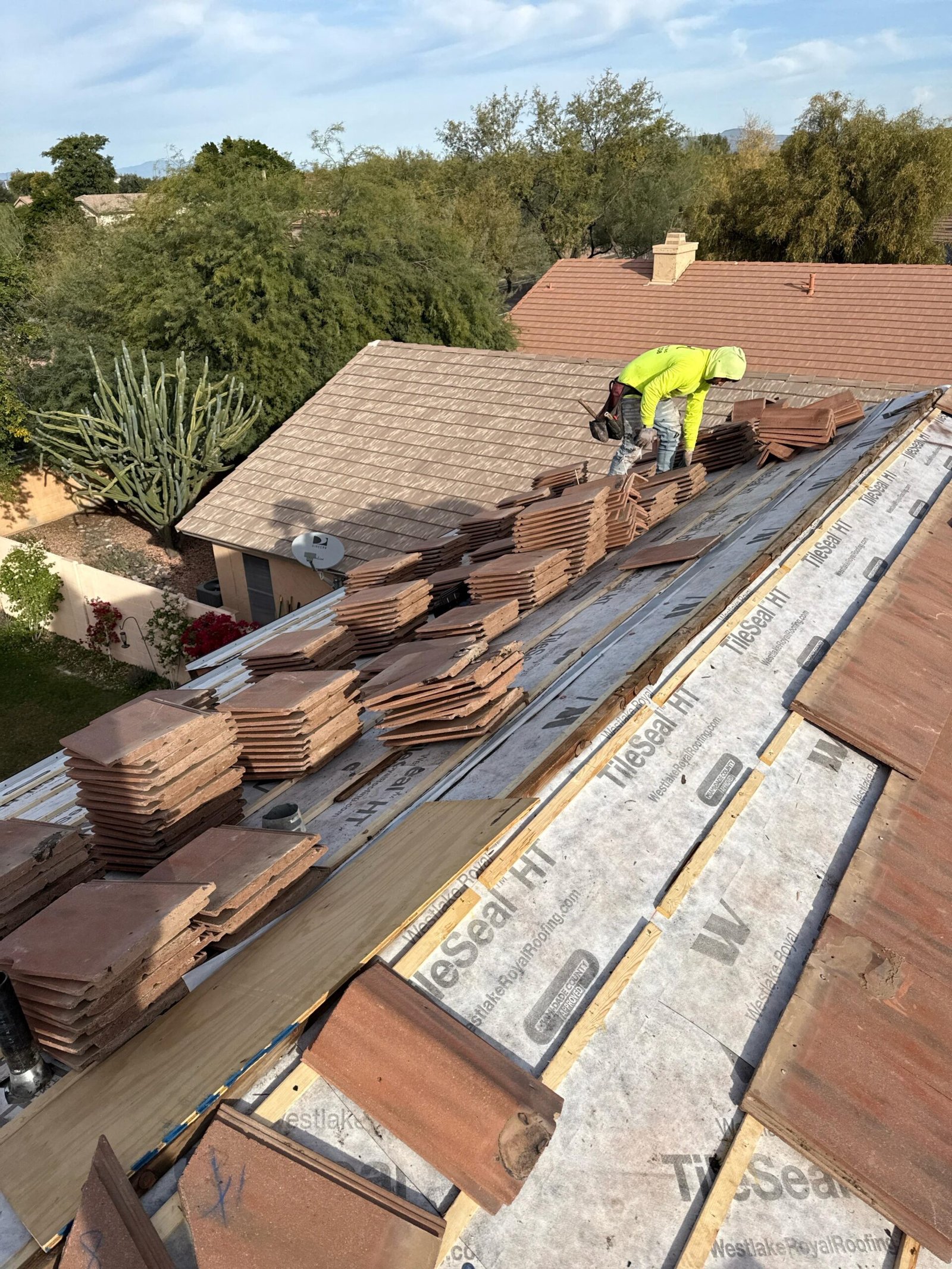
Clay tile is the defining roofing material of Fountain Hills. Walk through any neighborhood in the community and the warm earth tones and curved profiles of clay tile are immediately apparent. This is not coincidence — it reflects both HOA standards in many Fountain Hills communities and the practical reality that clay tile performs exceptionally well in the desert Southwest.
Clay tile’s thermal mass moderates heat transfer into the living space during Arizona’s brutal summer months. Its lifespan of 40 to 60 years makes it one of the most cost-effective roofing investments on a per-year basis, despite the higher upfront cost. And its resistance to UV degradation means that a properly maintained clay tile roof in Fountain Hills will look as good in 20 years as it does the day of installation.
The primary installation consideration is weight. Clay tile is heavy — typically 900 to 1,200 pounds per square — and the structural system of the home must be assessed prior to installation to confirm it can support the load. A qualified contractor will evaluate this as part of the inspection process.
Concrete Tile — Practical Performance for Every Budget
Concrete tile delivers very similar visual results to clay at a reduced material cost, making it the most widely installed roofing material in Fountain Hills for replacement projects. Modern concrete tile products are available in profiles that closely replicate clay barrel tile, flat tile, and S-tile, giving homeowners significant aesthetic flexibility.
Concrete tile is highly durable, UV-resistant, and available in a color range that satisfies most Fountain Hills HOA standards. Its slightly lower lifespan compared to clay — typically 30 to 50 years — and modest color fade over decades are the main trade-offs relative to clay. For most homeowners, concrete tile represents an excellent balance of performance and value.
Metal Roofing — A Growing Option in Fountain Hills
Standing seam metal and stone-coated steel have gained traction in Fountain Hills in recent years, particularly among homeowners renovating contemporary-style properties or those specifically prioritizing energy efficiency and minimal maintenance. Metal roofing reflects radiant heat effectively, requires very little ongoing maintenance, and carries lifespans of 40 to 70 years.
Homeowners considering metal roofing in Fountain Hills should verify HOA approval for their specific product and color selection before proceeding, as some communities maintain material restrictions that favor tile.
Roof Replacement Cost in Fountain Hills
Roofing costs in Fountain Hills reflect the community’s terrain, the predominance of tile systems, and the higher labor complexity associated with hillside properties. General estimates for a residential roof replacement are as follows:
| Material | Estimated Cost Range | Lifespan in Arizona |
|---|---|---|
| Clay Tile | $14,000 – $28,000 | 40–60 years |
| Concrete Tile | $11,000 – $18,000 | 30–50 years |
| Standing Seam Metal | $16,000 – $32,000 | 40–70 years |
| Stone-Coated Steel | $13,000 – $22,000 | 40–60 years |
Properties on steeper lots or with more complex roof geometry will fall toward the upper end of these ranges. Homes requiring structural evaluation prior to tile installation may incur additional costs. Always obtain a written, itemized estimate before committing to a contractor.
Common Roofing Problems in Fountain Hills
Cracked and Slipped Tiles
In Fountain Hills, tile cracking is most commonly caused by thermal expansion and contraction — the daily cycle of extreme heat and overnight cooling stresses tile over time. Walking on a tile roof without proper technique also causes cracks that may not be immediately visible but allow water infiltration during monsoon events.
Slipped tiles occur when the fastening system ages or when installation methods are inadequate for the pitch of the roof. Both issues are repairable without full replacement if caught early during a professional inspection.
Valley and Flashing Failures
Valleys — where two roof planes meet — and flashing around chimneys, skylights, and penetrations are the most common sources of leaks in Fountain Hills. The combination of debris accumulation, thermal stress, and periodic heavy monsoon rainfall means that these transitional areas experience significantly more stress than open field areas of the roof.
Flashing failures are often visible as rust staining, lifted metal, or cracked caulking. When caught early, repairs are straightforward. Left unaddressed, water infiltration through failed flashing causes structural damage and interior ceiling damage that is far more expensive to remediate.
Underlayment Degradation
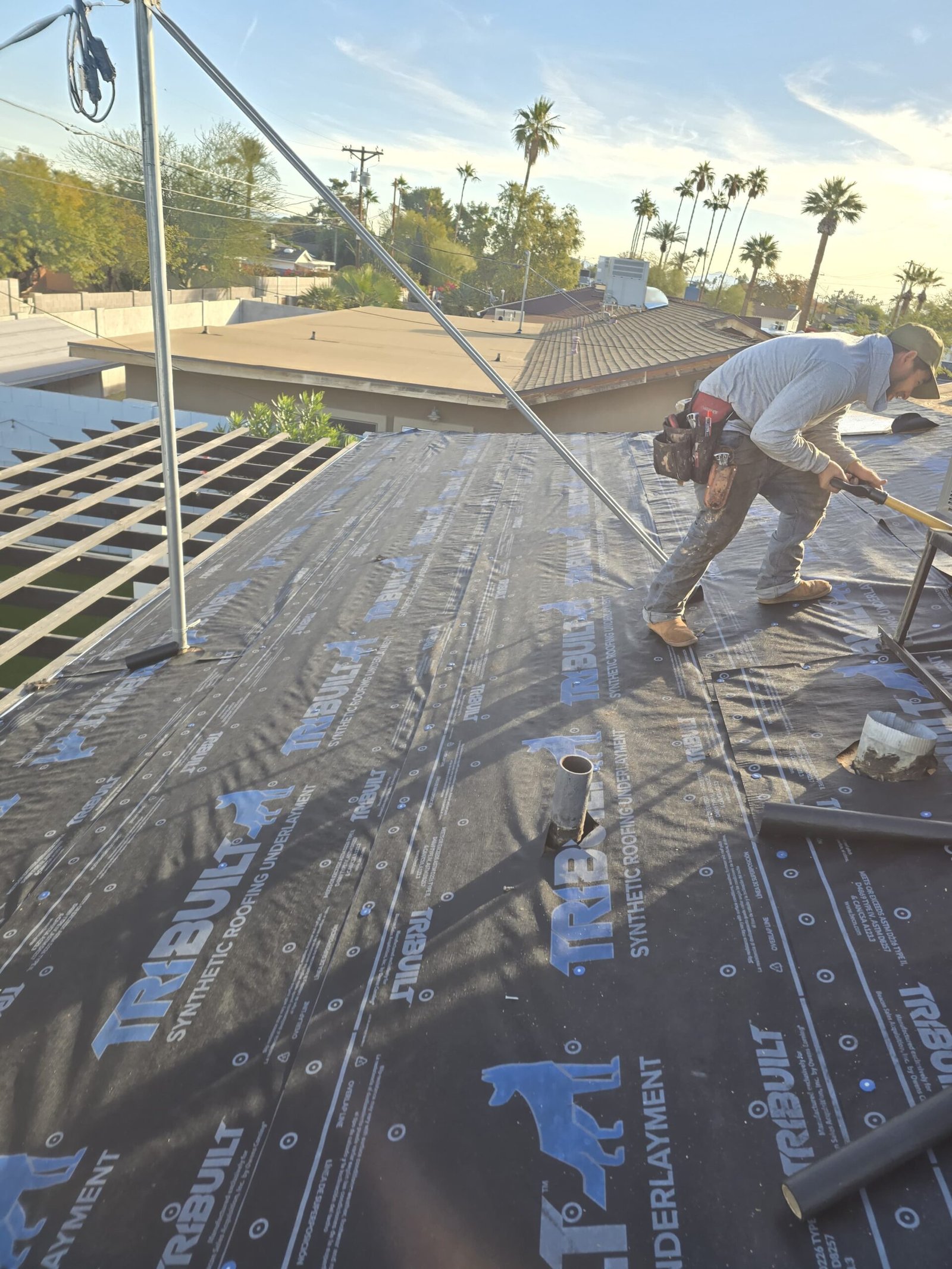
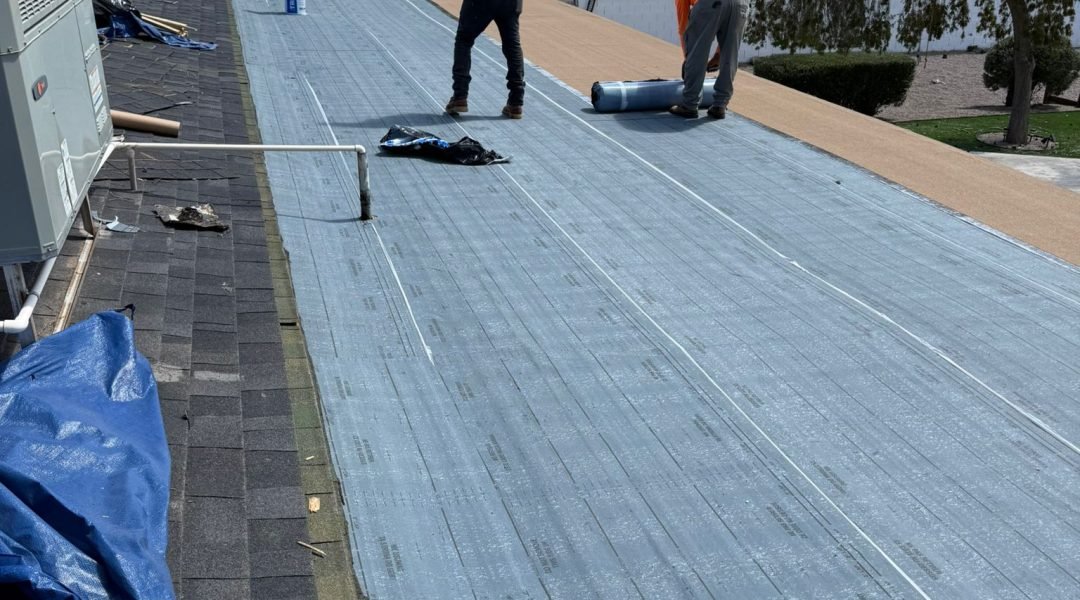
In Arizona’s UV-intense environment, the underlayment beneath tile roofing degrades over time — sometimes faster than the tile itself. A roof with visually intact tile may have compromised underlayment that offers little protection against water infiltration. This is why regular inspection by an experienced contractor is important even when a roof appears to be in good condition from the ground.
Choosing a Roofing Contractor in Fountain Hills
Fountain Hills homeowners should apply the same verification standards as any Arizona roofing project: confirm the contractor holds a current Arizona ROC license, carries appropriate insurance, and has documented experience with tile roofing in hillside environments specifically.
Local experience matters more in Fountain Hills than in many parts of the metro. A contractor who primarily works on flat valley neighborhoods may underestimate the complexity of a hillside tile project, leading to inadequate pricing, rushed scheduling, or installation shortcuts that affect long-term performance.
Ask for references from completed projects in Fountain Hills or comparable Scottsdale communities. A reputable contractor will be comfortable providing them.
Monsoon Season Preparation in Fountain Hills
Fountain Hills sits in a position that receives significant monsoon activity. The storms that sweep up from the south and east during Arizona’s monsoon season — typically June through September — bring high winds, heavy rain, and occasionally hail. Homes in Fountain Hills with aging tile roofs, compromised flashing, or accumulated debris are particularly vulnerable.
The most effective preparation is a professional inspection before the monsoon season begins. This allows a qualified contractor to identify and address vulnerable areas — cracked tiles, questionable flashing, blocked valleys — before they become active leaks during storm events. Post-monsoon inspections are equally valuable for identifying damage that may not be visible from inside the home.
Schedule Your Free Roof Inspection in Fountain Hills
Tip Top Roofing Service provides roofing services throughout Fountain Hills, Scottsdale, Paradise Valley, Phoenix, Tempe, and the greater Phoenix Metro. If you are planning a roof replacement, dealing with tile damage, or want a professional assessment of your roof’s condition, call us at (480) 877-1643 or visit tiptoproofingservice.com to schedule your free inspection.
We are licensed, insured, and GAF certified. ROC License #355034.
Tip Top Roofing Service
Licensed & Insured | ROC #355034 | GAF Certified Contractor
6830 E 5th Ave #205, Scottsdale, AZ 85251
(480) 877-1643 | tiptoproofingservice.com