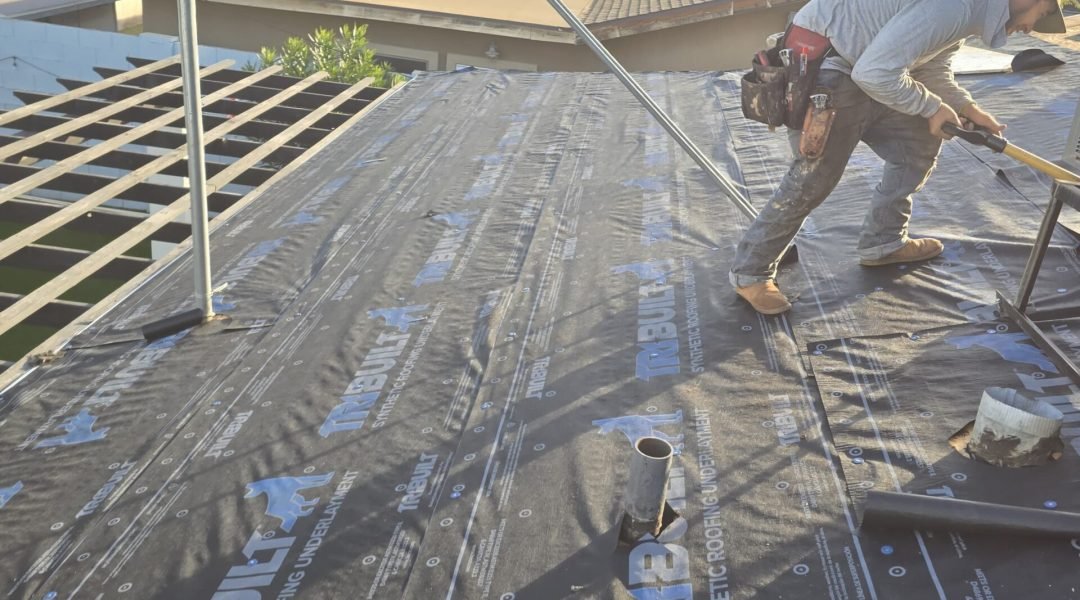
Replacing your roof is already a significant undertaking. For homeowners in Scottsdale, Phoenix, Tempe, Paradise Valley, or Fountain Hills who live under a homeowners association, there is an additional layer of process that many homeowners discover only after a contractor is already scheduled — or worse, after materials have already been installed.
HOA approval requirements for roofing are real, enforceable, and in some communities, very specific. Getting them wrong can result in fines, mandatory removal of non-approved materials, and disputes that delay your project by weeks.
This guide covers everything Phoenix Metro homeowners need to know about HOA roofing rules — what requires approval, how the process works, and how to navigate it without headaches.
Do You Need HOA Approval to Replace Your Roof?
In most HOA-governed communities across the Phoenix Metro, yes — you need formal approval before replacing your roof. The specific requirements vary by association, but the following almost always require HOA review and approval:
- Full roof replacement — regardless of whether you are using the same material and color as the original
- Change of roofing material — for example, replacing asphalt shingles with tile, or tile with metal
- Change of color — even within the same material category
- Installation of rooftop features — solar panels, skylights, rooftop HVAC units, ventilation modifications
- Changes to roof pitch or structure — less common in standard replacements but relevant to additions
Some HOAs also require notification and approval for significant repairs — particularly anything that changes the visual appearance of the roof from the street.
What HOAs Typically Specify for Roofing
Every HOA has its own governing documents — typically a Covenants, Conditions & Restrictions (CC&Rs) document and an Architectural Review Committee (ARC) or Design Review Committee (DRC) handbook. These documents specify what roofing materials are permitted, what colors are approved, and sometimes which specific product lines are on an approved list.
Common HOA roofing specifications in Scottsdale and Phoenix communities include:
Material restrictions: Many HOAs in Scottsdale and Paradise Valley require tile roofing — either clay or concrete — and explicitly prohibit asphalt shingles. In these communities, a homeowner who replaces their tile roof with shingles will be required to remove them.
Color palettes: Most HOAs maintain an approved color palette for roofing materials. Colors are often described by reference to specific manufacturer product codes. Submitting a sample or color chip as part of your approval request is typically required.
Profile restrictions: For tile roofing, some HOAs specify approved tile profiles — S-tile, flat tile, or barrel tile — and prohibit non-standard profiles that don’t match the community’s established appearance.
Brand and product approvals: Some communities maintain lists of pre-approved manufacturers and product lines, which can streamline the approval process if your contractor uses an approved product.
How the HOA Approval Process Works
The approval process for roofing in most Phoenix Metro HOAs follows a standard workflow, though timelines and specific documentation requirements vary:
Step 1: Review Your HOA Documents
Before selecting a material or contacting a contractor, obtain your HOA’s current Architectural Guidelines and CC&Rs. Review the roofing section carefully. If the documents are not readily available, contact your HOA management company — they are required to provide them upon request.
Step 2: Work With Your Contractor to Prepare the Submission
A qualified contractor familiar with the HOA approval process will help you prepare the required documentation. This typically includes:
- A completed Architectural Review application form
- Description of the proposed work (material type, manufacturer, product name, color)
- Product sample or color chip (for tile or shingles)
- Manufacturer product specification sheet
- In some cases, a site plan showing the affected roof areas
Step 3: Submit to the Architectural Review Committee
Submit your completed application to the HOA’s Architectural Review Committee (ARC) or Design Review Committee. Most HOAs accept submissions by email or through a homeowner portal. Some require physical submission via mail.
Keep a copy of everything you submit, and note the submission date. Most HOAs are required by Arizona law to respond to ARC applications within a specified timeframe — typically 30 to 60 days. If they fail to respond within that period, in some cases approval is deemed granted by default (check your specific CC&Rs for this provision).
Step 4: Receive Written Approval Before Work Begins
Do not schedule your installation until you have received written approval from the HOA. A verbal assurance from a board member is not sufficient — you need documented, written approval that you can retain in your files. This protects you if any questions arise later.
Step 5: Complete the Work Per the Approved Specifications
Once approved, ensure your contractor installs precisely the material, color, and profile that was specified in your application. Any deviation — even a similar product from a different manufacturer — can trigger a compliance review.
Common HOA Roofing Mistakes in Scottsdale and Phoenix
Starting Work Without Approval
The most costly mistake is beginning installation before HOA approval is in hand. If your HOA discovers non-approved materials installed on your roof, they can require you to remove and replace them — entirely at your expense. This can mean paying twice for the same job.
Assuming Same Material = No Approval Needed
Many homeowners assume that because they are replacing their roof with the same material and color as the original, no approval is needed. In most HOAs, this assumption is incorrect. Any significant modification to the exterior appearance of the home — including a full roof replacement — typically requires formal documentation, even if the outcome is visually identical.
Not Verifying the Specific Product Line
Even within an approved material category, the specific product must sometimes be from an approved manufacturer list. Selecting a tile profile that is not on the approved list — even if the color and general style are appropriate — can delay or complicate the approval process.
Allowing Your Contractor to Begin Without Documentation
Urgency after storm damage or an unexpected roof failure can create pressure to begin work quickly. While understandable, proceeding without HOA approval in an emergency does not exempt you from compliance requirements. In genuinely urgent situations — active roof leaks causing interior damage — document the emergency, notify your HOA immediately, and request expedited review. Most HOAs have provisions for emergency situations.
Tips for Faster HOA Approval in Scottsdale and Phoenix
- Submit a complete application on the first attempt. Incomplete submissions are the primary cause of delay. Include every required item.
- Use materials from the HOA’s pre-approved list if one exists — this bypasses the need for extended review in many communities.
- Request a pre-application meeting with the ARC coordinator if you have questions about whether a specific product will be approved.
- Follow up appropriately. If the HOA response deadline has passed with no communication, contact them in writing to document your follow-up.
- Retain all correspondence. Keep a complete file of your application, all HOA communications, and the written approval.
How Tip Top Roofing Service Handles HOA Projects
At Tip Top Roofing Service, we regularly work with homeowners in HOA-governed communities throughout Scottsdale, Phoenix, Paradise Valley, Tempe, and Fountain Hills. We are familiar with the approval requirements across many of the Phoenix Metro’s major HOA communities and assist homeowners in preparing complete, accurate applications.
We do not schedule installation until written HOA approval is confirmed. Our product selections are consistently made with compliance in mind, and we provide the documentation you need to support a smooth approval process.
Frequently Asked Questions
What if my HOA rejects my roofing application? You have the right to appeal an HOA decision. Review your CC&Rs for the appeal process, document your grounds for appeal, and submit in writing. In some cases, selecting an alternative approved product resolves the issue without a formal appeal.
Can my HOA force me to use a specific contractor? No. HOAs can specify materials, colors, and standards — but they cannot require you to use a specific contractor.
What if my roof is damaged and I need immediate repairs? Most HOAs have provisions for emergency situations. Document the damage and your need for immediate action, notify the HOA in writing, and request expedited review. For minor repairs that do not change the roof’s appearance, approval may not be required — check your CC&Rs.
Does my HOA have access to my roof? HOAs typically have the right to inspect the exterior of your home from common areas and public spaces to confirm compliance. They generally do not have the right to access the interior of your property without notice.
Schedule Your Free Inspection — We Handle the HOA Process
Tip Top Roofing Service serves Scottsdale, Phoenix, Tempe, Paradise Valley, Fountain Hills, and the greater Phoenix Metro. If you are navigating an HOA approval for your roof replacement, we can help from the initial material selection through the documentation process.
Call us at (480) 877-1643 or visit tiptoproofingservice.com to schedule your free inspection.
Tip Top Roofing Service
Licensed & Insured | ROC #355034 | GAF Certified Contractor
6830 E 5th Ave #205, Scottsdale, AZ 85251
(480) 877-1643 | tiptoproofingservice.com